A Complete Gili Air Travel Guide
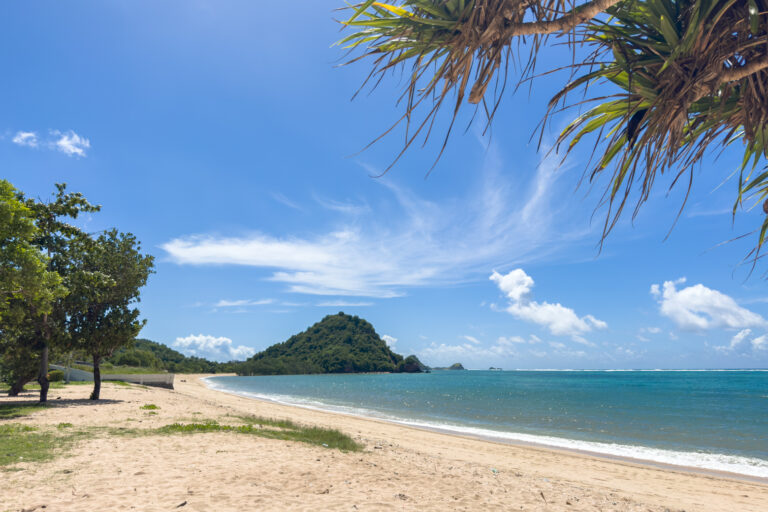
On Gili Air, days move to the rhythm of nature rather than minutes on the clock. Sunrise beckons you out of bed, turtles surface in calm turquoise water, and evenings end with the sky glowing in streaks of orange and pink.
Gili Air, meaning “island of water”, is one of the three Gili Islands just off the north west coast of Lombok, Indonesia.
Each of the three Gili Islands has its own personality. Gili Trawangan is the largest and is known for its nightlife. Gili Meno is the smallest, quietest, and most remote. Gili Air is a lovely balance of the two.
It’s an unpretending and authentic little island (little: really, only 5km around the perimeter) that produces smiles, drops shoulders and slows down time. Yet, against all instincts, you’ll find wonderful restaurants, cafes, activities and comforts all of which surpass expectations.
All of this is to say… many who come end up staying longer than intended.
This Gilli Air travel guide will cover absolutely everything you need to know for your visit to Gili Air.
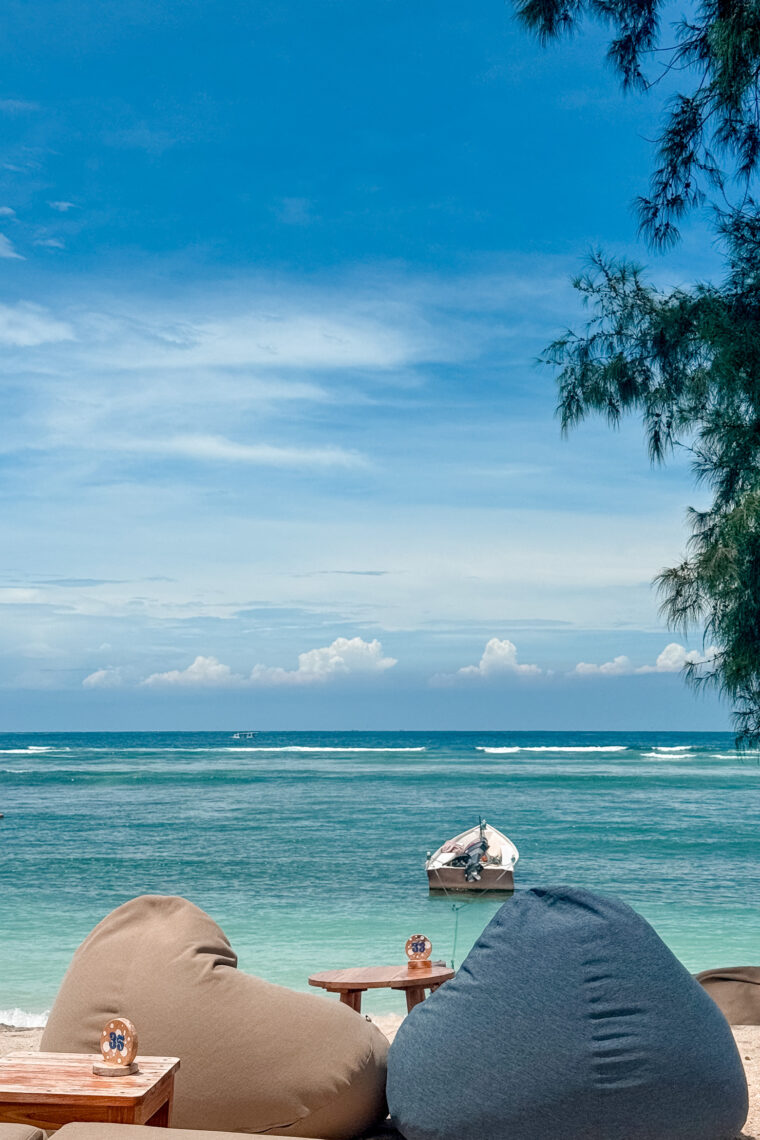
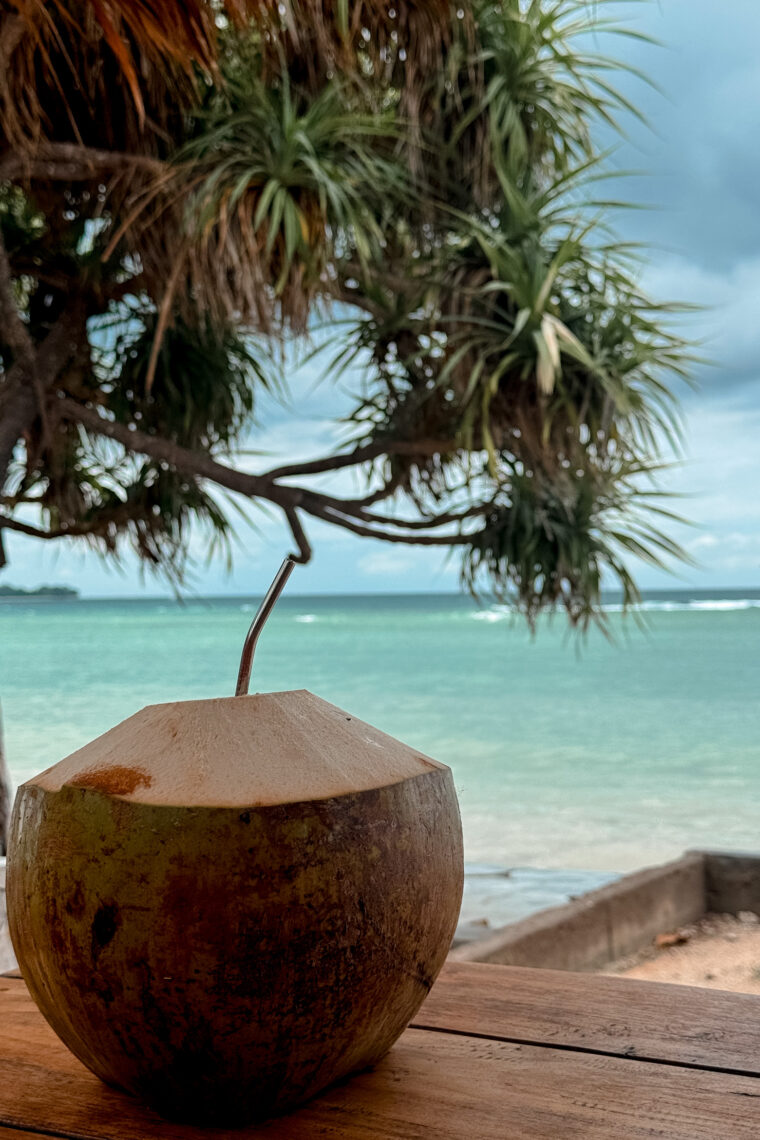
The best time to visit Gili Air
Let’s start the Gili Air Travel Guide with the best time to visit. Gili Air has a tropical climate with two main seasons, dry and wet. You can visit year-round and still have a great experience, but the seasons will shape your time on the island.
Dry season runs from May to October, bringing sunny days, lower humidity and generally calmer seas. If you are planning beach time, snorkelling and clear sunsets, this is the most reliable window.
The wet season runs from November to April. It is warmer and more humid, with tropical downpours, stronger winds and white-capped seas. And of course, less people.
I visited during the peak wet season and still enjoyed most of what the island offers. That said, choppier water meant snorkelling wasn’t at its best; worth considering if visibility is a priority. If you don’t mind the odd storm, prefer a quieter, more relaxed atmosphere, and are happy getting caught a bit soggy, then don’t rule out the wet season.
Travel tip for rainy season:
Keep plans flexible in the rainy season. Rough seas can lead to occasional ferry delays or cancellations from Bali and Lombok.
How to get to Gili Air
The only way to reach Gili Air is by boat.
From Bali
If you are travelling from Bali, the most common option is a ‘fast ferry’. Boats depart daily from Padang Bai on the east coast and Serangan Harbour in south Bali. Padang Bai is the closest port for reaching the Gili Islands, with the crossing usually taking 1.5-2 hours. Because of the (frequently) rough seas, it’s also the most popular departure option.
On the way, boats either go directly or stop at Gili Trawangan and/or Gili Meno before Gili Air, so total travel time can vary. Crossings are very weather-dependent, especially during the rainy season, and delays do happen. Bear in mind that early-morning crossings are calmer.
After researching safety and reviews of various operators, I chose Eka Jaya Fast Ferry and had a smooth and safe experience. The boat had AC, comfortable seats, was well organised, and luggage was securely covered. I compared operators, prices, and schedules on GiliBookings, then booked directly. Expect to pay around 550k IDR for a one-way ticket.
From Lombok
If you are already on Lombok, getting to Gili Air is very straightforward.
Public boats from Bangsal harbour (~2 hours drive from the Airport) run throughout the day, take around 15 to 20 minutes, and cost approximately 20k IDR. There is no need to book in advance, simply buy a ticket at the harbour and depart once the boat is full.
Private boats are also available. They are 20x more expensive, but are still relatively affordable for travellers. Expect to pay around 400k IDR per boat. This is a good option if you want flexibility or are travelling in a group, and can be arranged at the port or through your accommodation.
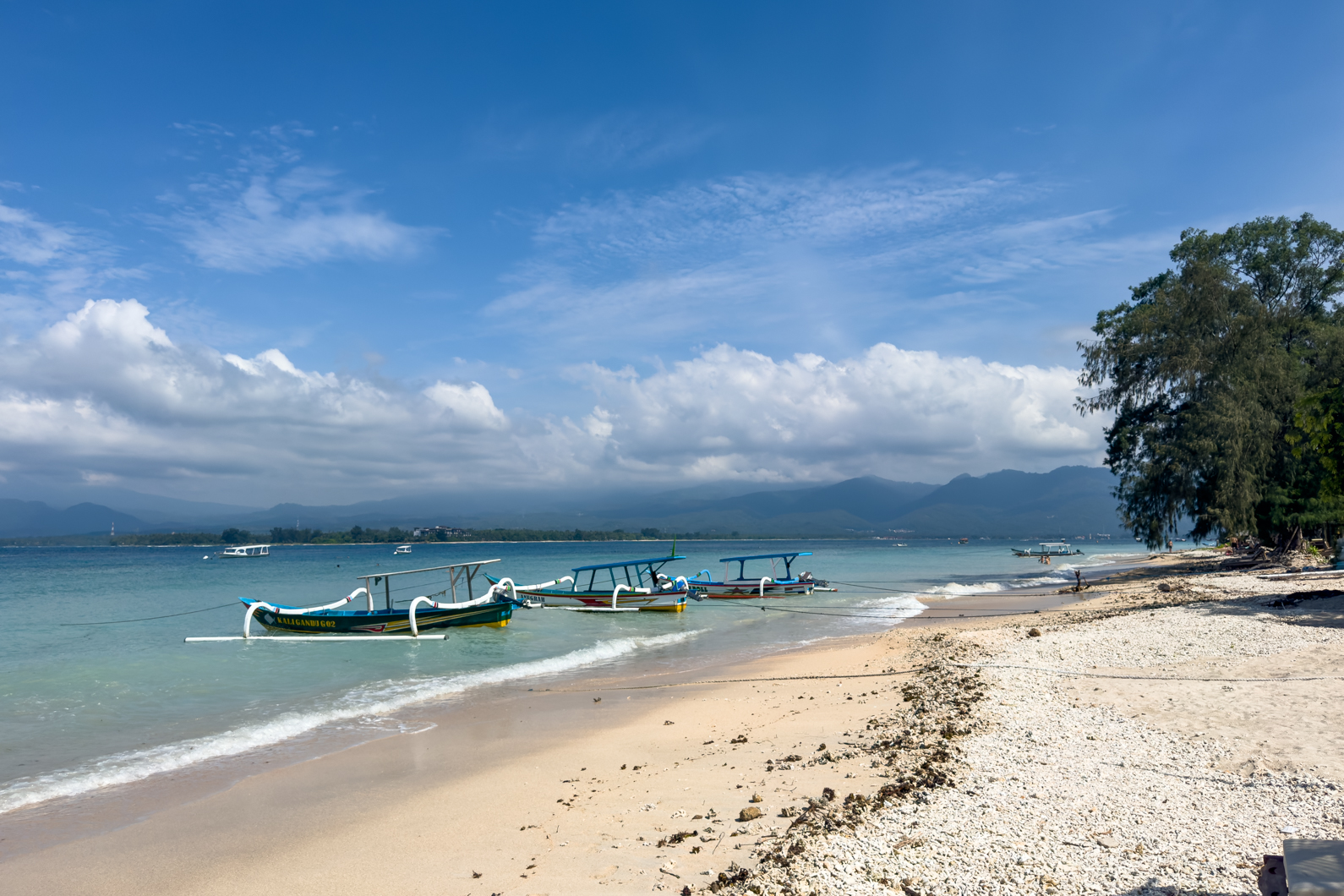
Getting around Gili Air
First things first, there are no motorised vehicles on Gili Air. If you are coming from Bali, you’re going to notice this straight away; the stillness is serene.
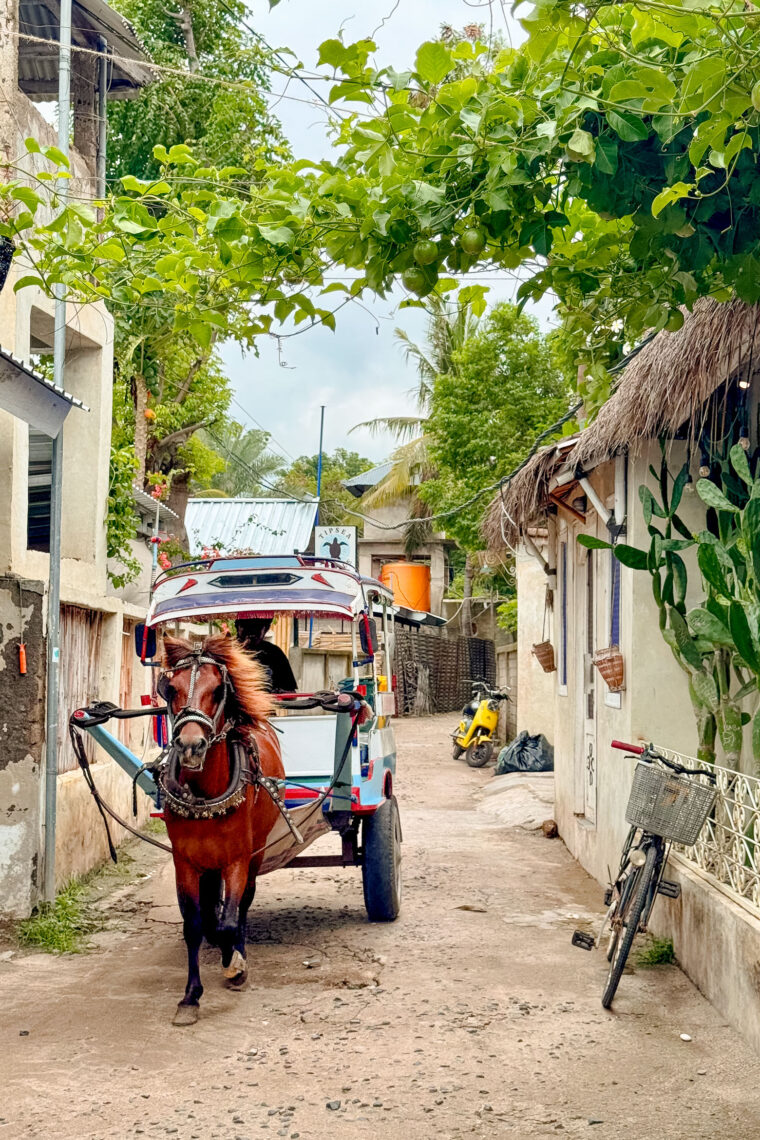
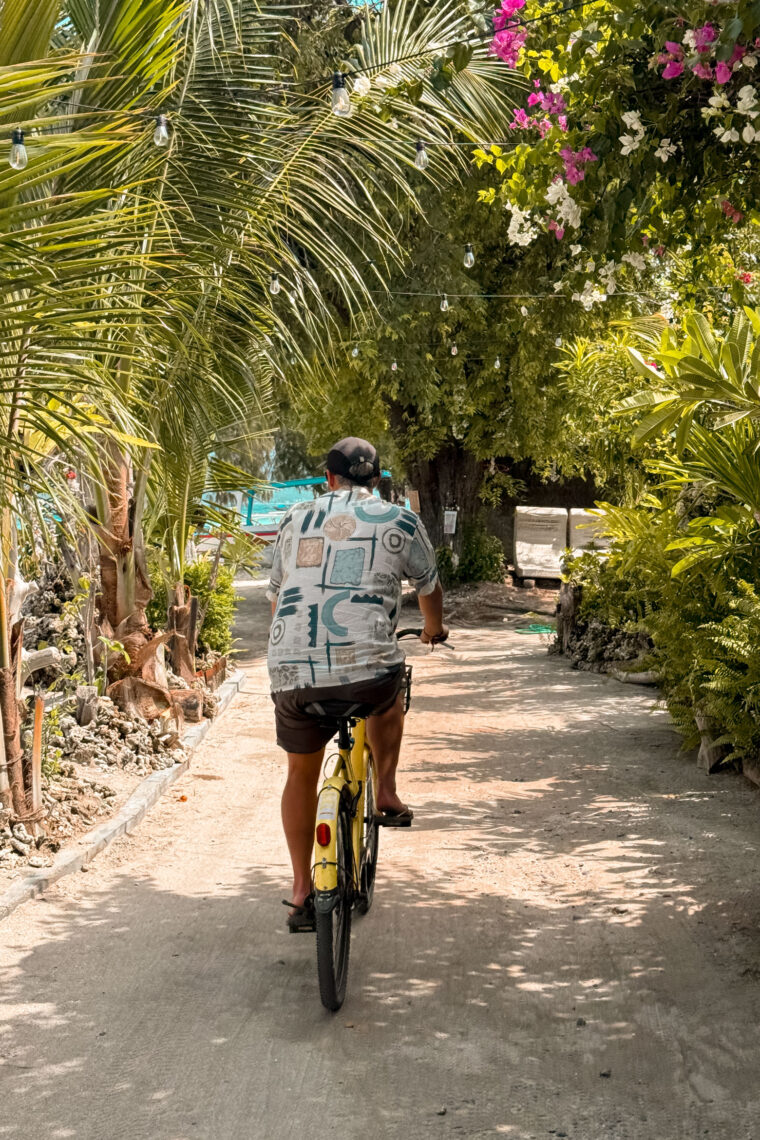
Traffic on Gili Air is limited to bicycles, cidomos and a small number of electric scooters. Cycling is by far the most common and practical option. You can cross the island in under 20 minutes, so nowhere is far. [It’s so fantastic to never worry about travel times.] Bicycles are easy to arrange through your accommodation or from rental stands near the port, and typically cost around 50k IDR per day.
Cidomos, as mentioned, are traditional horse-drawn carts (ci meaning cart, do meaning horse, mo meaning motor) are mainly used for luggage transfers to and from the harbour. They line up near the port like taxis, and prices are negotiated based on distance and load.
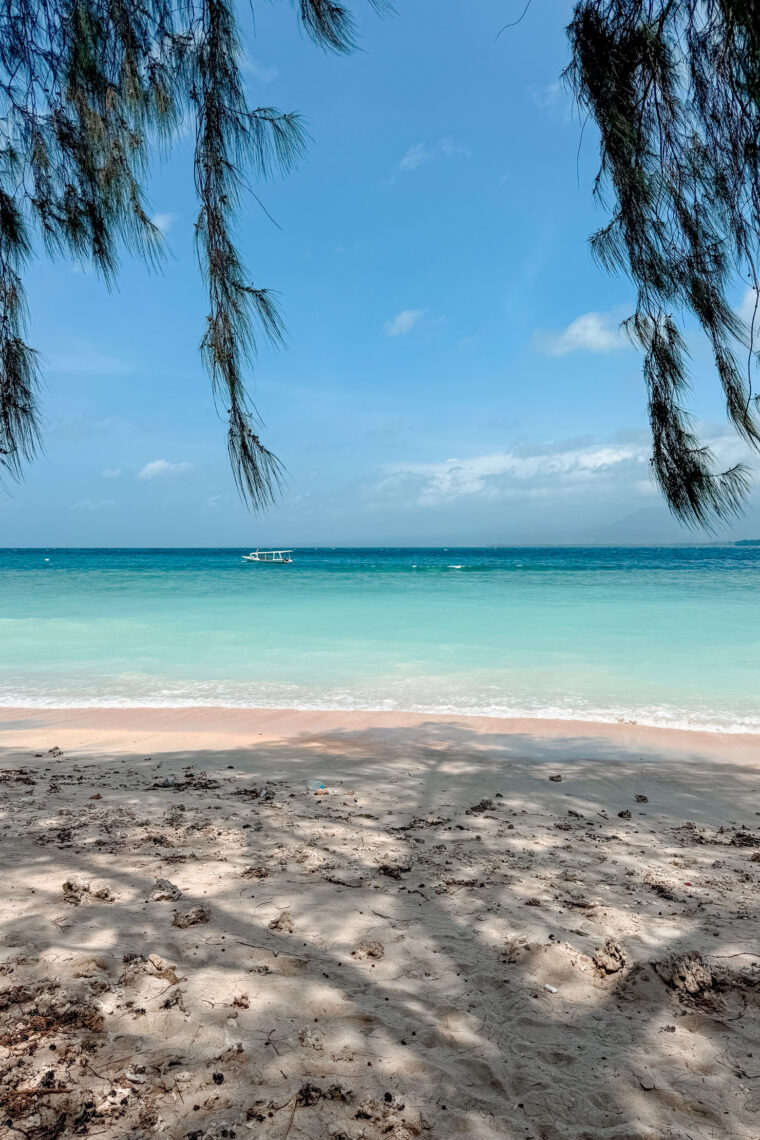
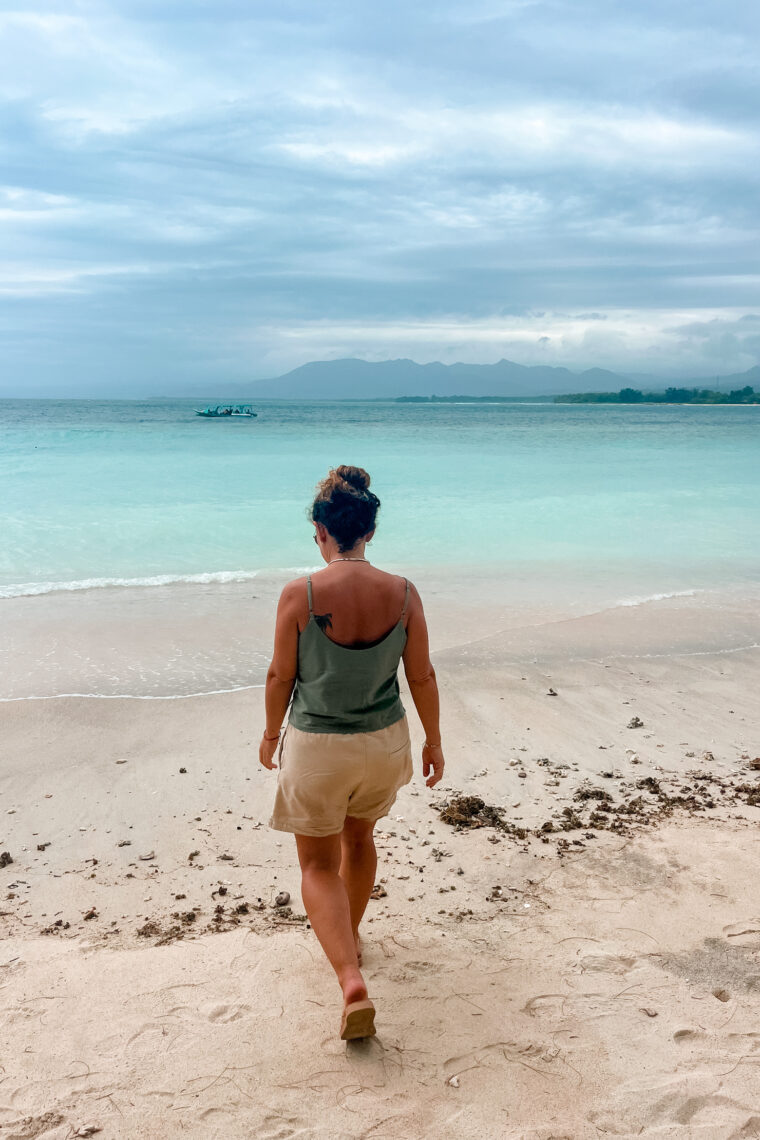
And of course, you can walk everywhere. Sunrise and sunset walks along the beach became my favourite way to start and end the day. ‘East coast’ in the morning, ‘west coast’ in the evening, sandy toes for both.
Where to stay on Gili Air
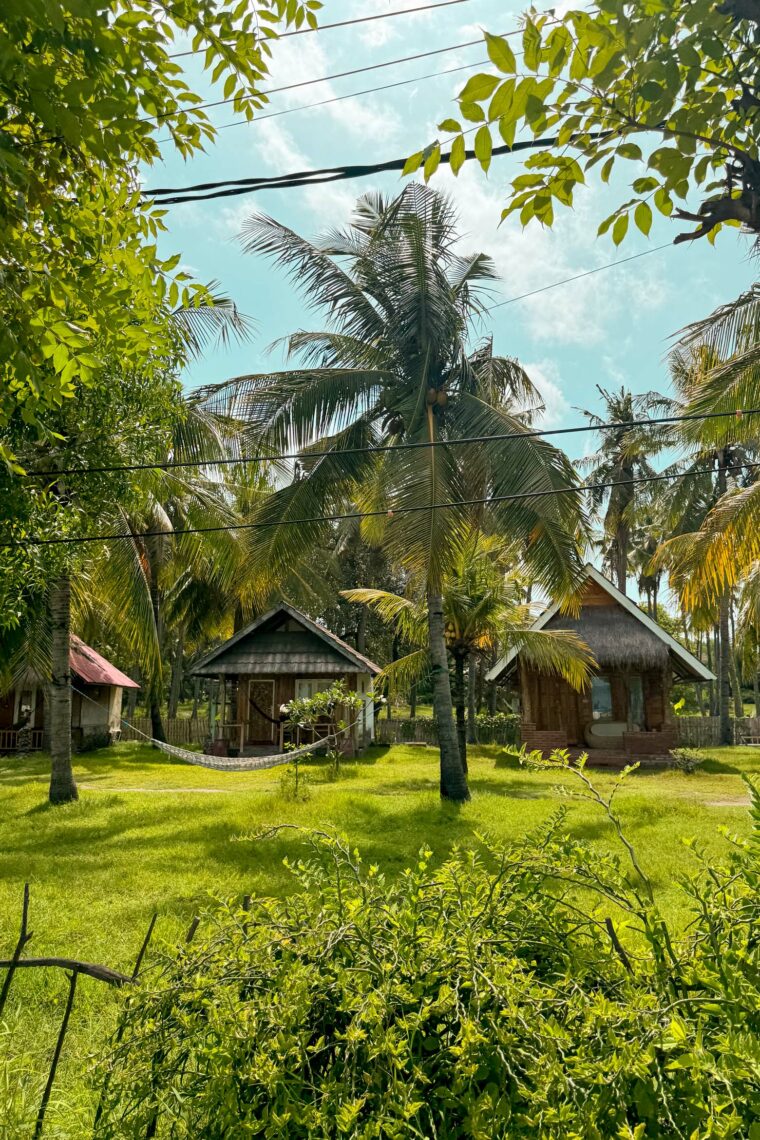
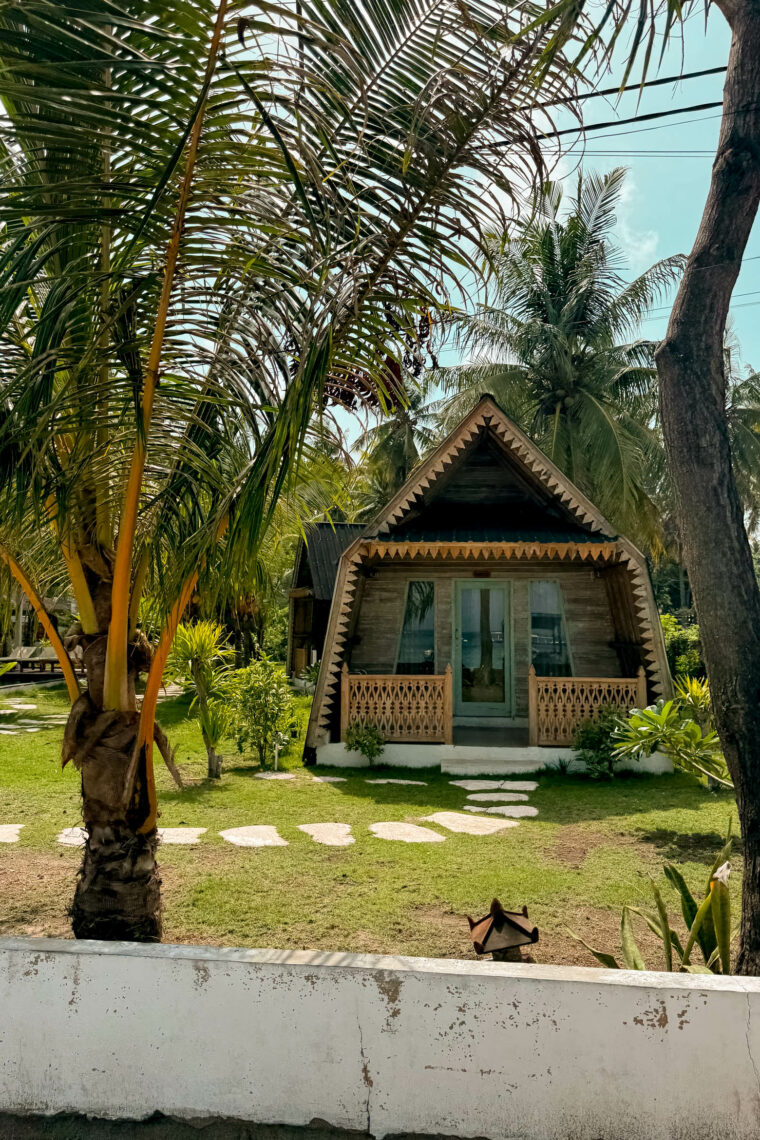
There is no shortage of accommodation on Gili Air. From hostels and beach bungalows to private villas and boutique stays, there is something for every budget and travel style.
The island is small, so location is rarely a deal breaker. That said, staying in the south places you closer to the port and the livelier stretch of restaurants, cafés and shops and the north feels quieter, with fewer businesses and an ever-so-slightly more remote atmosphere.
Here are a few standout options:
- Tipsea Turtle Hostel: A social, budget-friendly option just steps from the beach, with a pool, café and yoga studio. Ideal for solo travellers or anyone wanting a more communal stay.
- Abdi Fantastik Bungalows: Private studio bungalows that are perfect if you want to wake up on the beachfront, roll out of bed and straight into the sea (and super affordable!)
- Gilipad Villa: A beautiful two-bedroom villa with a private pool, perfect for families, couples travelling together, or anyone wanting their own space. This is where we stayed and it instantly felt like home, thanks to the thoughtful design and wonderful hosts.
- Slow Gili: For a more bourgie stay, Slow Gili offers minimalist, design led private villas with a boutique feel. It also has an on site spa, making it a great option if relaxation is a priority.
Things to know before visiting Gili Air
- Card and cash are widely accepted. Card payments are mostly restricted to restaurants and cafés, and you will need cash for beach vendors, markets and cidomos. There are several ATMs on the island, mostly around the south near the port.
- WiFi is available in accommodation and most cafes, but this is a small tropical island and storms can disrupt electricity and internet. During my January visit, heavy weather caused temporary outages. If staying connected is important, consider buying a local SIM with data before arriving, or seek out a restaurant with Starlink.
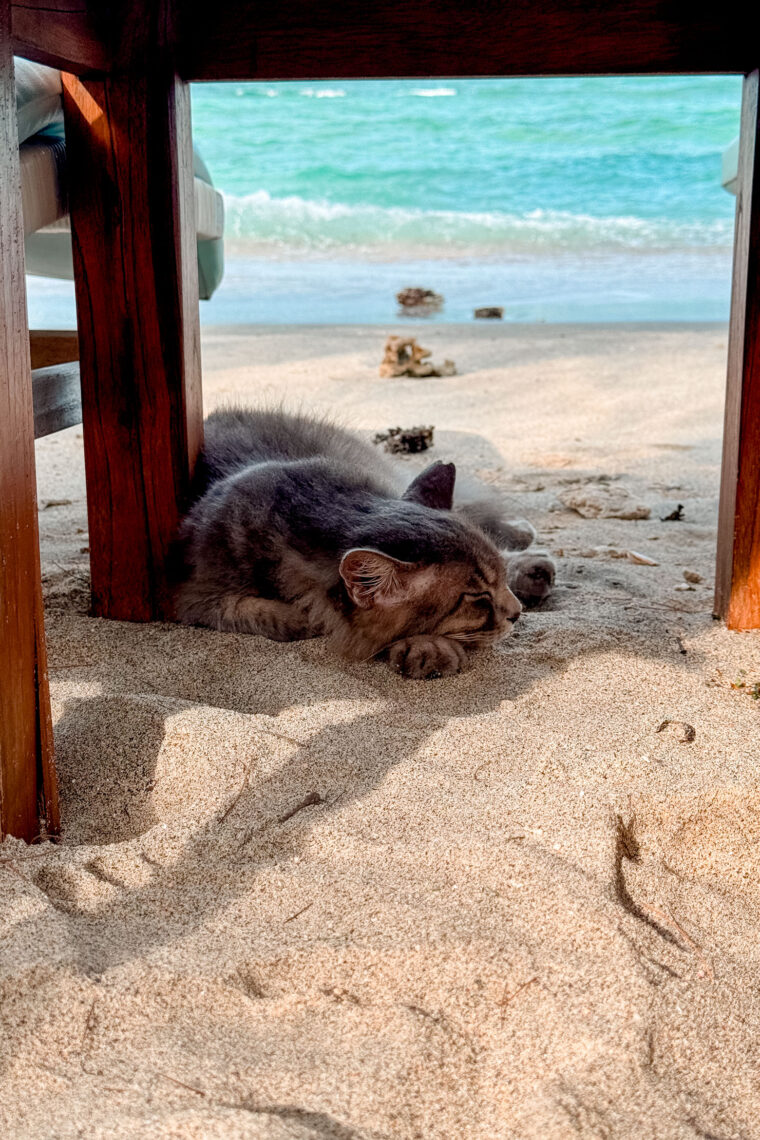
- Gili Air is a cat lover’s dream. Dogs are not allowed on the island, so you will only see cats lounging in the streets and along the beach. They are technically stray, but are very well looked after by the local community.
- While Gili Air feels relaxed and beach-focused, it is part of Lombok, which has a predominantly Muslim culture. Swimwear is fine on the beach and around resorts, but it is respectful to cover up when walking through the village.
- Finally, remember that Gili Air is a small and fragile island with limited resources. Fresh water and waste management are ongoing challenges. Refilling a reusable bottle, avoiding single-use plastics and wearing reef-safe sunscreen are small actions that genuinely help protect the island.
The best things to do on Gili Air
Go Snorkelling
If you come to Gili Air, snorkelling is a rite of passage. With warm, clear waters and coral reefs accessible straight from the beach, you don’t need to be an experienced swimmer or book a full-day tour to enjoy it. The eastern side, around Turtle Point, tends to be calmer and ideal for snorkelling. Here you’ll find coral gardens, tropical fish and, if you’re lucky, sea turtles cruising through the shallows. Early mornings usually offer the best visibility before winds pick up later in the day.
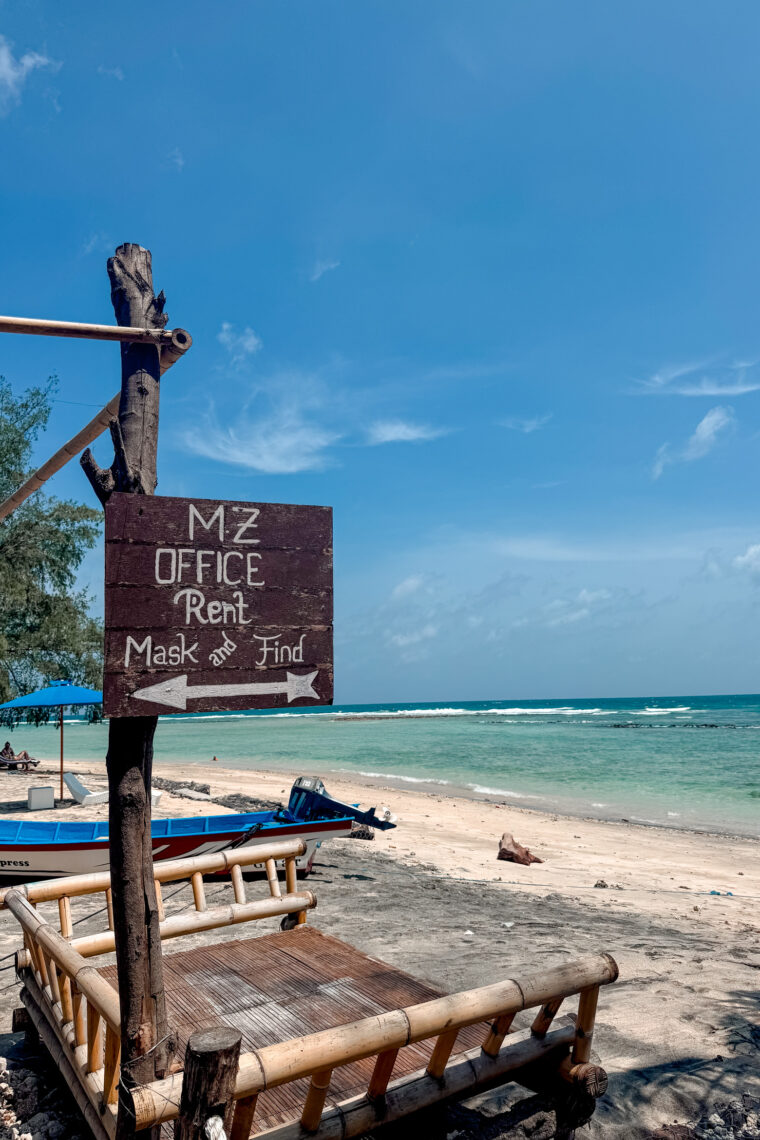
As you walk along the beachfront, you will notice many rental shops offering masks, snorkels, and fins. I used MZ Gili Air and paid about 50k IDR (between £2-3!)
Explore the island by bike
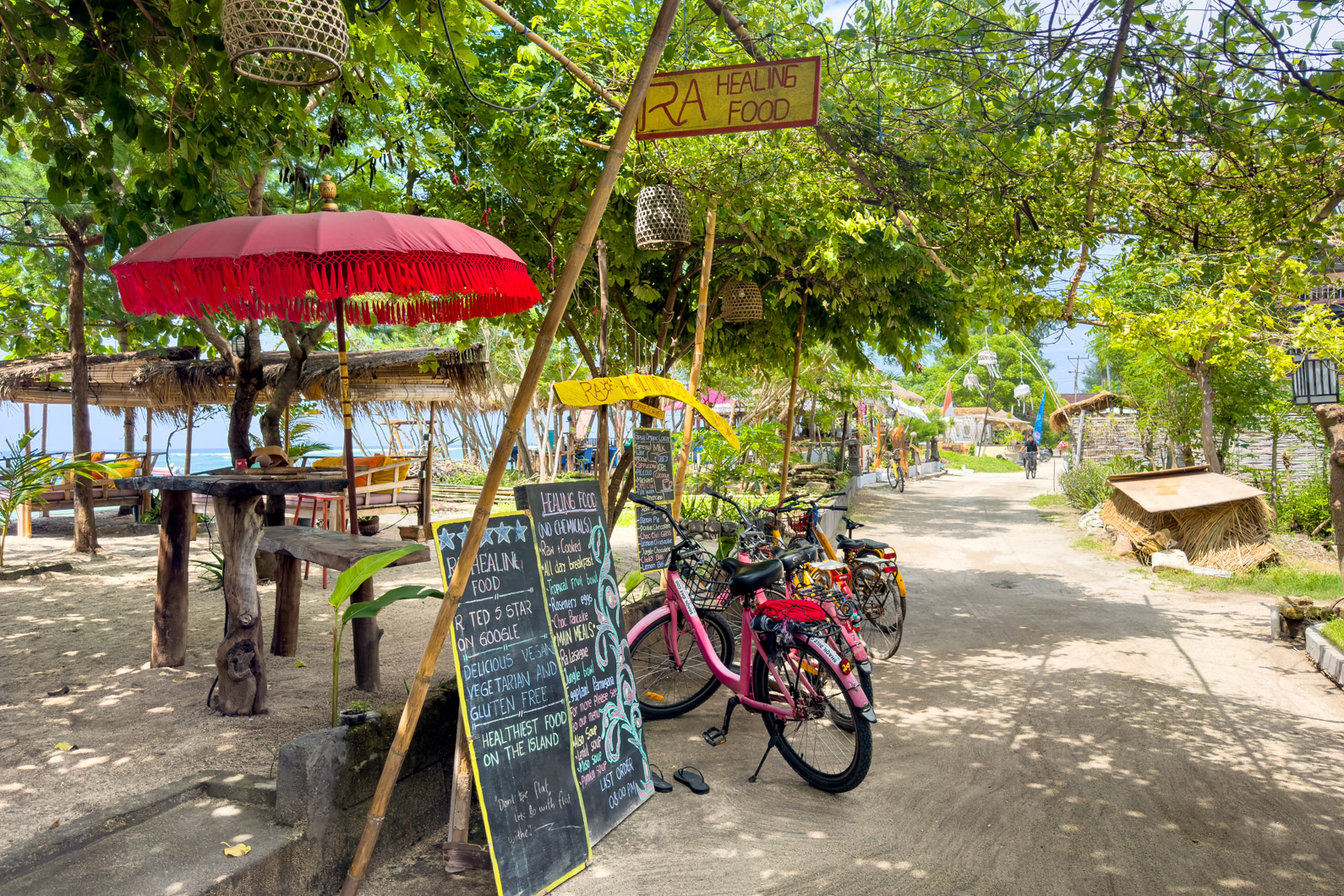
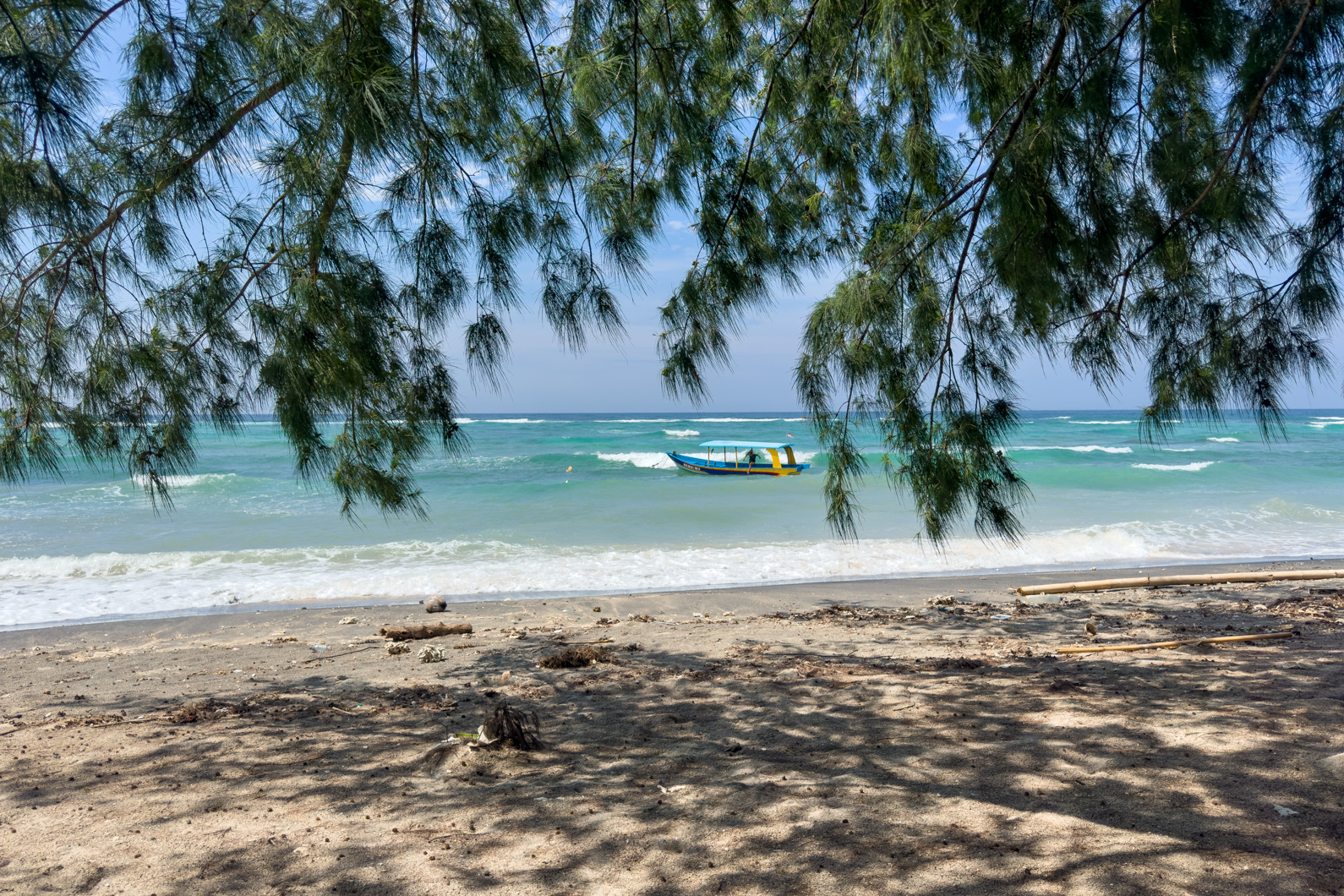
Cycling will likely be your main way of getting around Gili Air. Beyond simply travelling from A to B, it’s one of the best ways to explore. Skip Google Maps, ride with no agenda, follow the handmade signs, get lost, and settle into island time. There are no police on the island, but Gili Air is very safe, so you can easily stop wherever catches your eye and leave your bike outside without worry.
Enjoy the yoga & wellness scene
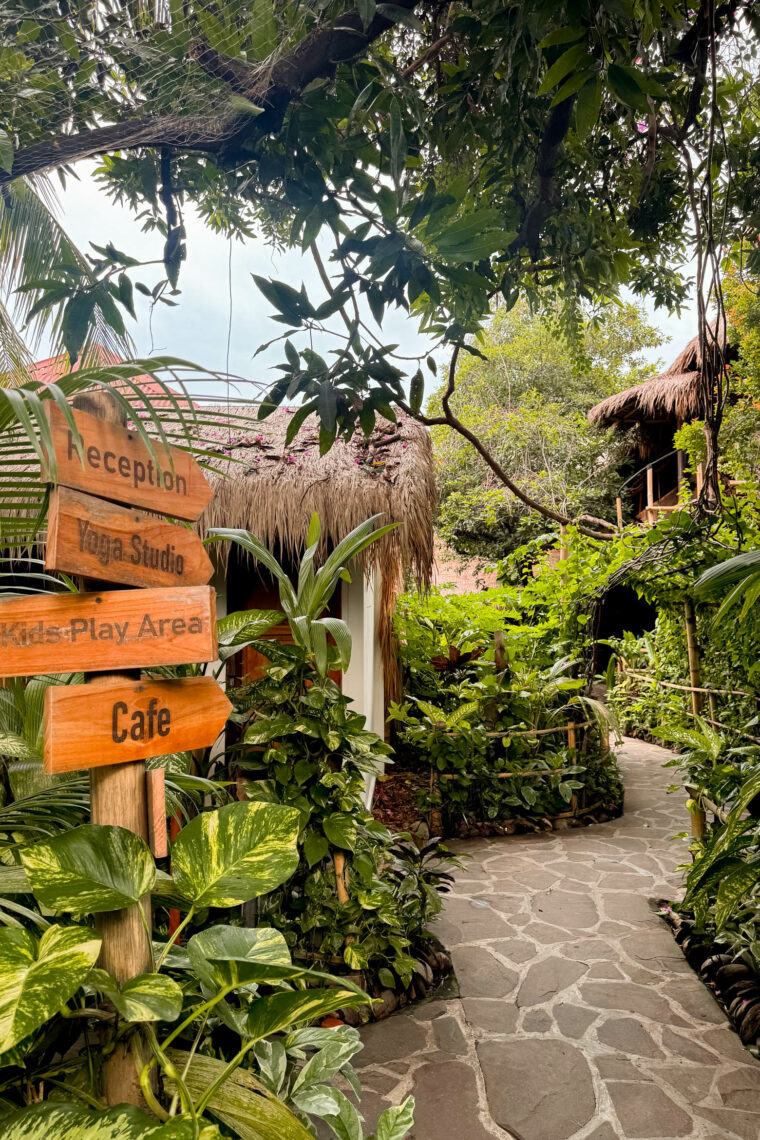
The island has a strong yoga and wellness scene to perfectly mirror the slow, mindful undercurrent. You will find classes, workshops, events and healing spaces dotted around the island; all of which are open to drop ins.
I really loved the yoga sessions at Flower and Fire. They have two studios, one at their yoga garden, where there is also accommodation and an amazing cafe, and the other is ocean side, perfect for the sunrise sessions.
Book onto a diving experience
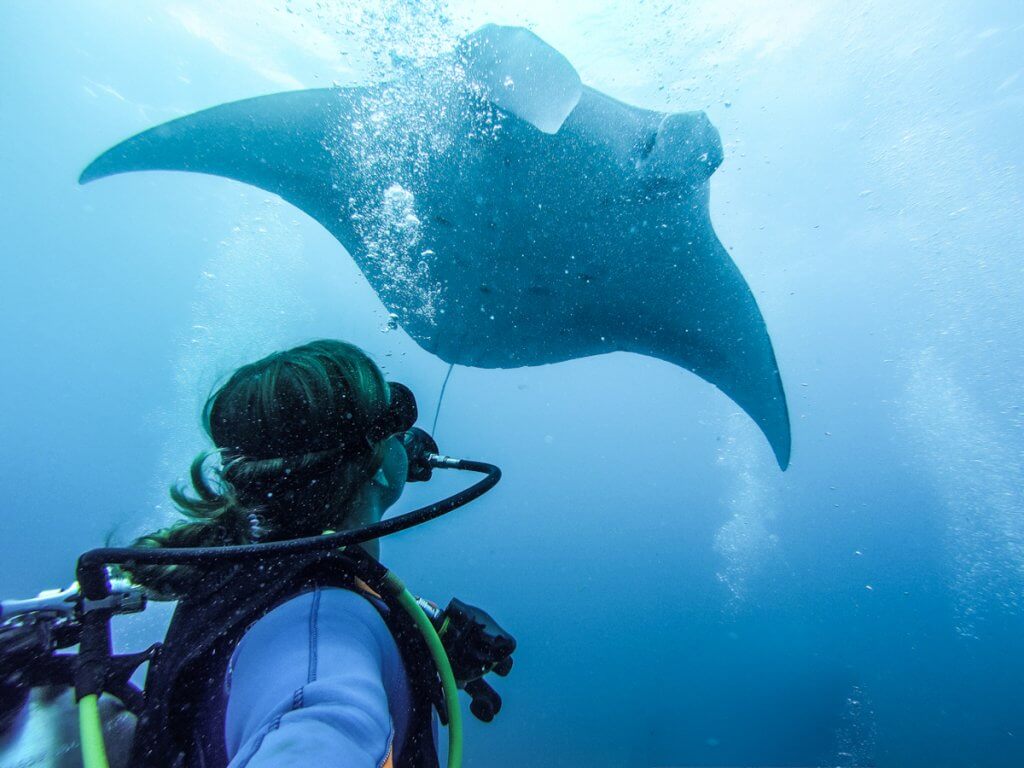
Diving is one of the standout experiences in the Gili Islands and a major reason to visit. Warm water, good visibility and many accessible dive sites are just a short boat ride away. Whether you are trying diving for the first time or adding Indo to your logbook, exploring the underwater world around Gili Air is easily one of the island’s highlights.
One fun dive costs around 650k IDR and includes all the equipment you will need. The price decreases with each additional dive purchased.
Most dive centres offer PADI Open Water courses that take three to four days to complete. So if you have been thinking about getting qualified, this would be an amazing (and affordable) place to do it!
Enjoy the sunset and sunrise
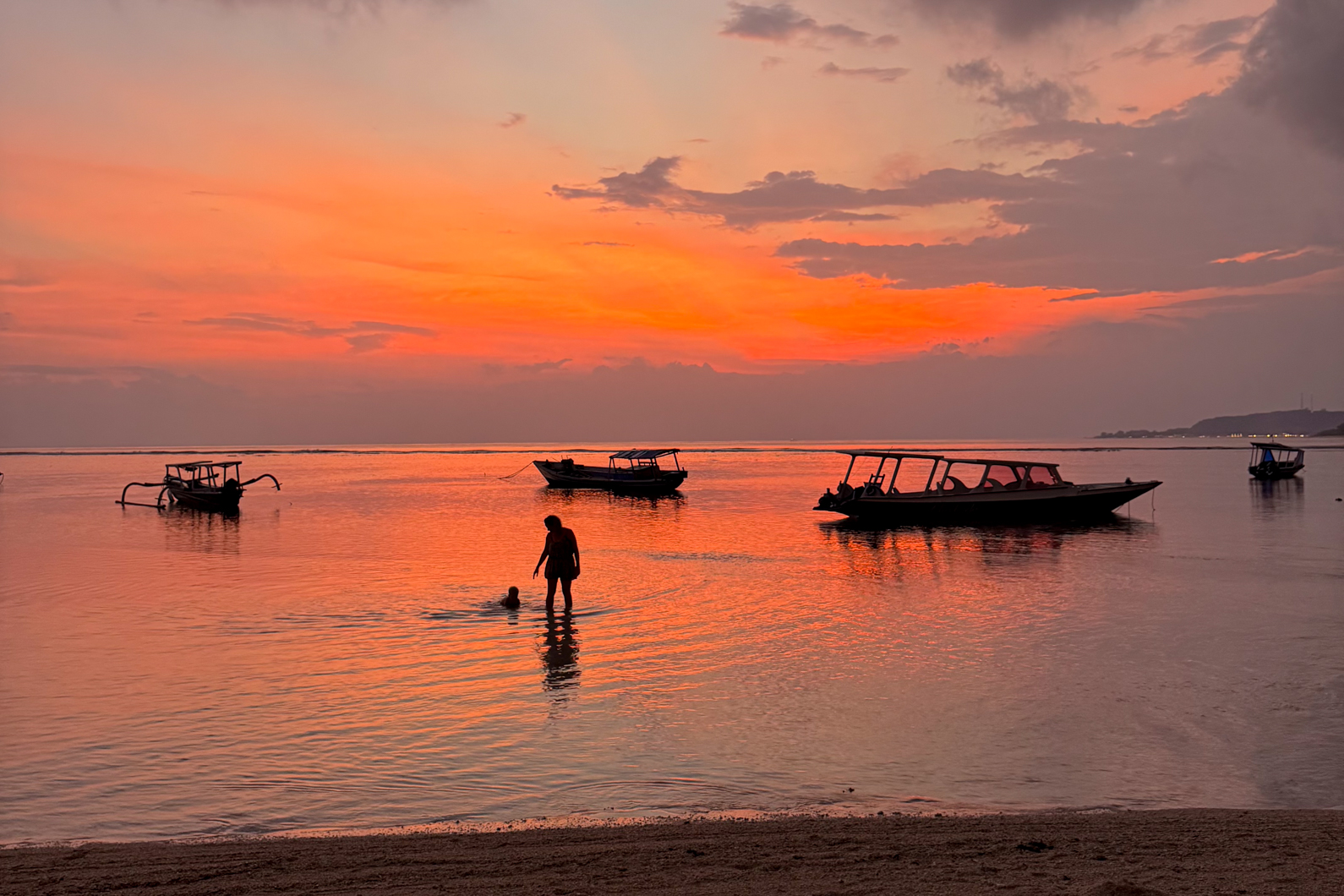
One of my many favourite things about this island is the fact that you can see the sunrise and sunset! I really enjoyed starting the day with a coffee from Sejiwa Coffee on the beach after watching the sun rise over the hills of mainland Lombok.
For sunset, the view from the beach out the front of Gili Lumbung bar is magical. This part of the island has so many beach bars lining the sea front to choose from, if a happy hour tipple takes your fancy.
Book a massage or spa treatment
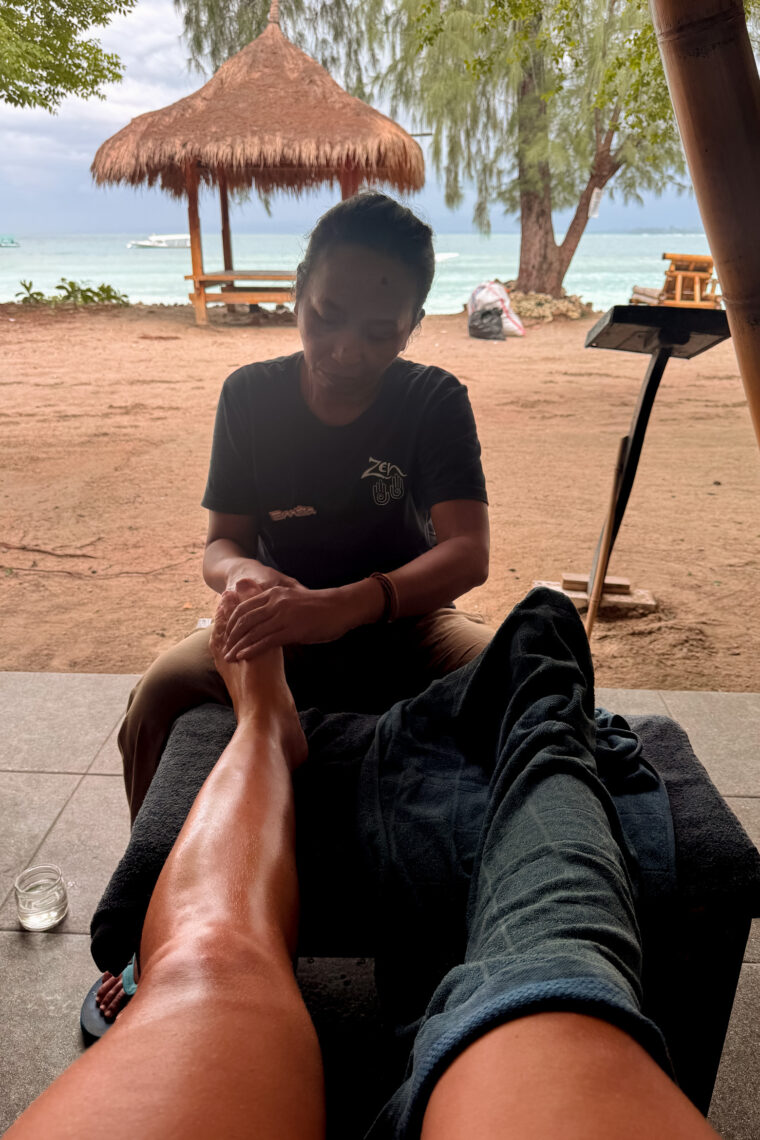
For peak island mode, add a massage to your itinerary. Zen Spa on the island’s east coast offers simple, affordable treatments with one major bonus….uninterrupted ocean views. A one-hour foot massage here can cost under £5, and while it may not be a luxury spa experience, the setting more than makes up for it.
It is relaxed, unpretentious and undeniably memorable. If you are looking for something more elevated, Slow Spa offers a calmer, more refined atmosphere. Set within beautiful bamboo architecture, it feels like a true tranquil sanctuary.
Learn to cook local in a cooking class
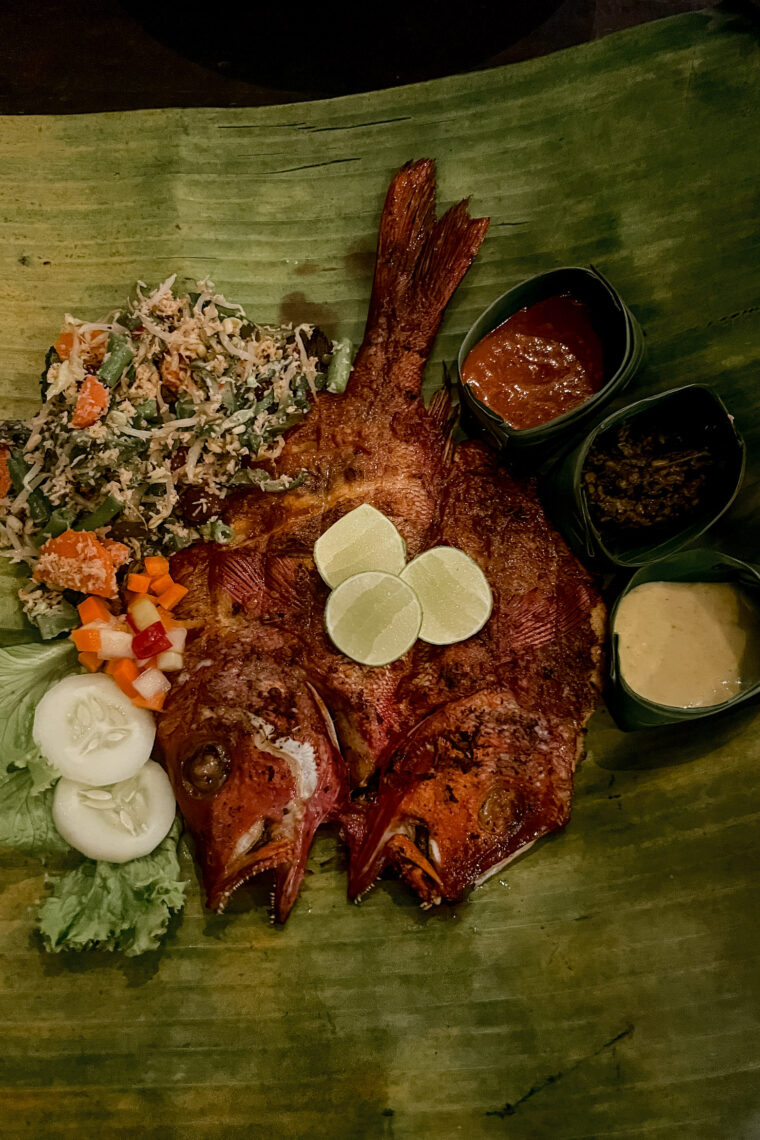
One of the most delicious ways to experience Gili Air is through a cooking class at Warung Sunny (Warung means local restaurant in Indonesian). In an open air kitchen, you’ll learn how traditional Indonesian dishes come together using fresh raw spices and locally sourced ingredients.
Whilst at Warung Sunny, do not miss the Jamu drink (a traditional Indonesian herbal tonic made with fresh roots and spices), and it’s the best recipe I had across all of Indonesia.

Run a loop of Gili Air
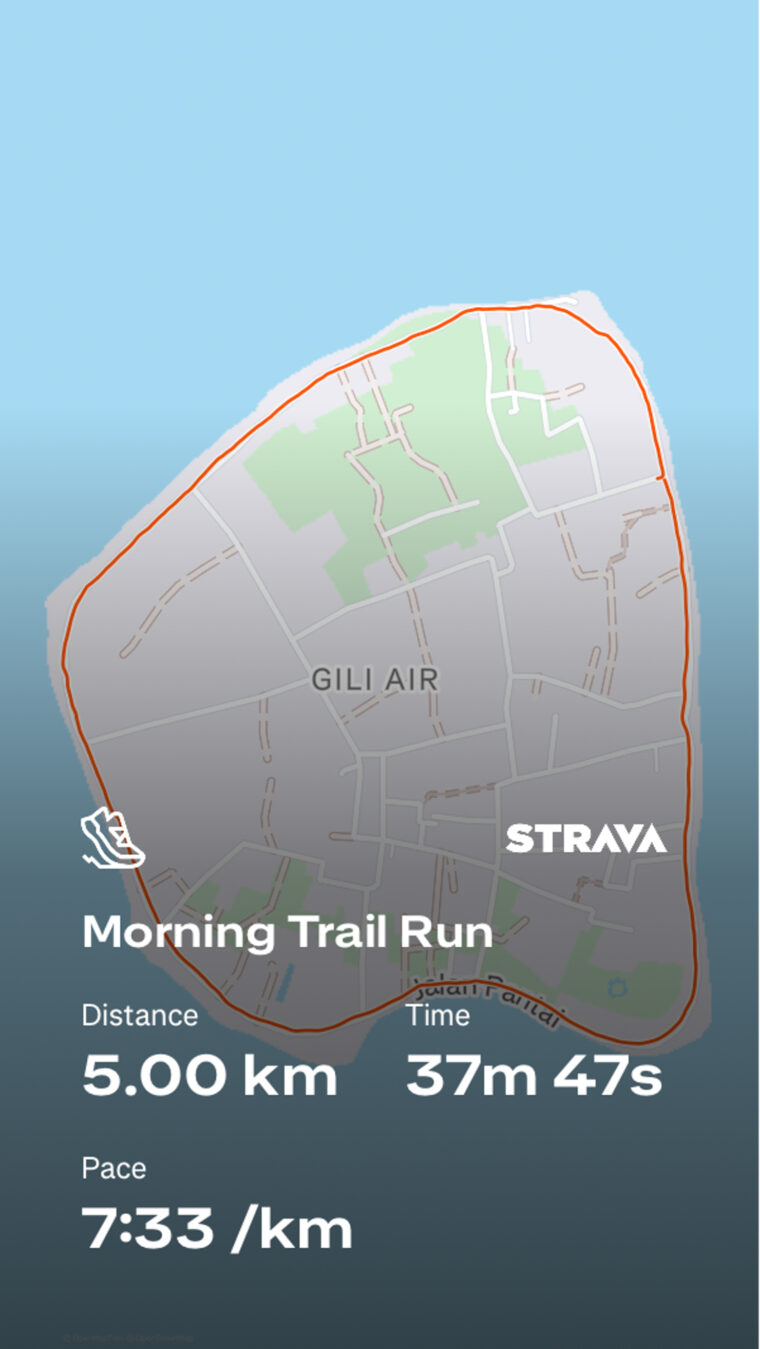
It might not be the first thing that comes to mind when planning an island escape, but hear me out. Gili Air has a sandy track that runs around its entire 5km (based on my Strava) perimeter, making it the perfect loop.
It is flat, scenic and surprisingly enjoyable. Running the island is a great way to get your bearings, pass beach bars and restaurants you might not otherwise notice, and see every stretch of coastline in one go. And the best part is you can cool off with a swim the moment you finish.
Play Padel
Yes, really, there is a padel court on Gili Air. On an island this small it’s wildly unexpected. If you fancy breaking up the beach time with something active, book an hour and play in the tropical heat. It is a fun way to meet other travellers and expend some energy.
Best places to eat & drink on Gili Air
There are SO many great places to eat on the island, and even if you had an entire month on the island, you would struggle to get around them. My personal favourites, that I highly recommend checking out, are:
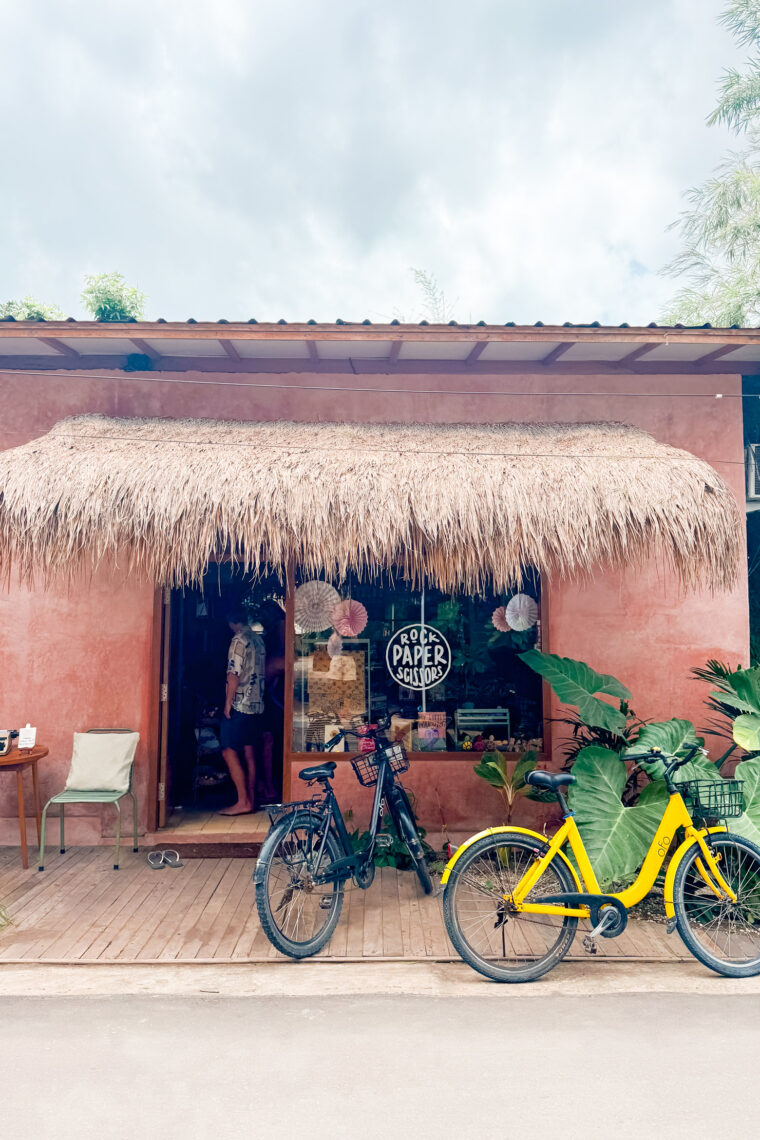
Pituq: plant-based restaurants, known for their creative, beautifully presented dishes and focus on fresh, locally sourced ingredients. Set in a gorgeous courtyard with a lovely on-site shop selling local brands
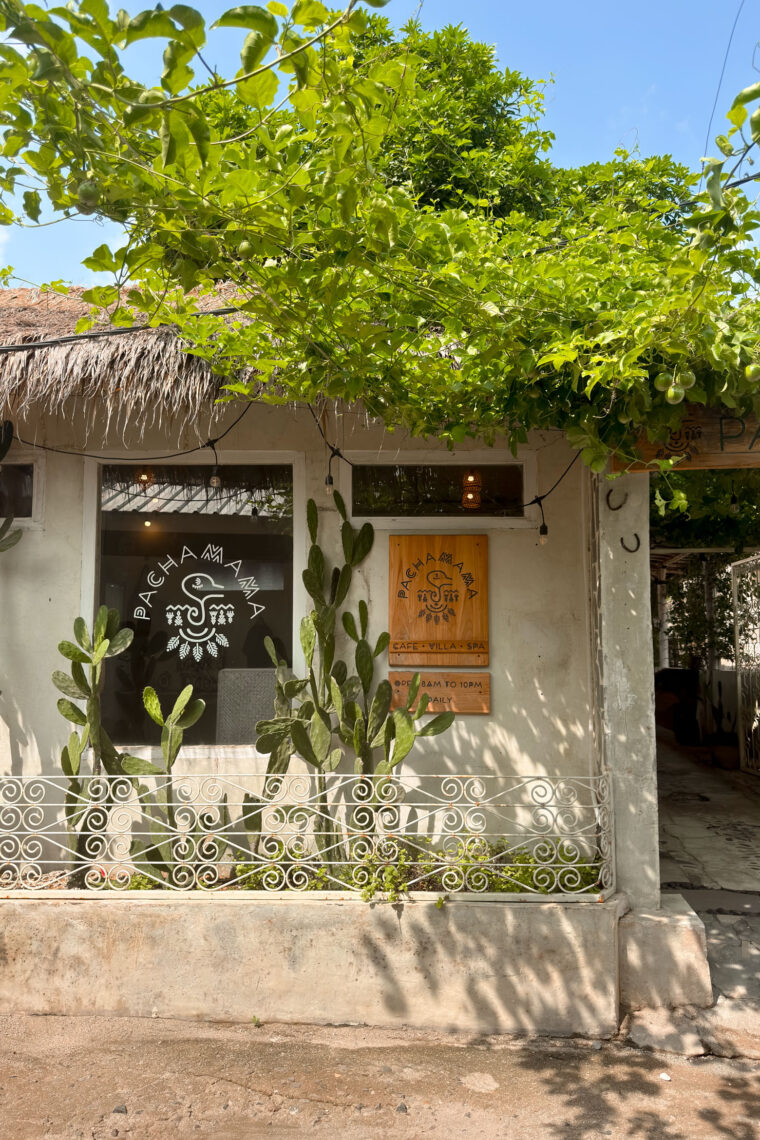
Pachamama: A jungle vibe, health-focused plant-forward cafe, serving colourful smoothie bowls, fresh salads and nourishing plates. The vegan burger was really delicious!
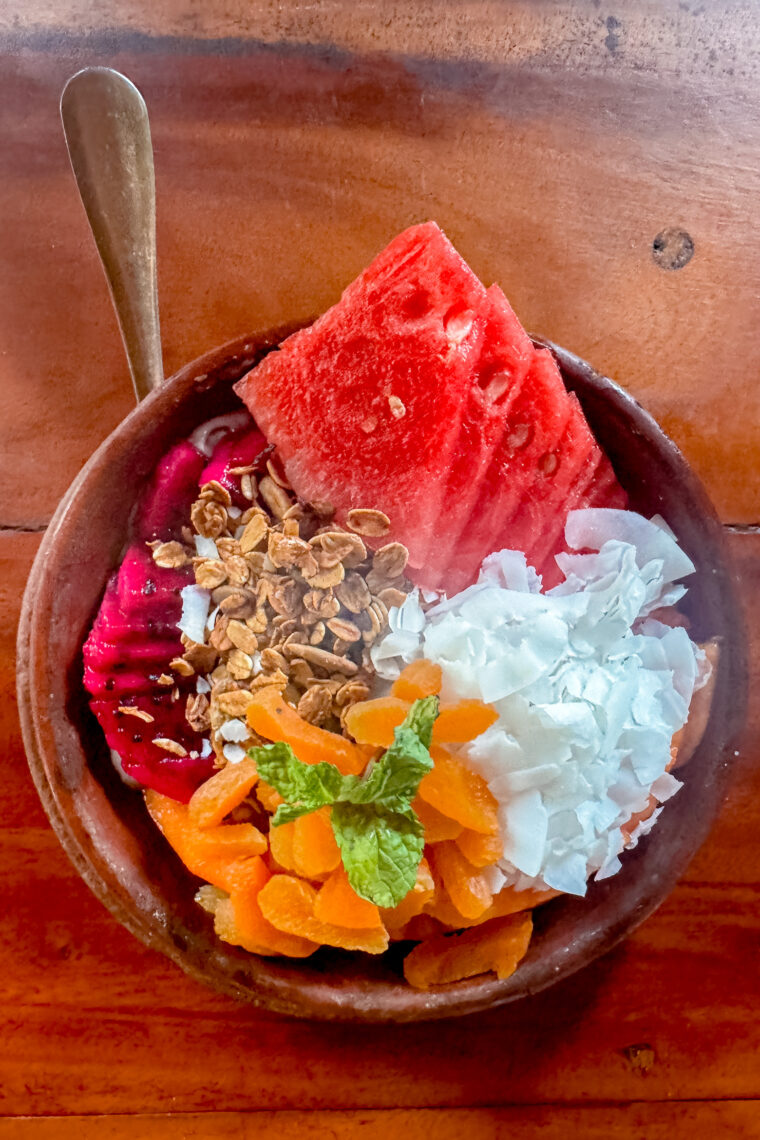
Fire and Flower cafe: The perfect post yoga cafe for a smoothie bowl you can fully customise, with your choice of toppings and flavours. The portions are generous, filling and nourishing. Also, the staff here are so welcoming and friendly!
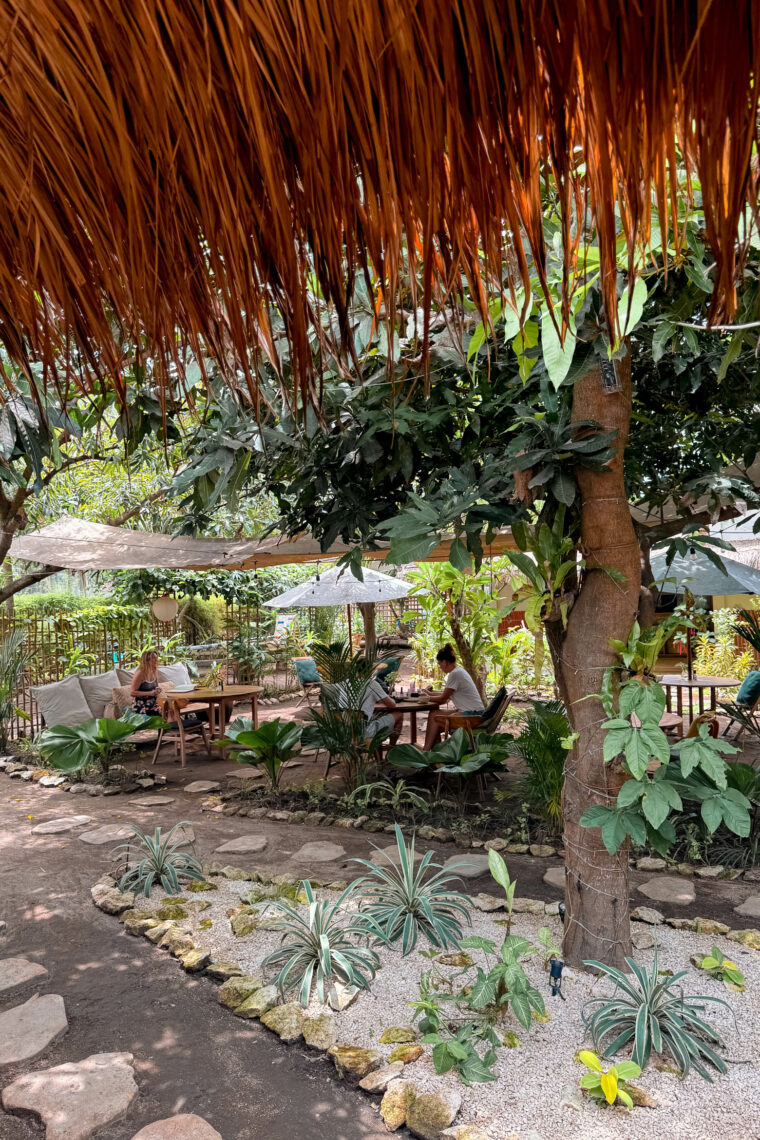
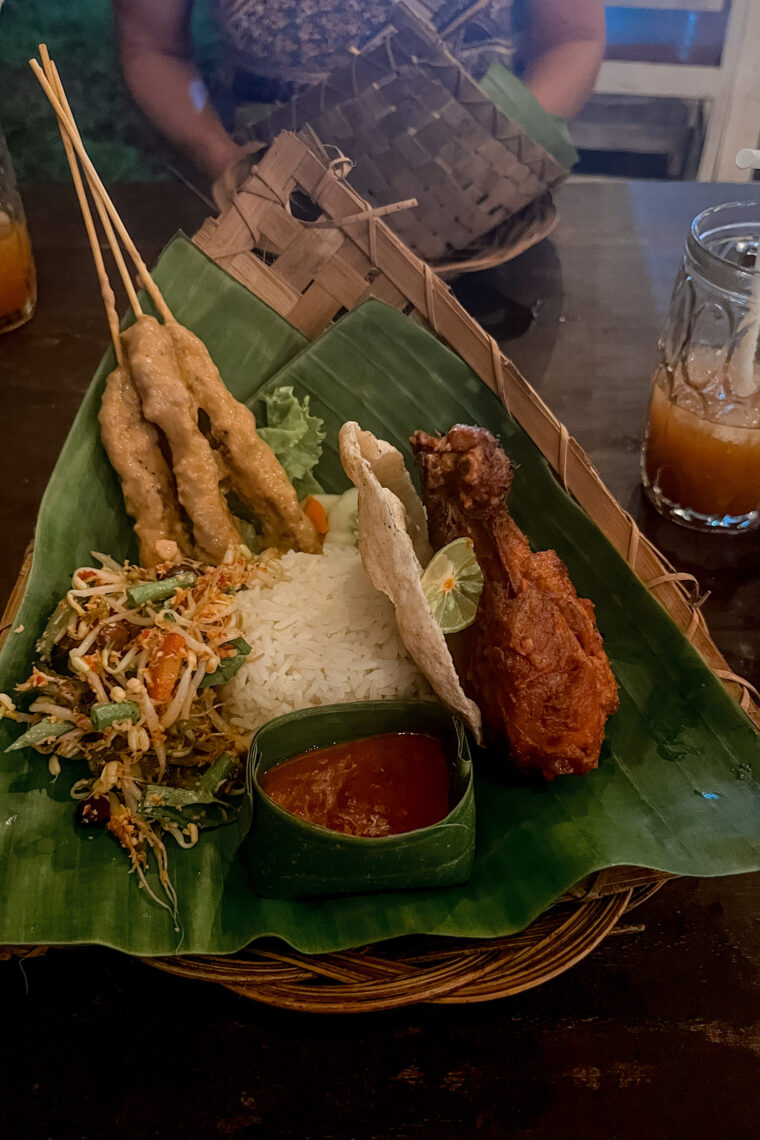
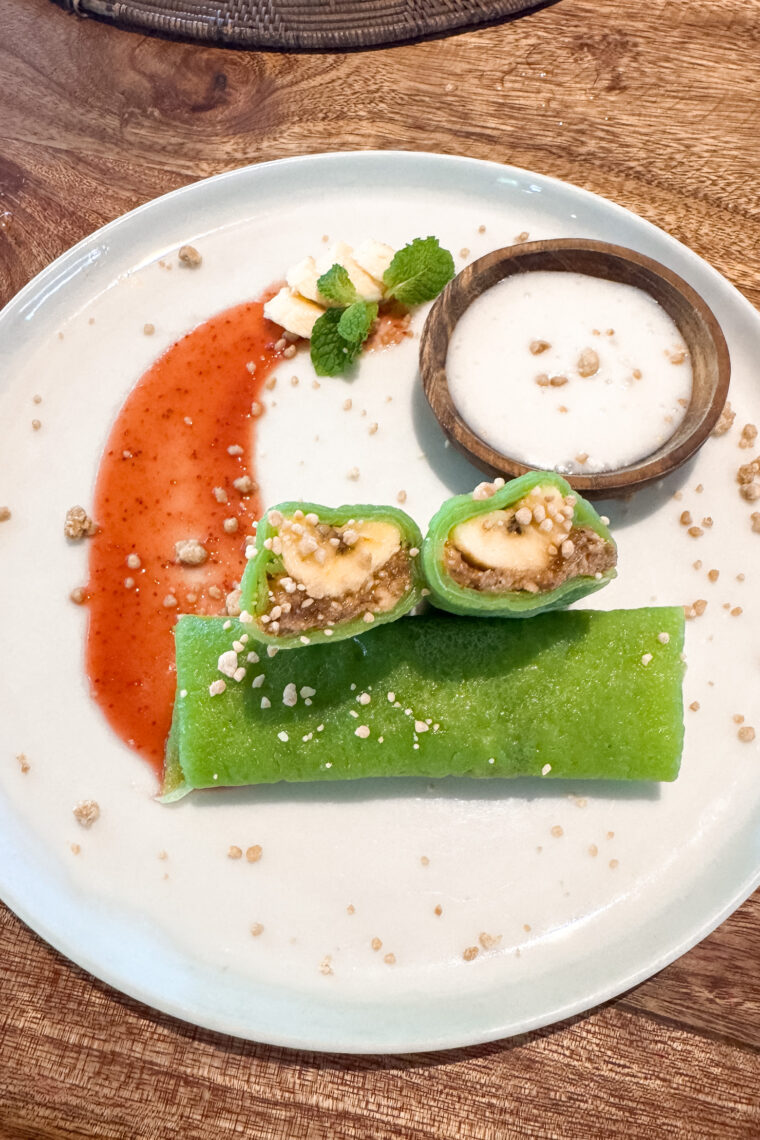
Warung Sunny: A must-visit for authentic Indonesian food made with fresh, locally sourced ingredients. Just like in their cooking classes, the focus is on bold, traditional flavours. I enjoyed trying several different local dishes. The team are incredibly accommodating with dietary requirements, and most dishes can be made gluten-free (and suitable for coeliacs).
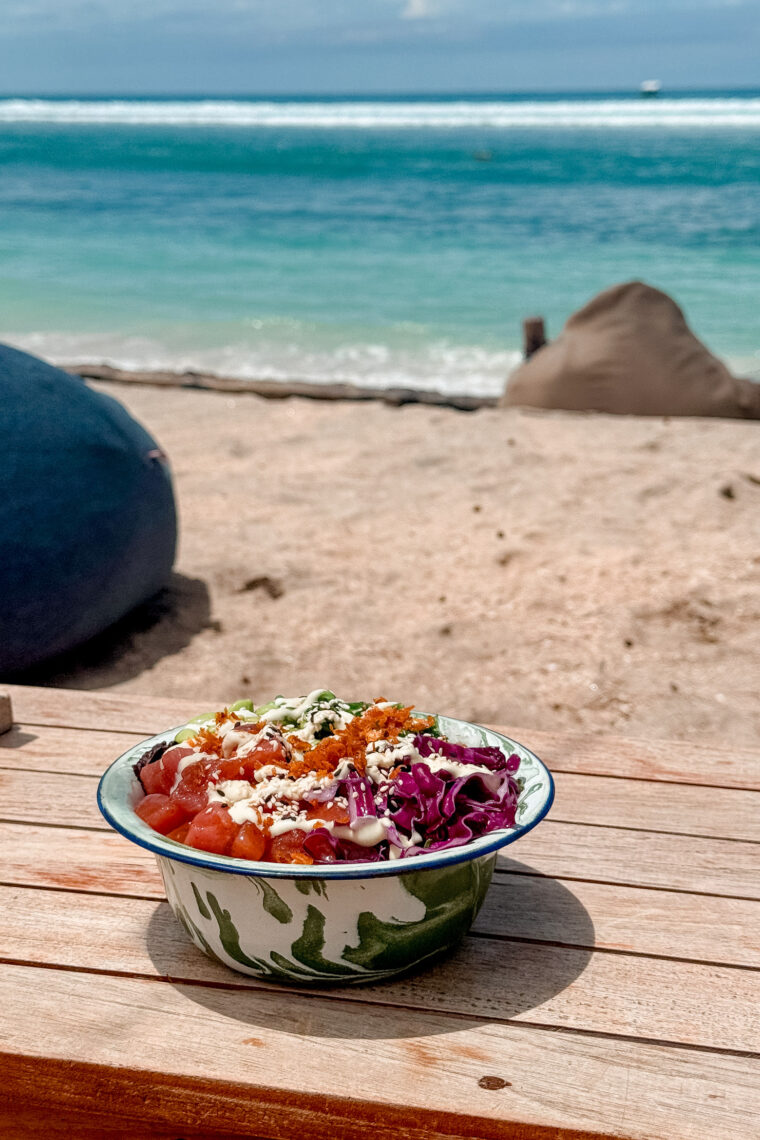
Poke Gili Air: Fresh, customisable poke bowls packed with fresh, vibrant ingredients. It is a simple, reliable option for a quick, healthy meal and right on the beach. You can not beat the location.
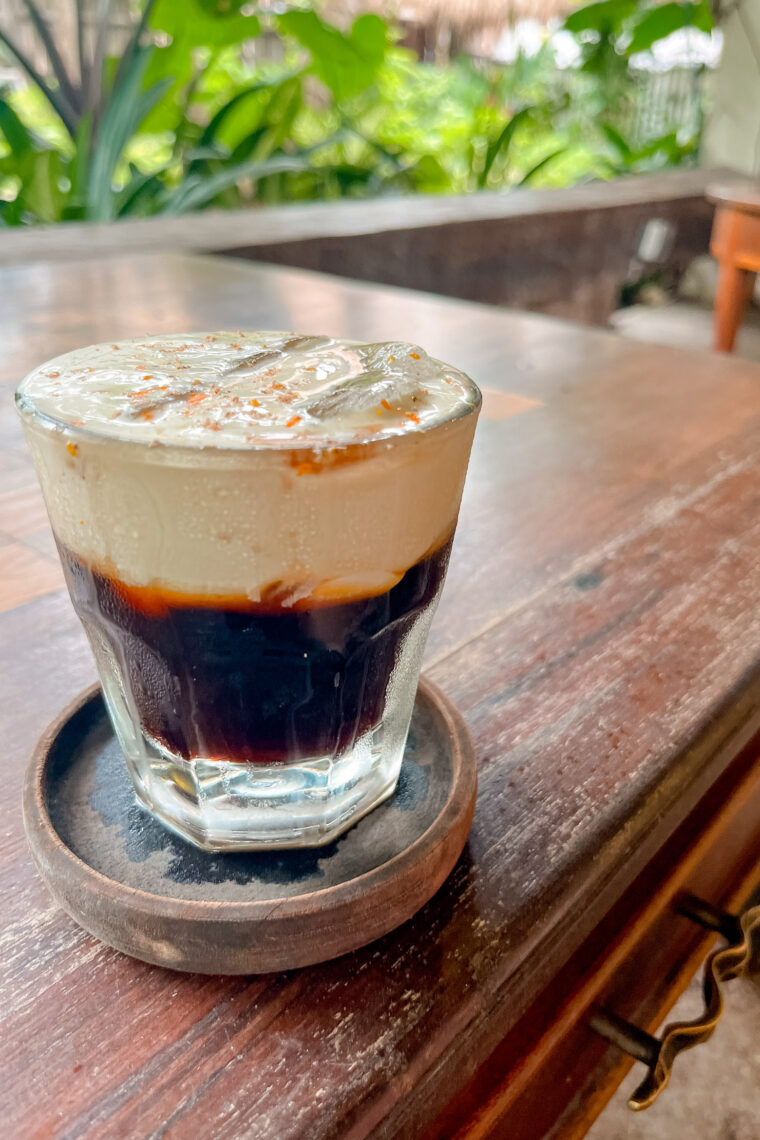
Gili Coffee roasters: This is the place for the best coffee on the island. Located in the centre of Gili Air, it is easy to stop by during your morning cycle. The team roast fresh beans daily, so you are guaranteed a perfect cup, often with a choice of different beans and tasting notes. Do not leave without checking the counter for their freshly baked cheesecakes; they are very hard to resist.
Gili Air, for me, was the perfect short stay sandwiched between a trip to Bali and Lombok. A fantastic reset. It’s amazing how quickly you get used to no traffic, no scooter noises or horns, and I really didn’t want to leave. Slower mornings, a more natural rhythm and nowhere I needed to be.
If you are already planning time in Bali or Lombok, I really do think it is worth carving out a few nights here. Three to five nights is the right amount of time, enough to settle into the island’s rhythm rather than just pass through it. That said, if you are tight on time and island hopping, you can still see the whole island in a day.
It suits travellers who want balance. Not the party scene of Gili T, not total seclusion in Gili Meno, but somewhere in between. Treat yourself to Gili Air, and you’ll not be disappointed.
Sami Norman
You can follow Sami’s adventures on Instagram here.