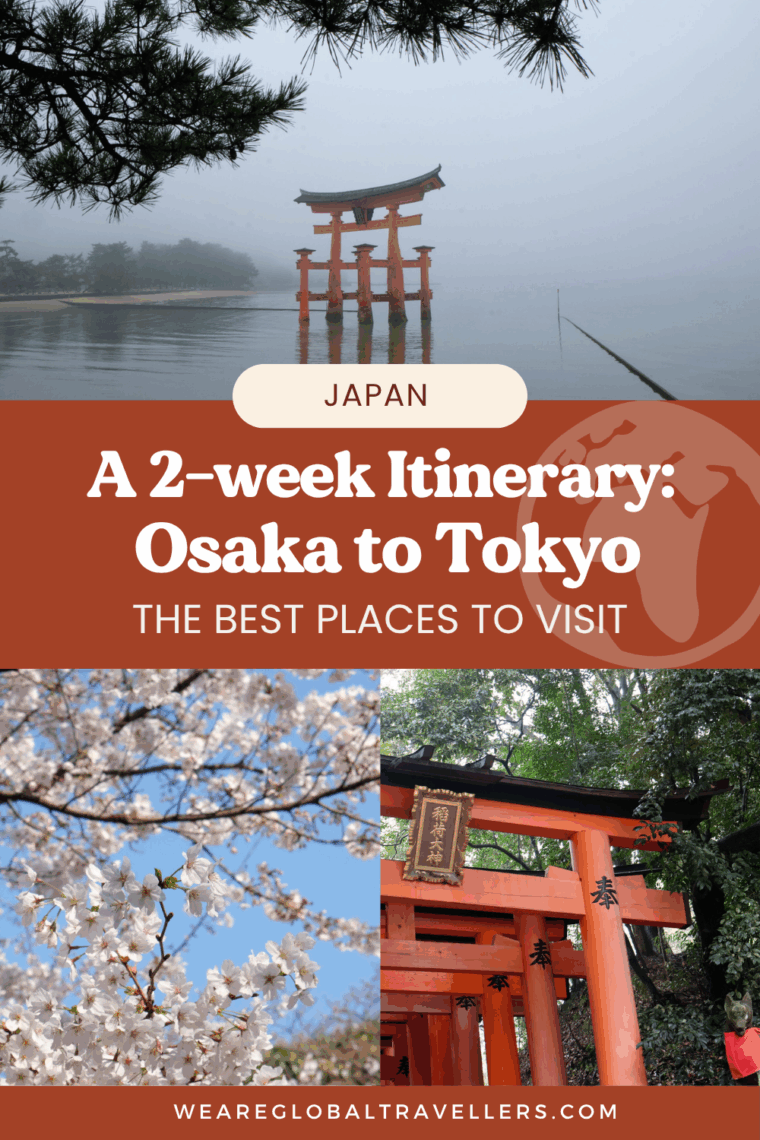
A 2-week Japan Itinerary: Osaka to Tokyo
Looking to get fully immersed in Japan? Then you have found the right guide, one that takes you on a two-week itinerary in Japan from Osaka to Tokyo. Stopping in cities, provinces and Islands to give you a mix of cultural activities and experiences along the way. From ancient culture to the most delicious food (IMO), this Japan itinerary guide has all the best bits and everything you need to get planning your two-week trip.
Japan is a vast, intrinsically diverse country, from futuristic cities to rural towns, from ancient culture to tropical isles. Shaped by four main islands – Honshu, Hokkaido, Kyushu, and Shikoku and 12 major cities.
Japan’s unique culture dates back 14,000 years, with temples and shrines dotted along streets, tucked away in alleyways, and in city parks. This country is a unique place filled with deep cultural respect for tradition, a world-renowned food-culture hub, and one that will leave you spellbound.
This country will leave a mark on you in ways that are hard to describe. The sights and sounds of city life, to the smell of cedar wood lofting through the air in the streets of Kyoto. Either way, from ancient culture to delicious food, this Japan itinerary guide has all the best bits and everything you need to get planning your two-week trip.
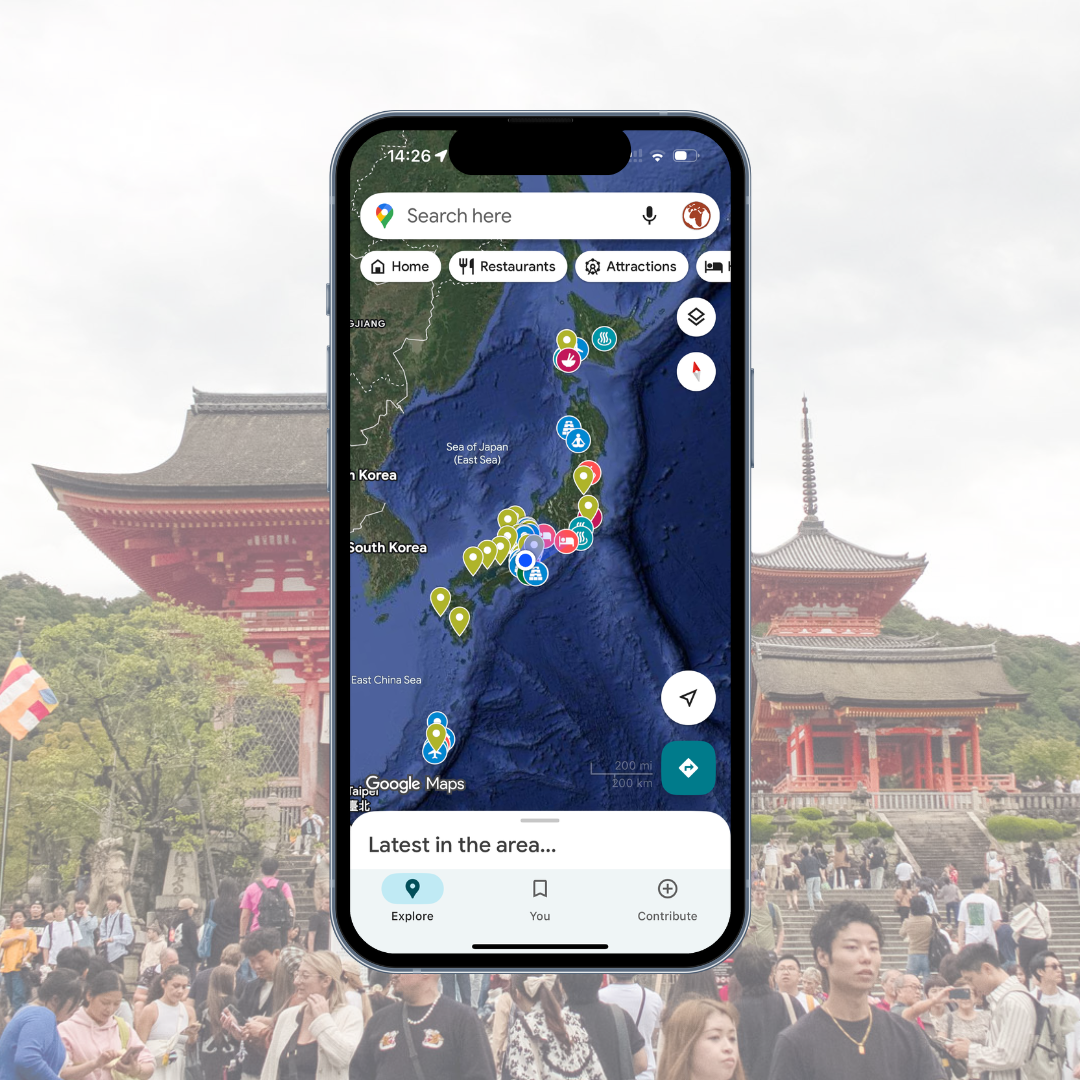
Japan Google Map
Get lifetime access to my endless hours of research and time spent on the ground finding the best places to eat, drink, relax and explore in Japan. Simply open the Google Map on your device and all my recommendations are at the touch of your fingertips.
A 2-week Japan Itinerary: Osaka to Tokyo
Day 1-3: The itinerary begins in Osaka
Why start in Osaka? You don’t have to start in Osaka, but from experience, I’ve found it to be a great first city to introduce you to Japan without the chaos of taking on cities like Tokyo right away. It’s a slower pace, and the locals are warm and welcoming to tourists. It’s the perfect starting balance of city and calm, with pleasant weather most of the year.
Logistically speaking, it makes for the perfect hub before heading towards Tokyo with varied stops along the way. With plentiful accommodation options such as Drop Inn Osaka Hostel, and a wide variety of traditional and western-style accommodations. There really is no shortage; depending upon your own personal needs, you can find something to suit both taste and budget in Japan with ease.
Fun travel tip:
First things first, before you begin to explore temples and shrines, I highly recommend you head to your nearest temple and collect the temple’s siduals book.
The books are usually A5, double-sided concertina books for collecting unique calligraphies from the temples you visit. Each temple has a different sidual and will ask for a small token payment. These make for beautiful souvenirs at the end of the trip.
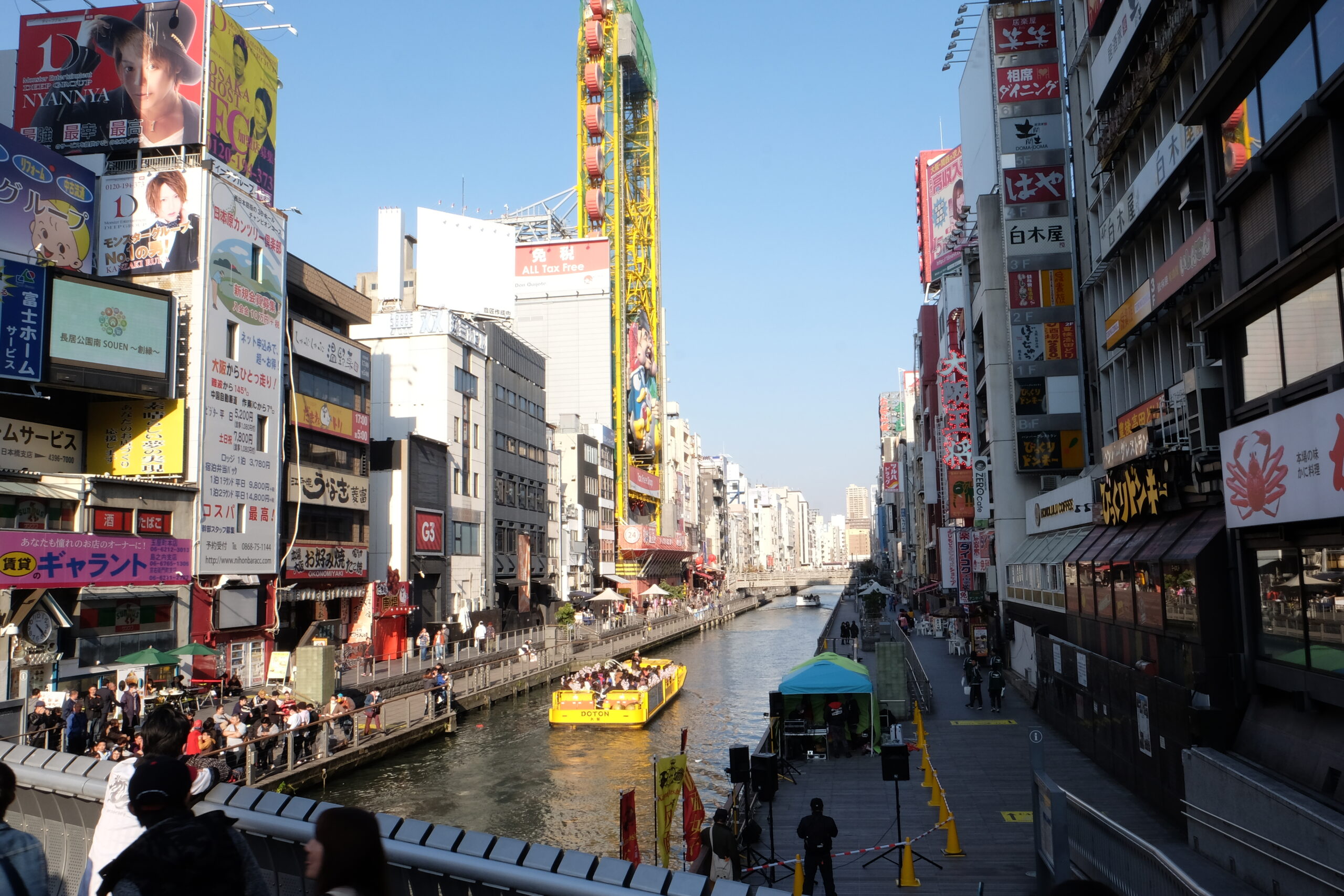
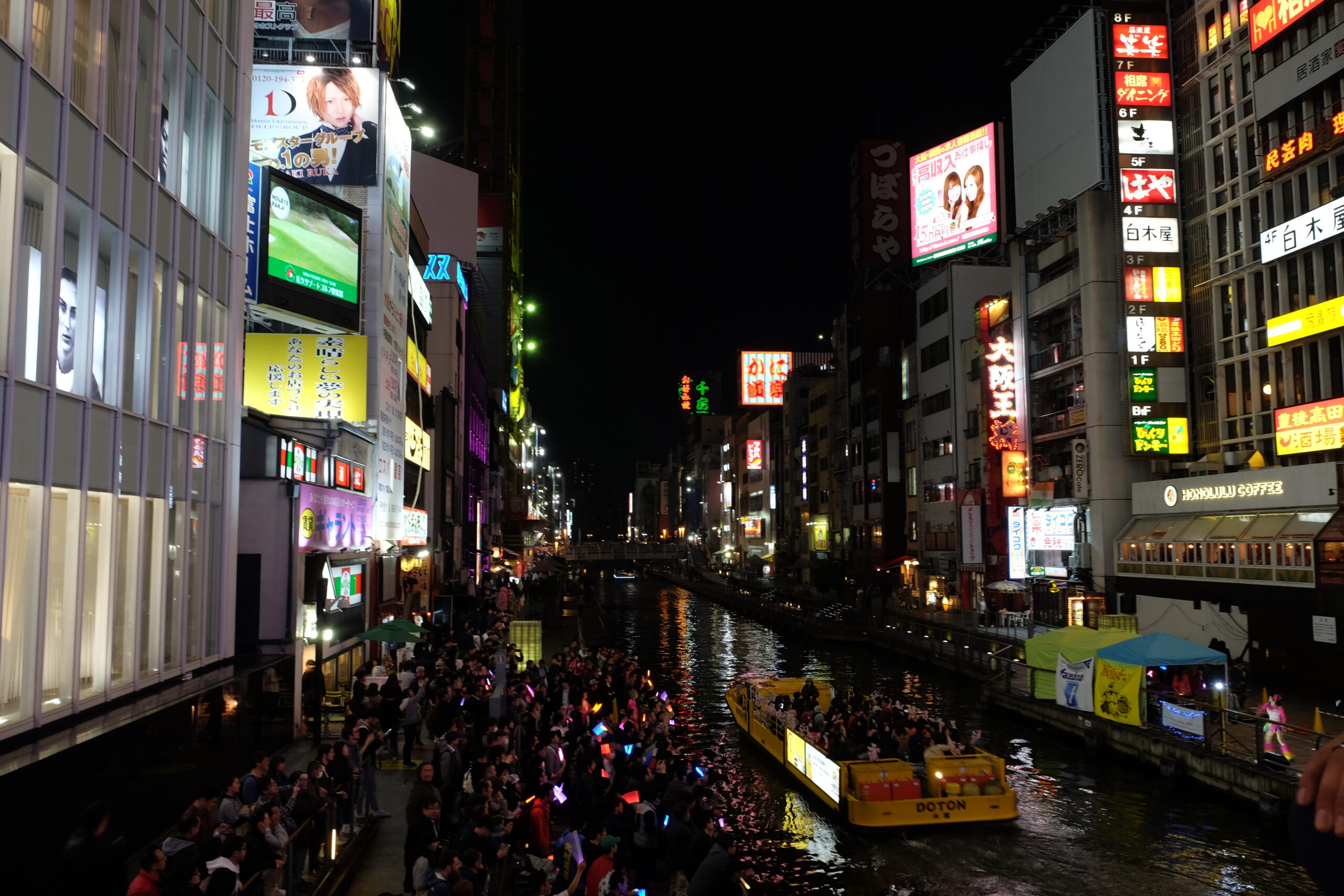
Exploring one of the best nightlife districts
Osaka, best known as the nation’s kitchen, is the perfect place to start the adventure, especially if you are led by the stomach on your travels. Osaka is locally celebrated for its street food, and Dotonbori is filled with gastronomic delights such as Takoyaki (octopus balls), Okonomiyaki (savoury pancake), Kushikatsu (meat skewers), and Taiyaki (warm, waffle-shaped fish, usually filled with custard or red bean paste). There are hundreds of street vendors, high-end restaurants, and more budget-friendly food options. If you choose to stay in the Umeda area, you will have easy transport links to Dotonbori, with most trains taking roughly 25 minutes.
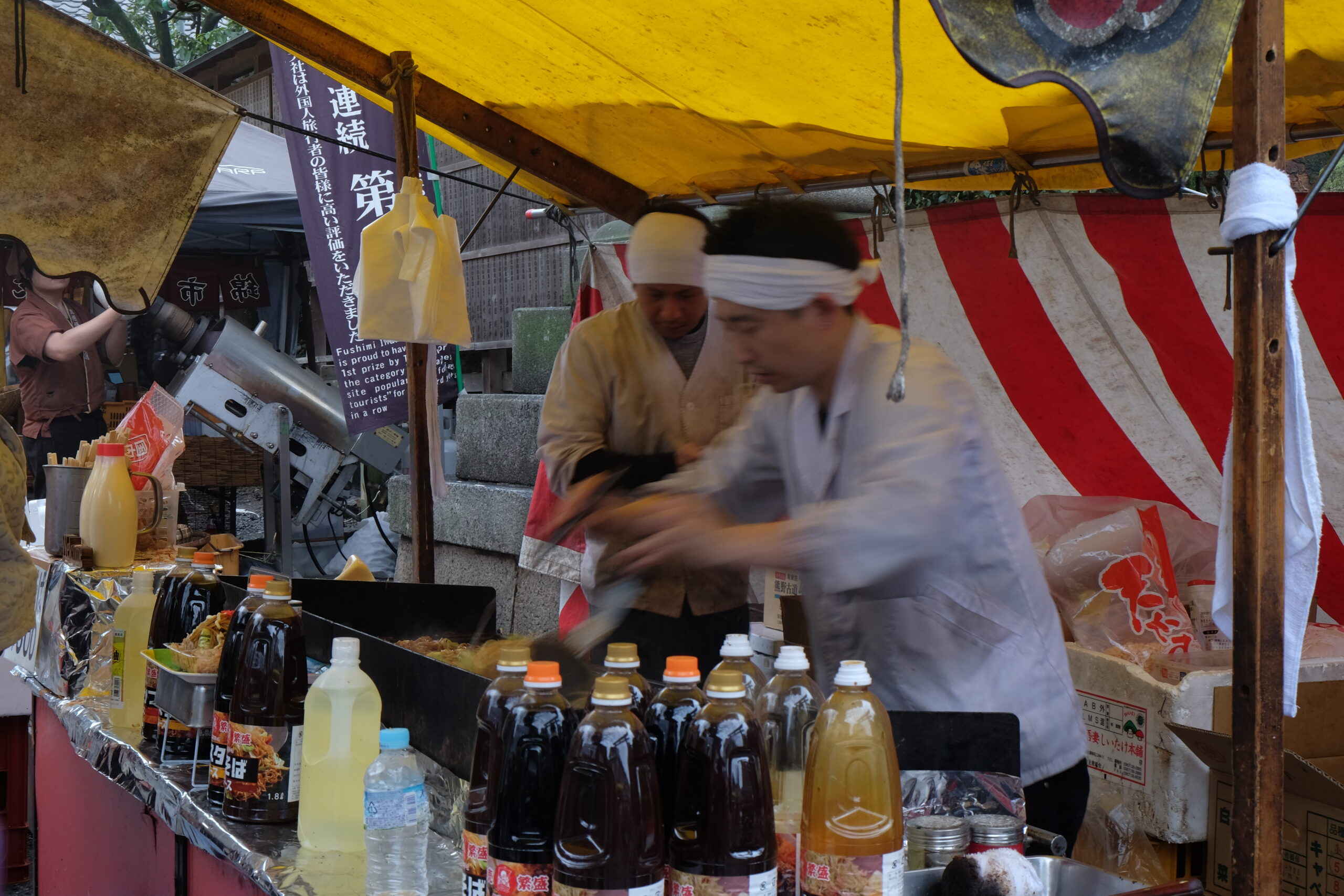
River Cruise Dotonbori River
If you are looking for a fun activity after you feast through the streets, then jump onto a river cruise on the Dotonbori River. It’s a 20-minute cruise along the river with a guide and commentary. You won’t miss the little yellow boats going up and down the river from morning to night.
There are a few ferry options to choose from, including the Naniwa Exploration Cruise, which departs from Universal Cityport at 9:45 am and offers round-the-clock trips. Tugboat Taisho that departs from Riverside Station, look for the waterway Osaka sign and Tombori River Cruise that departs further up on the north bank opposite the giant Ferris Wheel.
I highly recommend going at night, when the neon lights reflect over the water. It’s a great way to experience Osaka’s energy and nightlife without getting caught up in the crowds. It’s a magical experience, giving you an entirely different perspective on the city and the scale of Dotonbori’s lantern-lined streets. Made better while you snack on some of the street food you will without a doubt pick up before you jump on board. The journey costs around £10.00 (2000 yen) for adults.
Umeda Viewing Deck
If you are looking for another great adventure that gives you a sense of scale across the city, while marvelling at the fascinating modern architecture, then head to The Umeda Viewing Deck. This beautiful reflective building stands almost alone and catches the changing colours of the city, making it blend into the landscape.
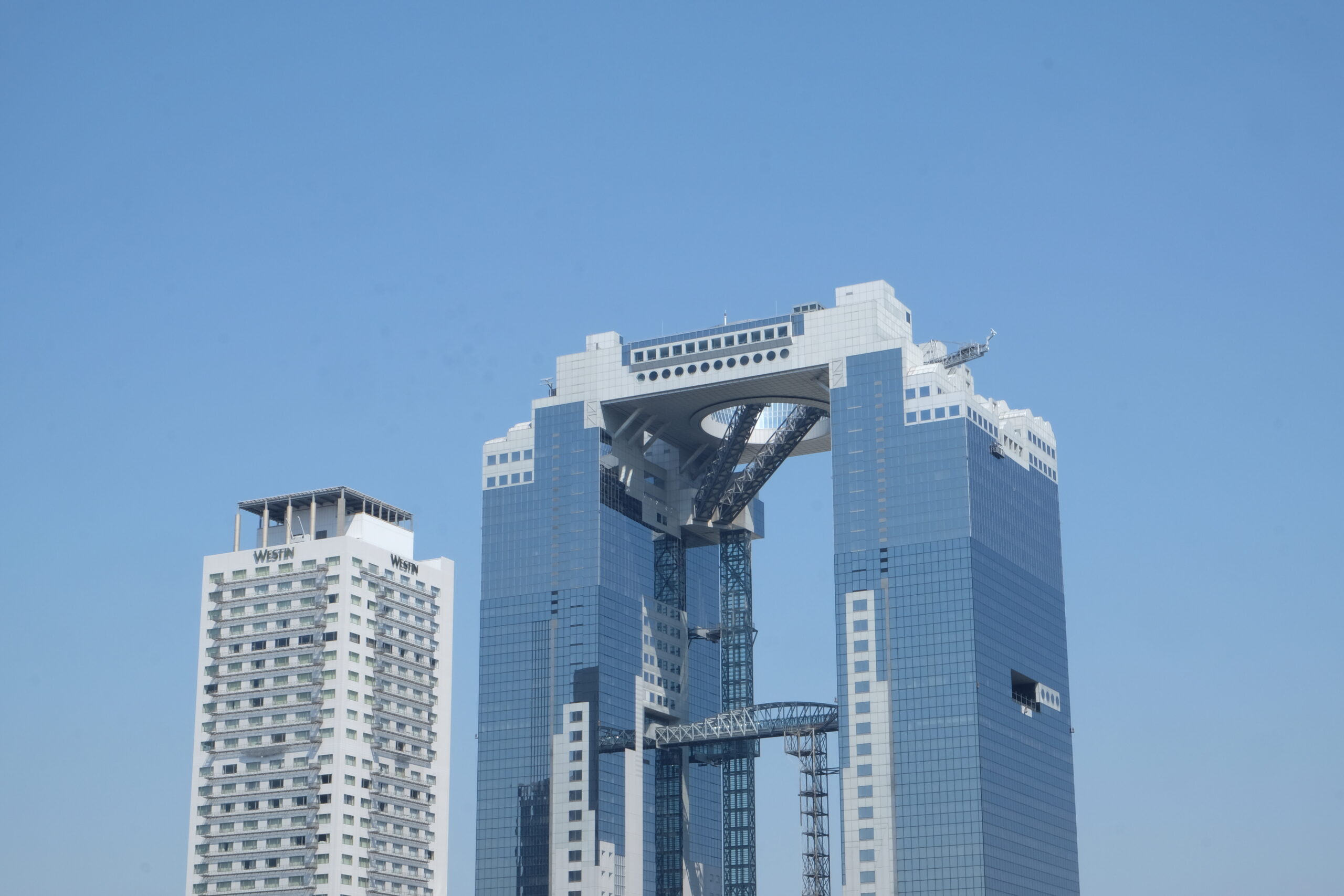
Located in the Umeda district, the building is hard to miss, with two towers connected by a bridge walkway. The middle escalator and the two that cut across the centre. The East and West Towers are home to the Kuchu Tower, which sits on the 39th and 40th floors and features a 360-degree open-air rooftop viewing deck. The viewing deck spans two levels of the circular centre, with views across the city, and is open from 9:30 am to 10:30 pm, where you can watch the city round the clock. Naturally, coming back later in the day is magic, especially if you catch an Osaka sunset.
Standard admission is £10.00 (2,000 yen), and access from the Umeda Station is about a 15-minute train journey. The building itself is hard to miss and only a short walk from the station.
Osaka Castle
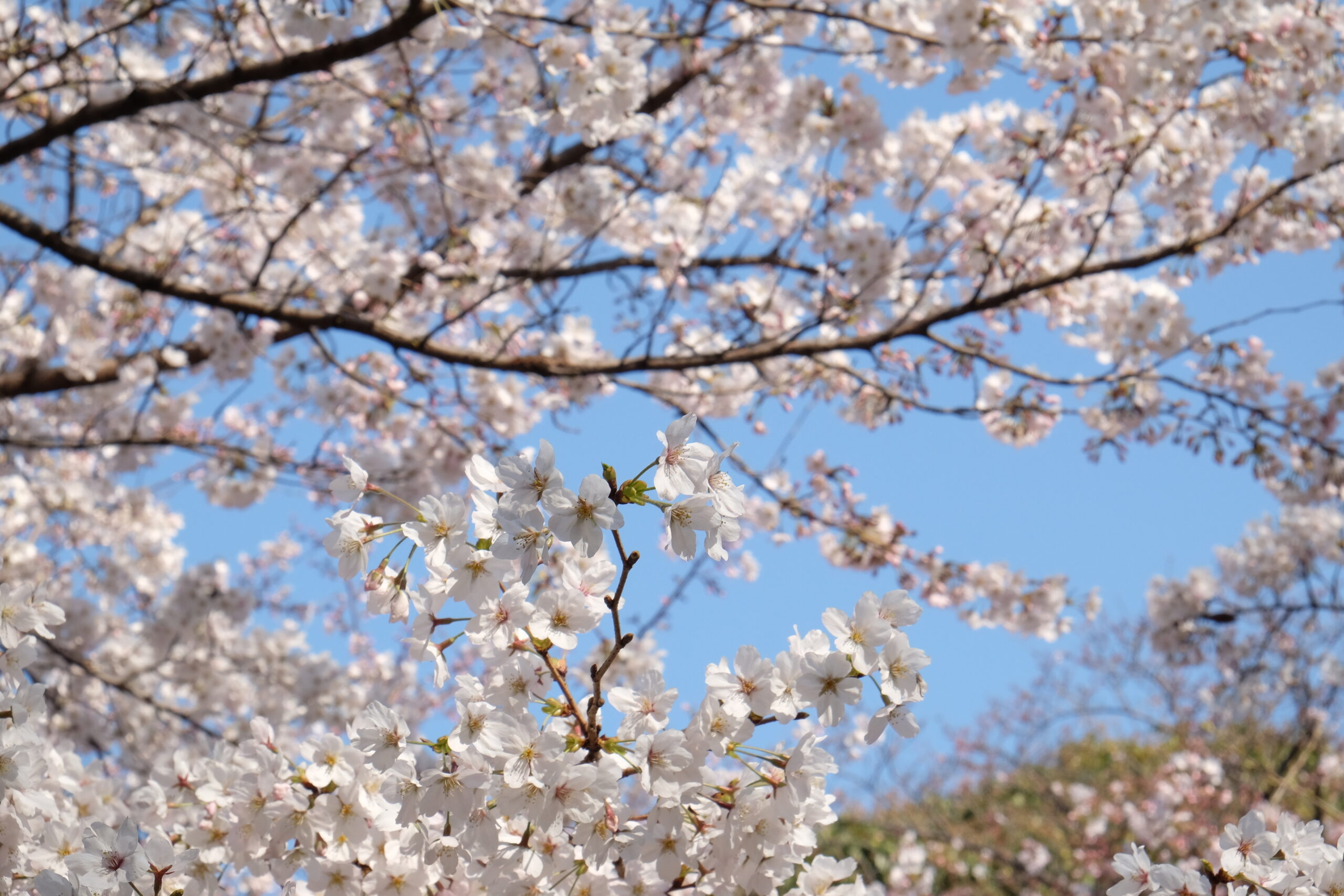
Looking for your first slice of history? A great place to stop off to learn more about Japanese culture and history is Osaka Castle. The castle sits within its own garden that comes alive during cherry blossom season. The beautiful green and gold peaks of the castle feel ethereal, set against the blue sky of Osaka. The castle dates back to the 1600’s and was an integral part of the rise and fall of the shogun era. A time when the city would have been drastically different to the modern Osaka we see today.
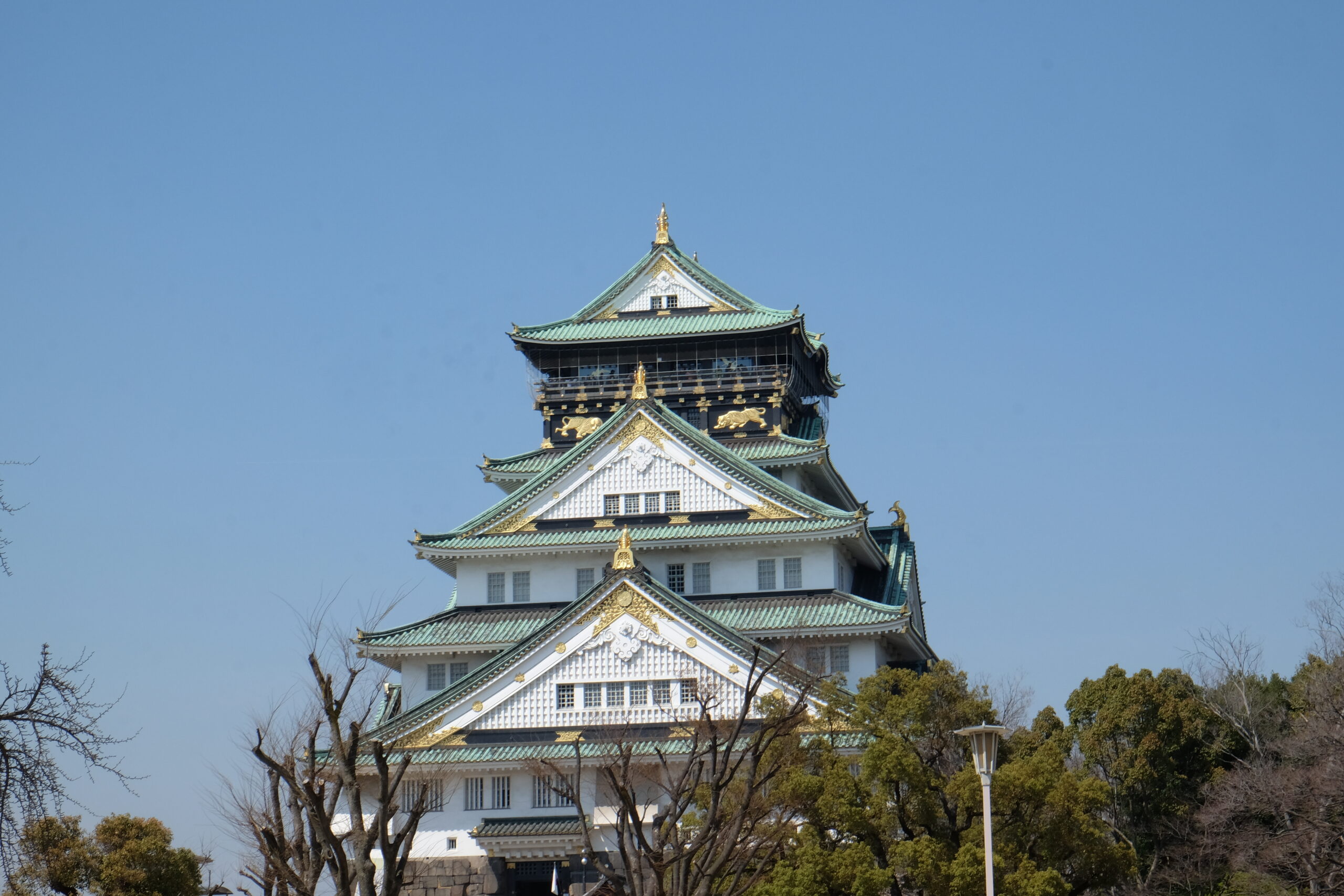
The castle is made up of the high stone walls that surround the Main Keep, with moats separating Osaka Park from the rest of the city; the castle almost sits on its own island. The Observation Deck provides 360-degree panoramic views across Osaka. Floors 1-3 house the museum, which hosts samurai armour and weaponry, and a richly detailed history of the castle and its placement within the city.
The castle gets super busy, especially during peak seasons, such as cherry blossom season, which is the most celebrated festival in Japan. You can buy your tickets before you arrive, and I highly recommend you pre-purchase to avoid the lines if you are here in the spring.
Entrance to the castle is £5.50 (1500 yen), and the Nishinomaru Garden has a separate entry fee to the castle of £2.00 (350 yen). There are plenty of other garden options if you decide you don’t want to pay the separate fee for Osaka Castle gardens.
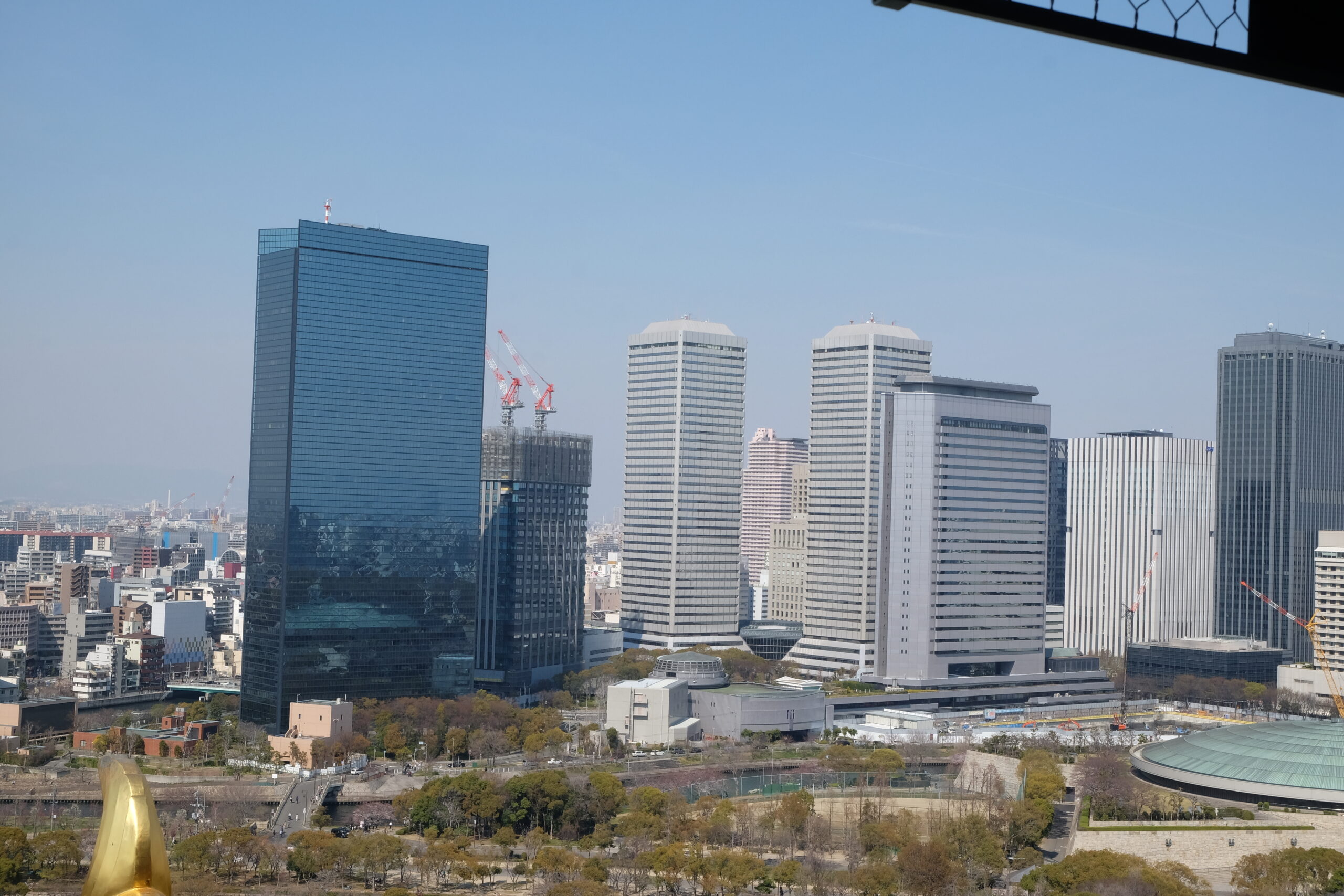
Getting there from the central station, such as Umeda, is about a 20-minute train journey, with the castle entrance only being a 7-minute walk from the station. It’s a nice place to start with, especially if it’s your first time in Japan and navigating the city’s web of train lines.
Osaka Tenmangu Shrine
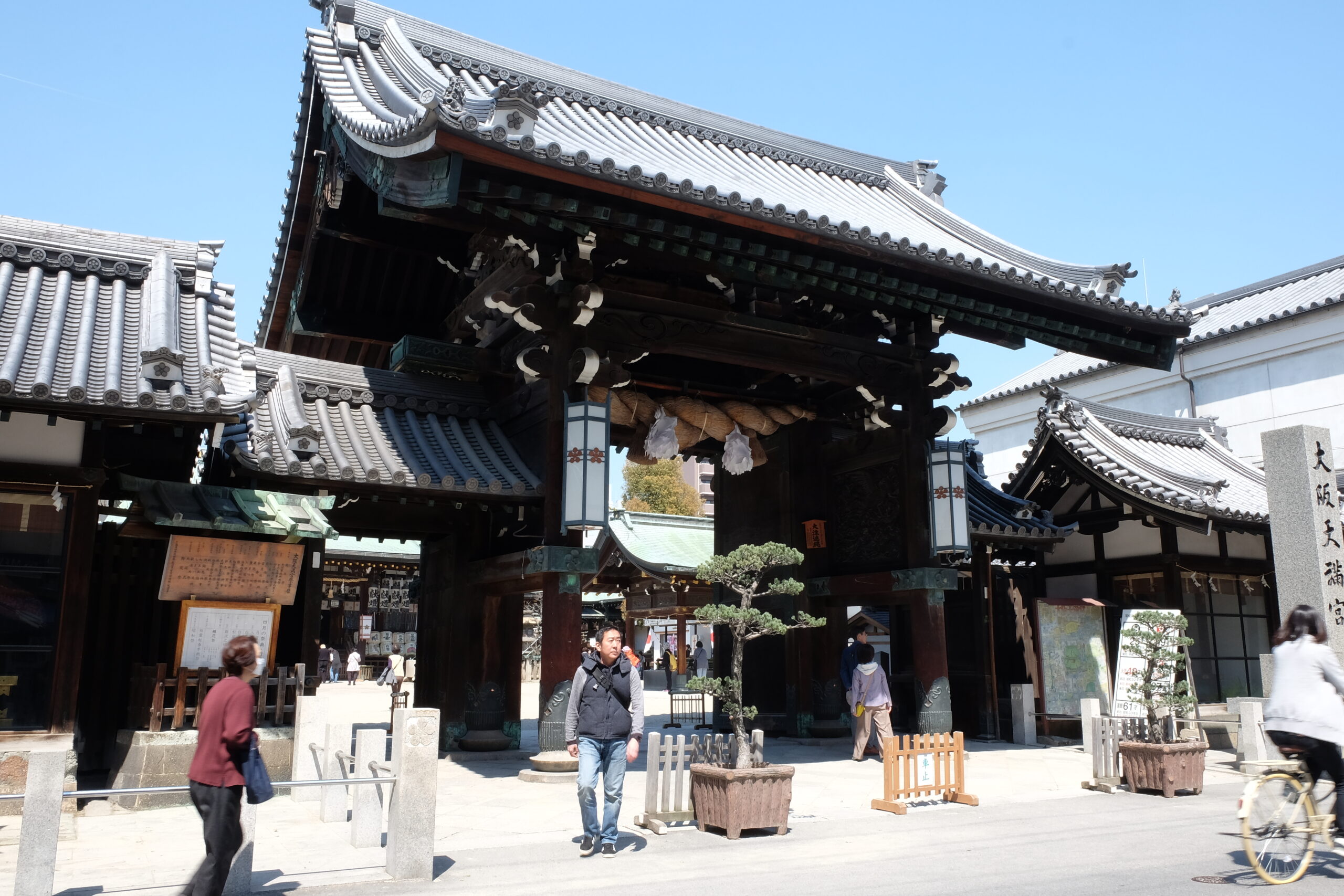
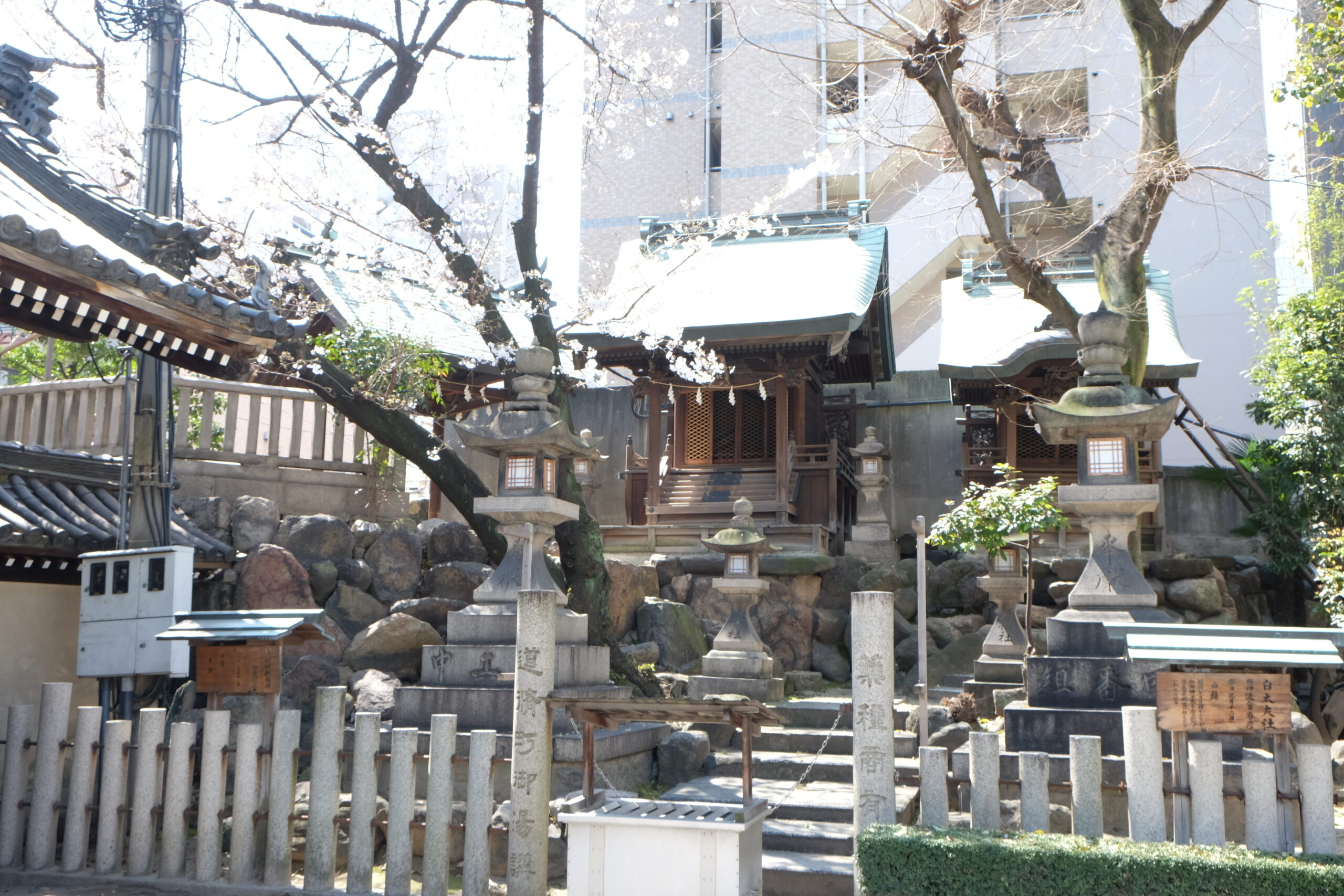
The Osaka Tenmanu Shrine is the perfect place to visit for your first shrine in Japan, widely considered one of the most important shrines in the country, dating back to the 10th Century. There is something about this shrine that gives an overwhelming sense of calm; maybe it’s the proximity to the city that makes it feel as though you’re in your own little bubble. Instead of red Torii Gates, you will pass under a beautiful stone gate into the stillness of the space. The beautiful green copper roofs and wooden beams create a more humble shrine than some of the others in Japan. Dedicated to the god of learning, this shrine makes a beautiful first on the journey through Japan and its different temples and shrines.
Japan Google Map
Get lifetime access to my endless hours of research and time spent on the ground finding the best places to eat, drink, relax and explore in Japan. Simply open the Google Map on your device and all my recommendations are at the touch of your fingertips.
Tenjinbashi-suji Shopping Street
Sitting next to the shrine is the Tenjinbashi-suji Shopping Street, considered one of the longest in Japan, spanning 2.5km and boasting cafes, restaurants, and shops. This place is amazing for looking for all those beautiful gifts and snacks. Come day or night, this place is perfect for on-foot exploring, but it will be busy, so remember to plan your time wisely. It takes about 45 minutes to walk end to end without stopping or crowds, so keep that in mind when you set off. The stores in Japan tend to open slowly, so getting there after 10 am is a good time to leisurely move through the streets before everything picks up in the late afternoon.
You’ll likely notice something beautiful and chaotic about the shopping streets in Japan, with lights, sounds, advertisements and colour. There is so much happening, but in some way, it adds to the magic of exploring these little stores and cafes. It makes a drastic contrast from the shrine, but don’t let that put you off exploring regardless. Like any good shopping area, it will likely take more than one visit to fully experience and see all the stores you want to visit.
Getting there is easy from Drop Inn Osaka, with a 20-minute train journey on the Osaka Loop Line. The shrine is only a few hundred meters from the end of the Tenjinbashi-suji Shopping Street, so it makes for the perfect day activity, as you will likely want to spend a good few hours in the area.
Leaving behind Osaka, it’s time to jump on board your first bullet train journey (Shinkansen)
Day 4+5: Hiroshima
Once you have soaked in all the wonders of Osaka, you’ll be more settled into Japan and well-fed before heading on to the next stop on the trip. Heading to the Shin-Osaka Station, you will need to head to Hiroshima Station via the Sanyo Shinkansen Line.
The trip will roughly cost you £47.00 (9,890 yen) and take 1 hour and 25 minutes, taking you on a journey through the Japanese countryside. Through green hillside towns that feel worlds away from the neon cities.
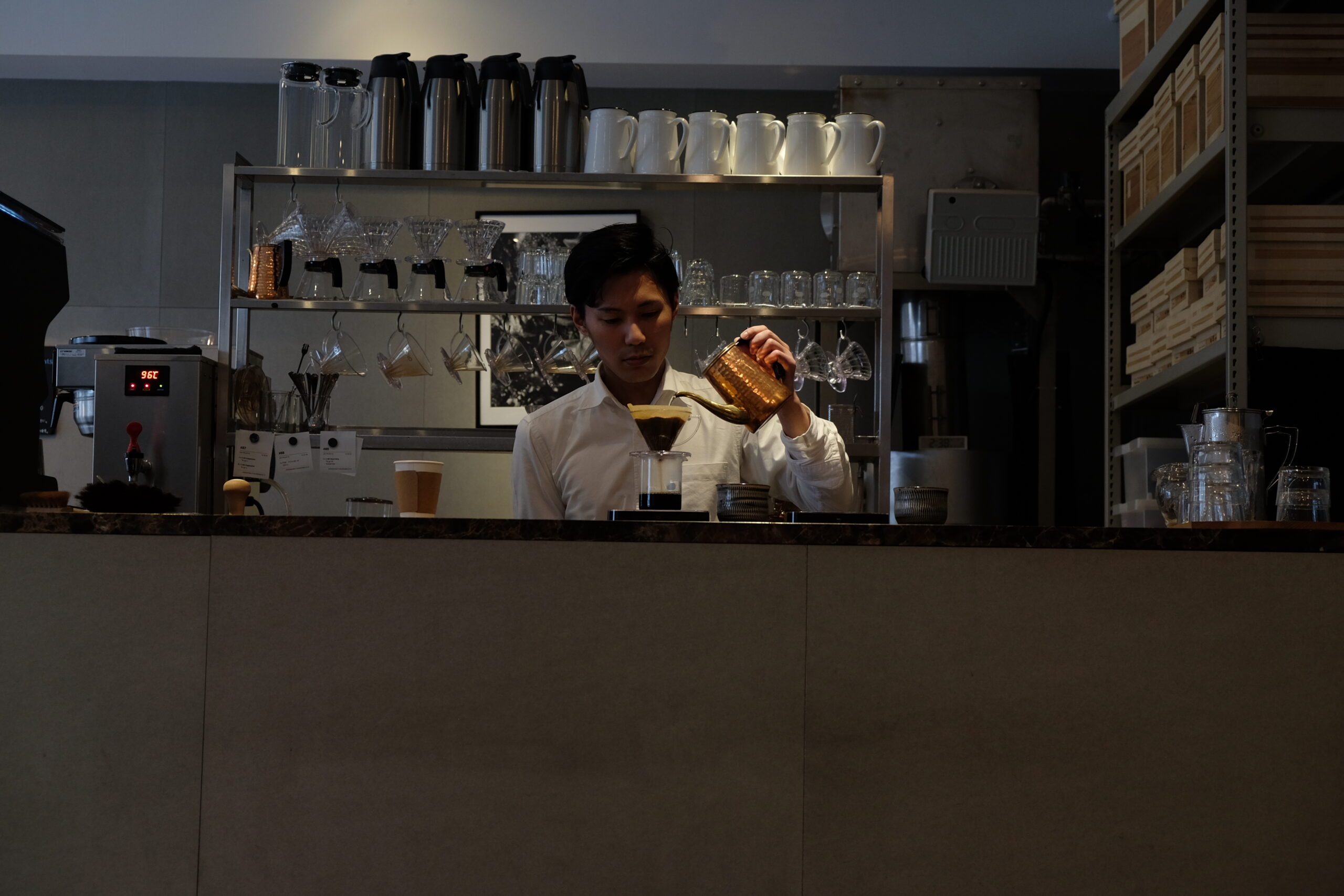
Upon arrival in Hiroshima or before you start the adventure, I highly recommend grabbing a coffee from Obscura Coffee Roaster. A beautiful modern, clean and crisp cafe for all your beverage needs. If you enjoy a pour-over or simply a milk-based coffee, then I highly recommend stopping here before you set out and explore the city. I loved the atmosphere here; it was really providing those essential calming, lo-fi cafe vibes. It was hard to tear myself away to get out and see more of Hiroshima.
Peace Park
Upon arrival in Hiroshima, you might notice a very different kind of atmosphere than in other cities. While it is still a large city with its own pace, there is an eeriness about it; its dark history still lingers in the air. In some parts, it’s almost palatable.
Hiroshima was subject to the atomic bomb that ended the Second World War, obliterating the city and reducing it to rubble. The blast destroyed 1800 feet of the city and rendered it useless as a military base during the war. Today, the city has remained an advocate against the use of nuclear weapons and created Peace Park as a memorial to those who lost their lives in the attack.
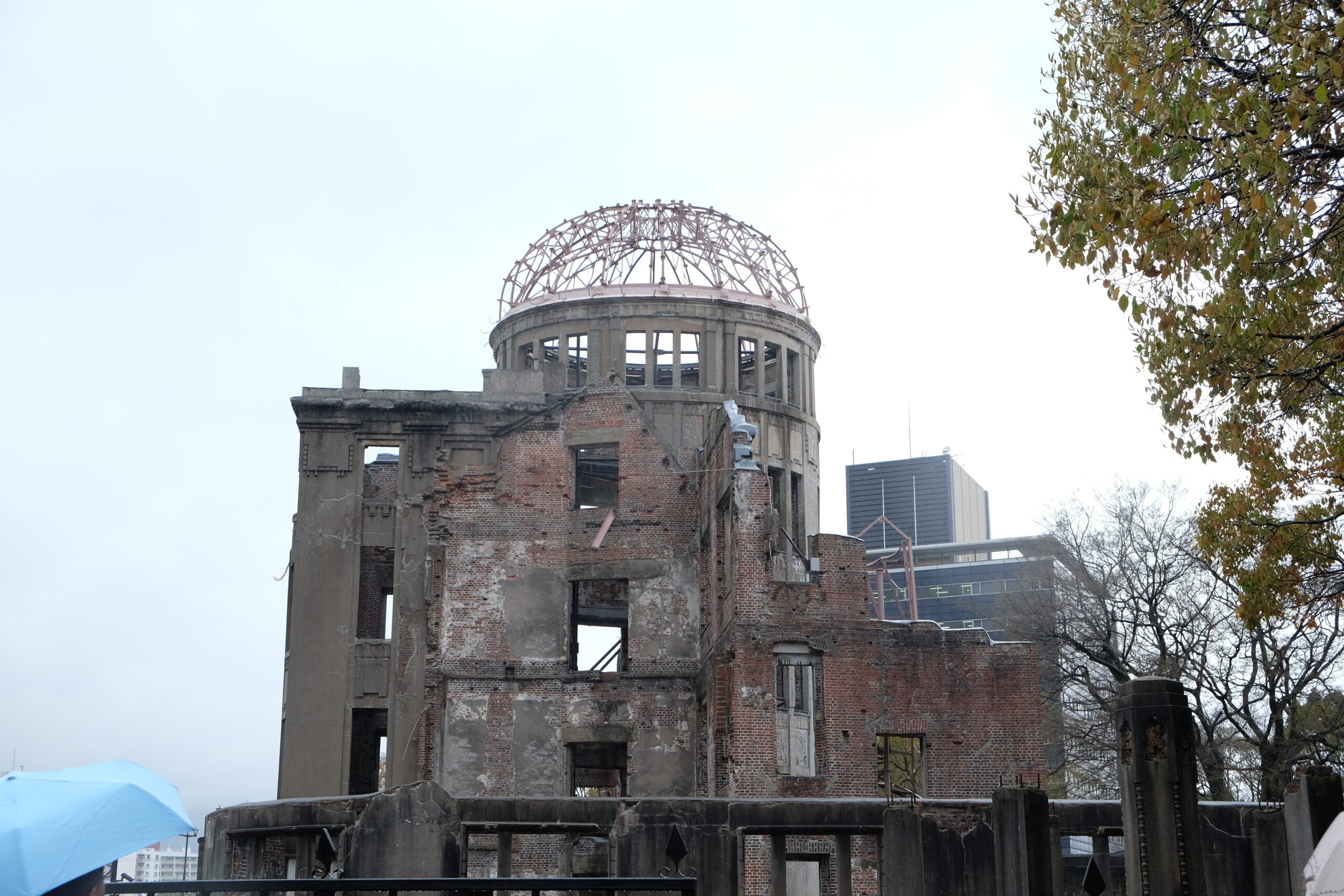
The beautiful green space, with a memorial sculpture at one end, frames the ruin of the old Promotion Hall, also known as Genbaku Dome. The park is now a UNESCO World Heritage Site and is home to the memorial museum. The museum covers the events of the blast with some confronting images and items that show the destruction caused. It’s a harrowing part of Japanese history, but it opens the door to a better understanding of the city itself. Entry to the peace park is free, and the museum is £1.00 (200 yen)
Shukkeien
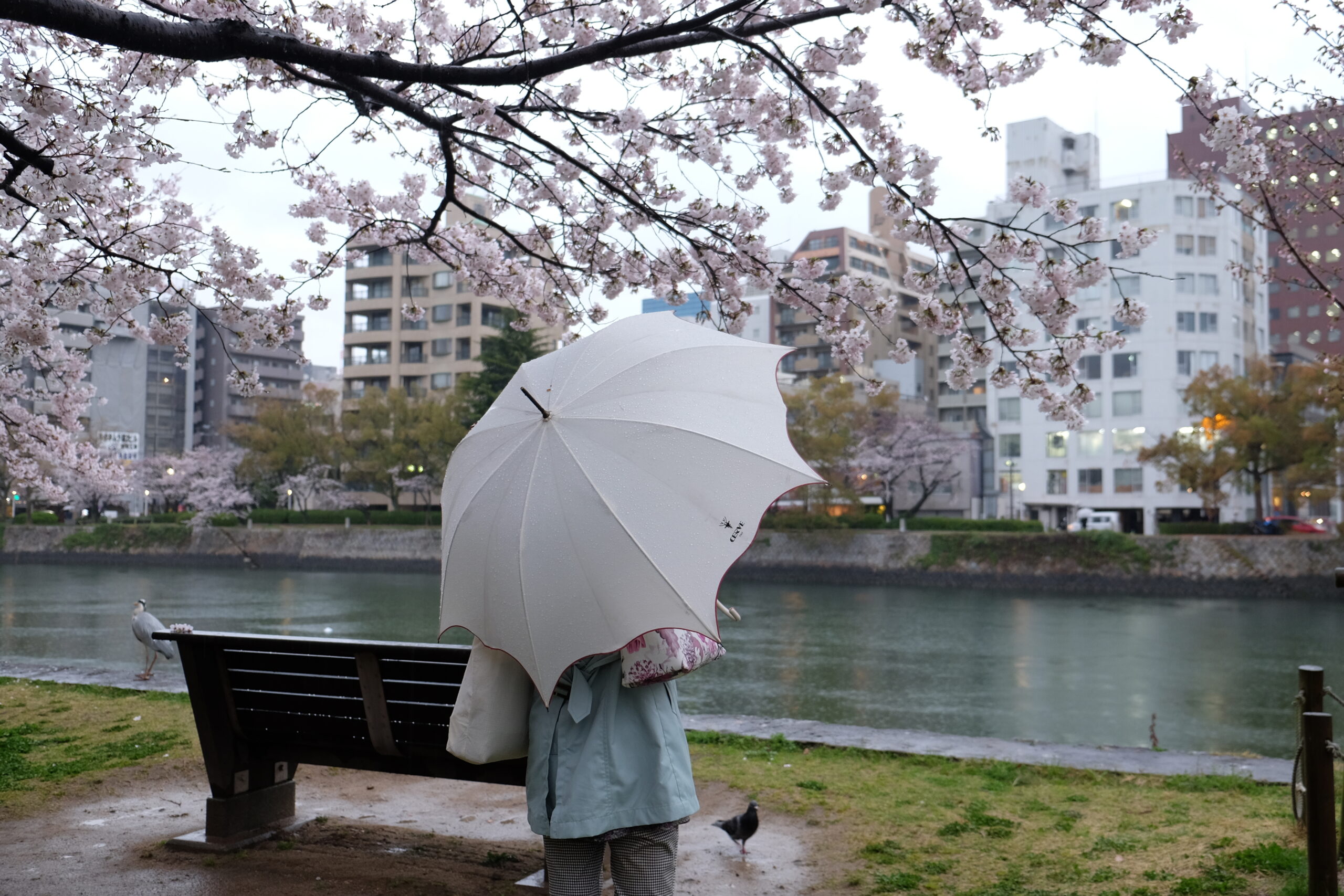
Another beautiful stop, if the Peace Park is a little heavy, but you still want to visit a memorial site to pay respects to those who passed, then the Shukkeien Garden is another beautiful spot. Located on the Kyobashi River bend, the gardens are tucked away behind the Hiroshima Prefectural Art Museum. The garden has a rich history as part of the city’s landscape since the 1600’s, complete with a tea house, viewing platforms and ancient trees. After the sun sets, the gardens take on a magical form with lights illuminating the trees. I visited during peak cherry blossom season, with the cherry blossom trees in full bloom. It felt like something from a Japanese fairy tale.
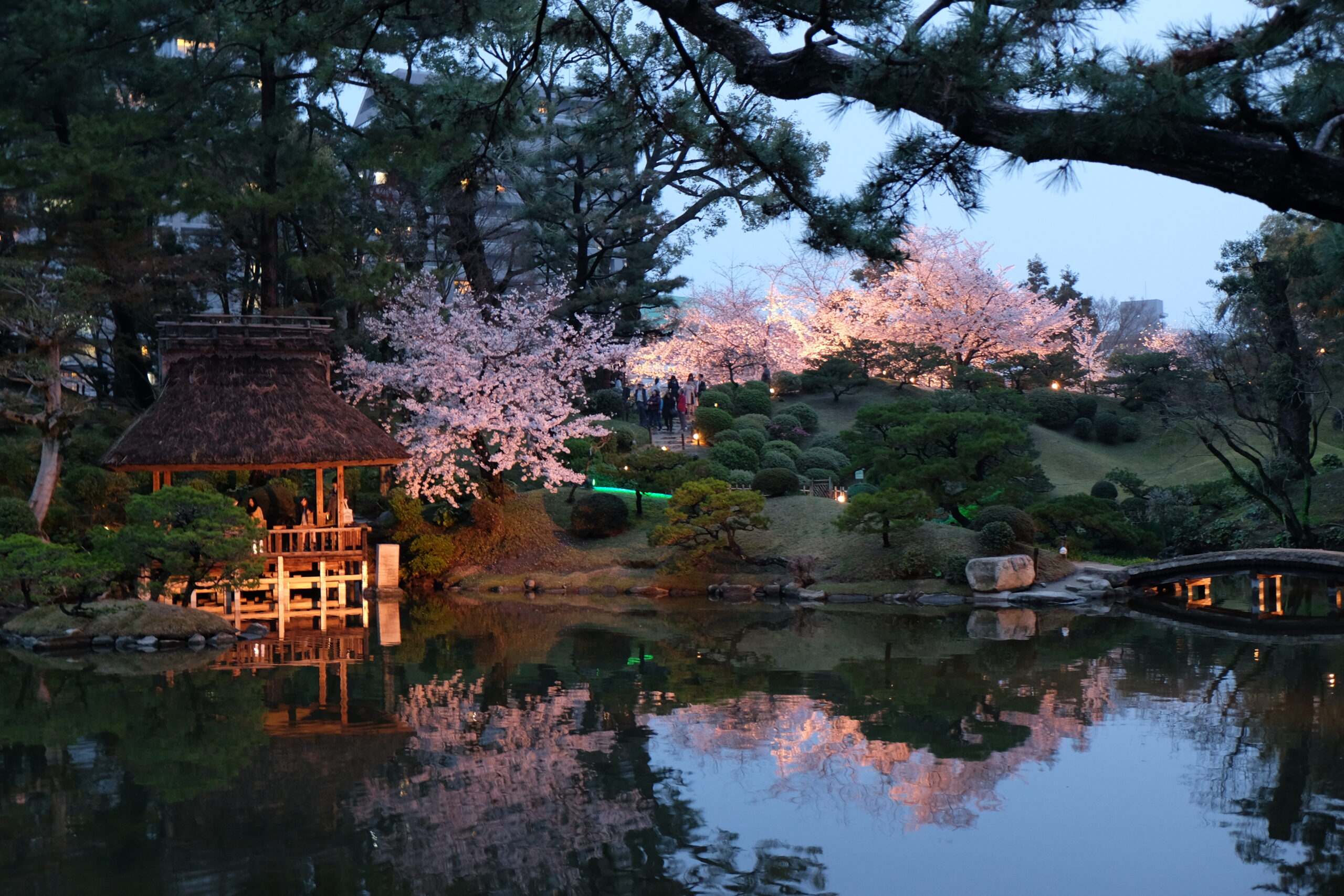
The gardens are open from 9 am – 6 pm, admission is £1.60 (350 yen). You can walk 27 minutes to the gardens from the Peace Park or 15 minutes from Hiroshima Station.
Note: The gardens are closed December 29-31.
Day trip to Miyajima Island
Japan is home to several thousand islands, with 300 of them supporting small communities and featuring beautiful island shrines, cafes, restaurants, and a unique coastal Japanese way of life.
If you’re looking for an immersive day trip from Hiroshima and are looking to do some island exploring, then take the ferry over to Miyajima Island, literally meaning Shrine Island. Upon arrival, you will be graced with views of the Floating Torii Gate that makes up part of the Itsukushima Shrine. The large, bright orange Torii Gate stands in the water and appears to float, an ethereal sight no matter the weather. The gate is another UNESCO World Heritage Site and serves as a visual threshold between the spirit world and the human world.
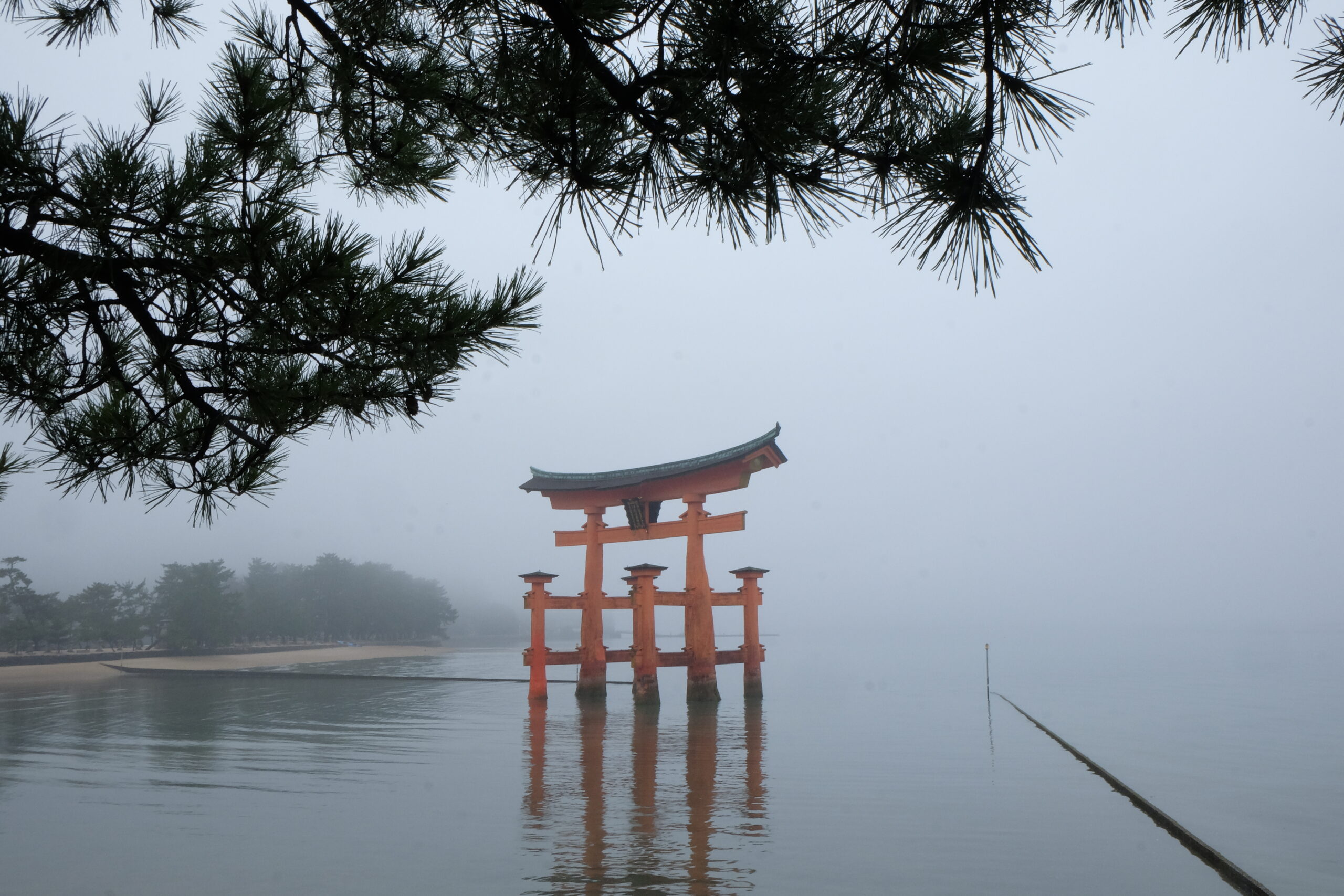
The shire itself is an incredible place to visit; it seems to hover over the water at high tide, the wooden structure wraps around the coast with mountains as its backdrop, and even visiting during the rain was an atmospheric experience. Entry fee for the shrine is about £1.50 (300 yen) if you don’t include the Treasure Room and £2.50 (500 yen) if you do decide to go have a look.
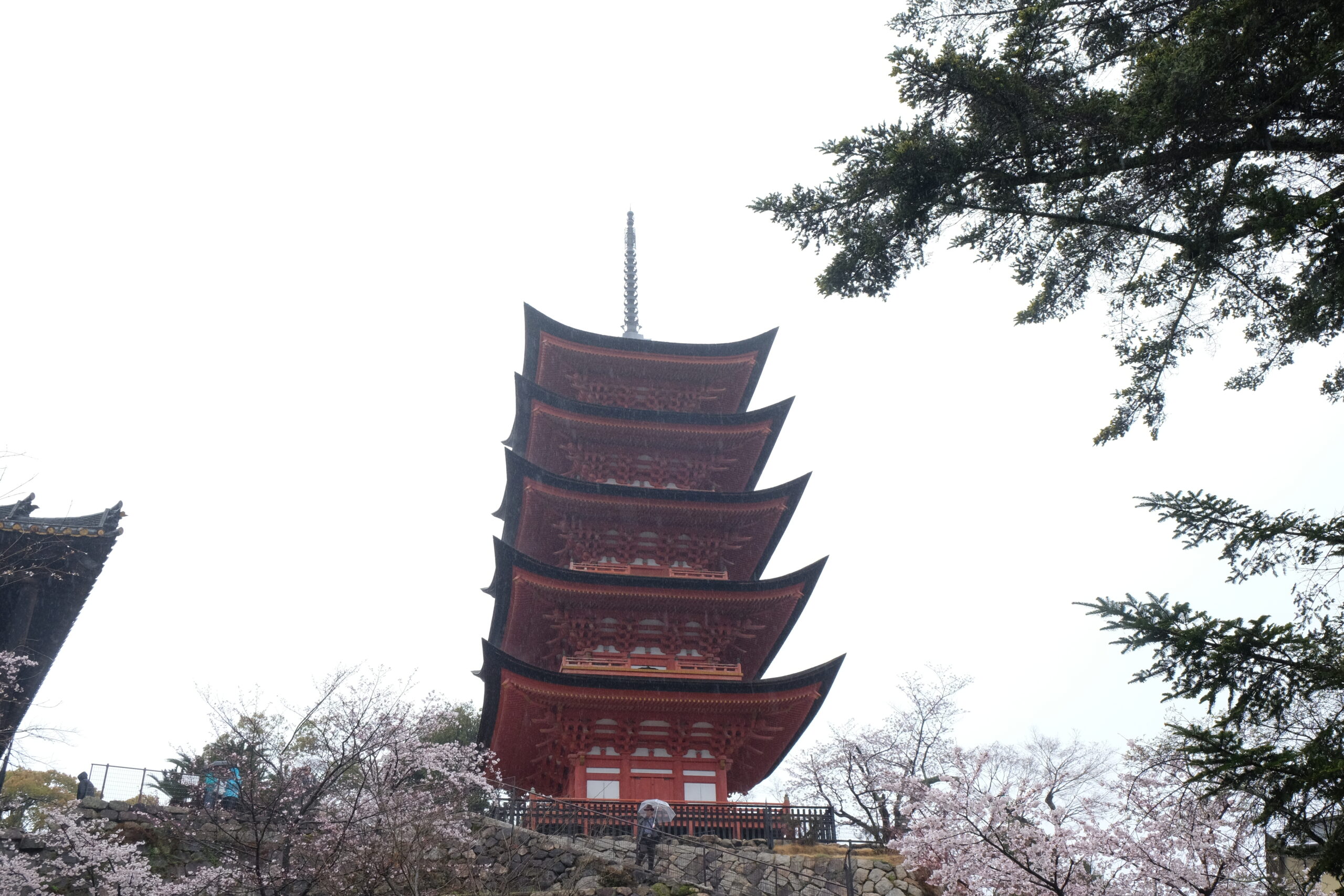
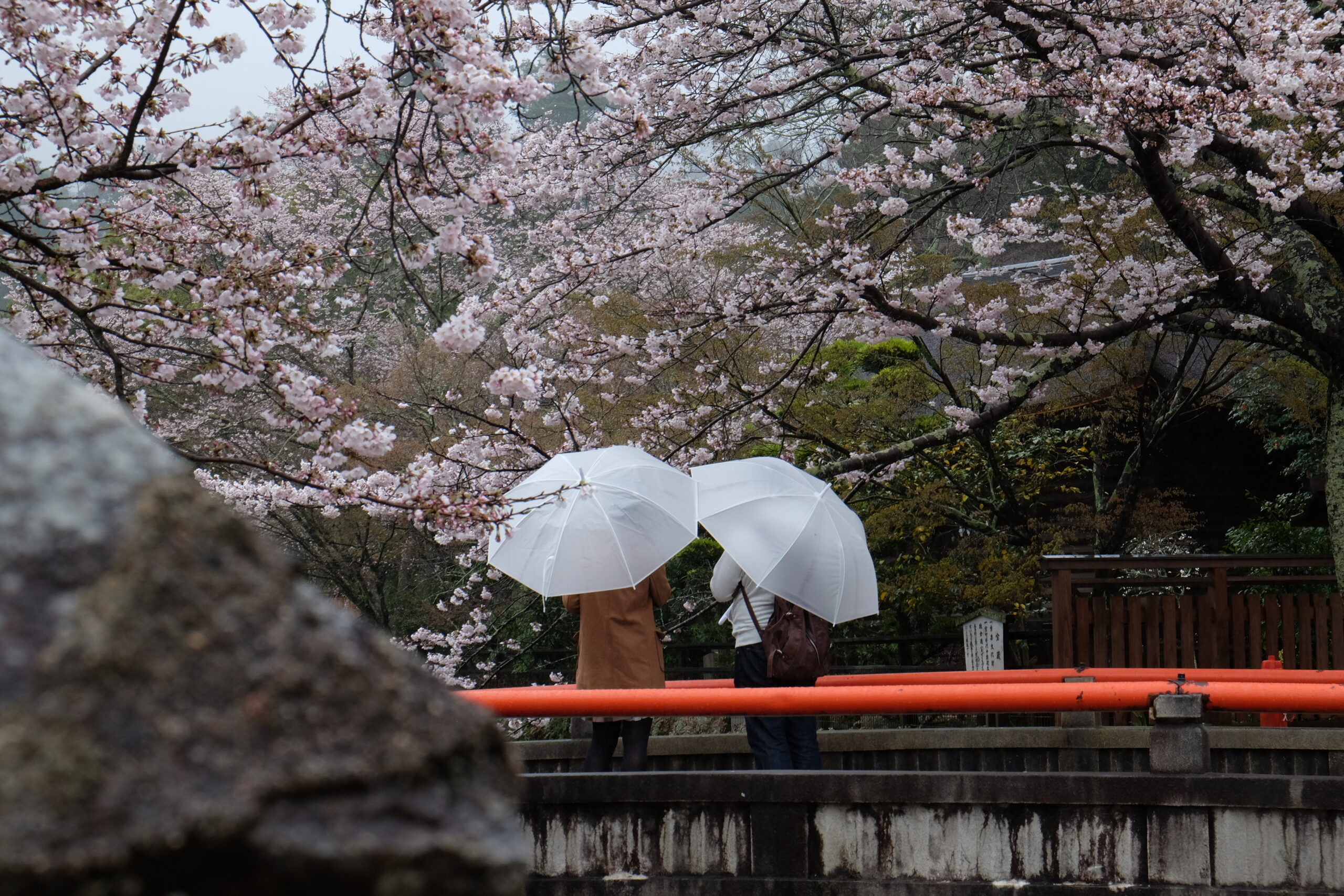
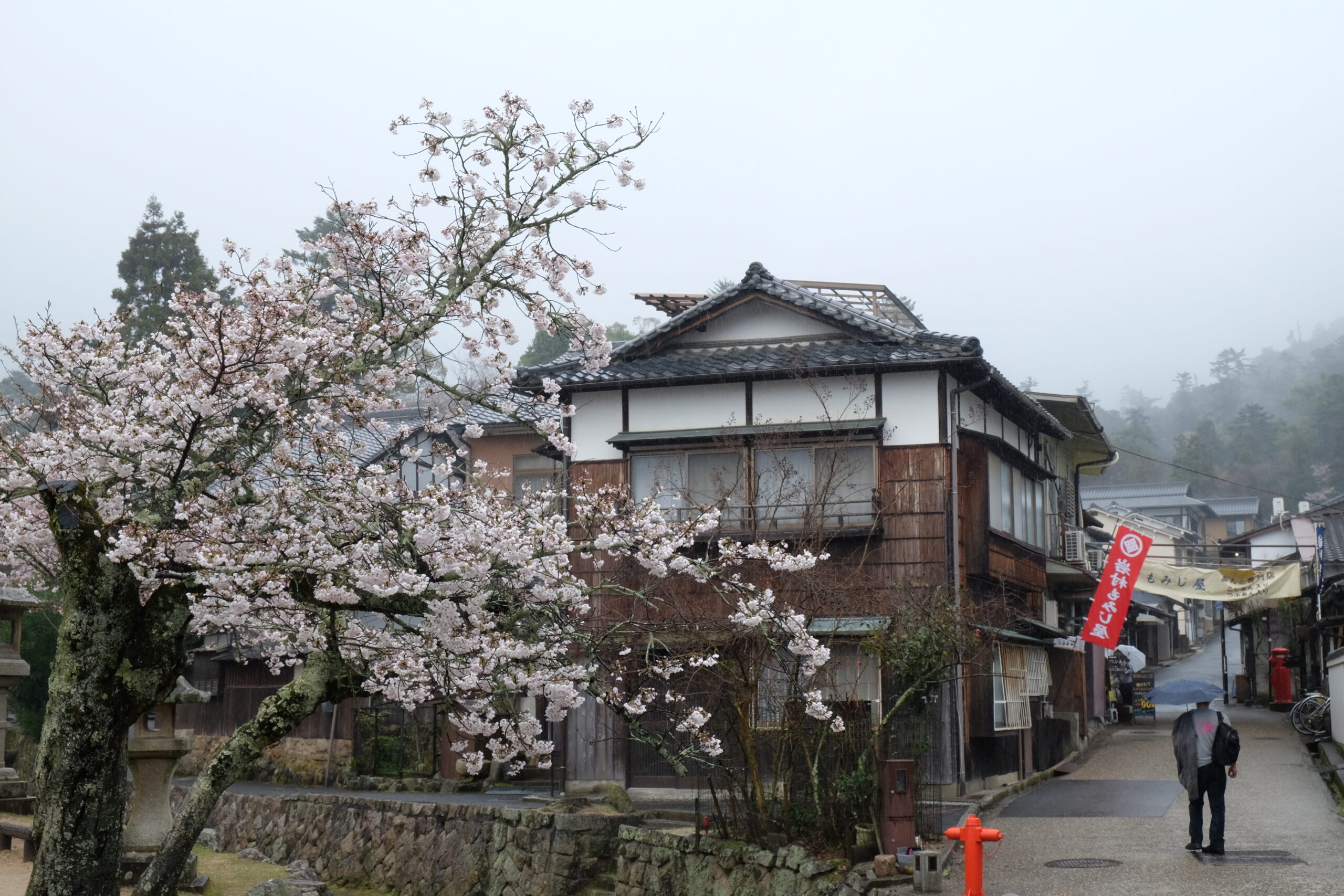
Miyajima Island itself is home to some very curious deer, walking trails and the Island’s Tallest Mountain – Mount Misen and a museum of history, along with additional shrines. There was something about the island, even in the rain, that felt otherworldly. As if you had stepped into an anime drawing, with shrines towering at the end of the streets, jinrikisha (human-drawn carts or Ricksaws) and little cafes and side streets that feel almost fictional. There is more than enough to see and do, especially on a good day, to keep you entertained.
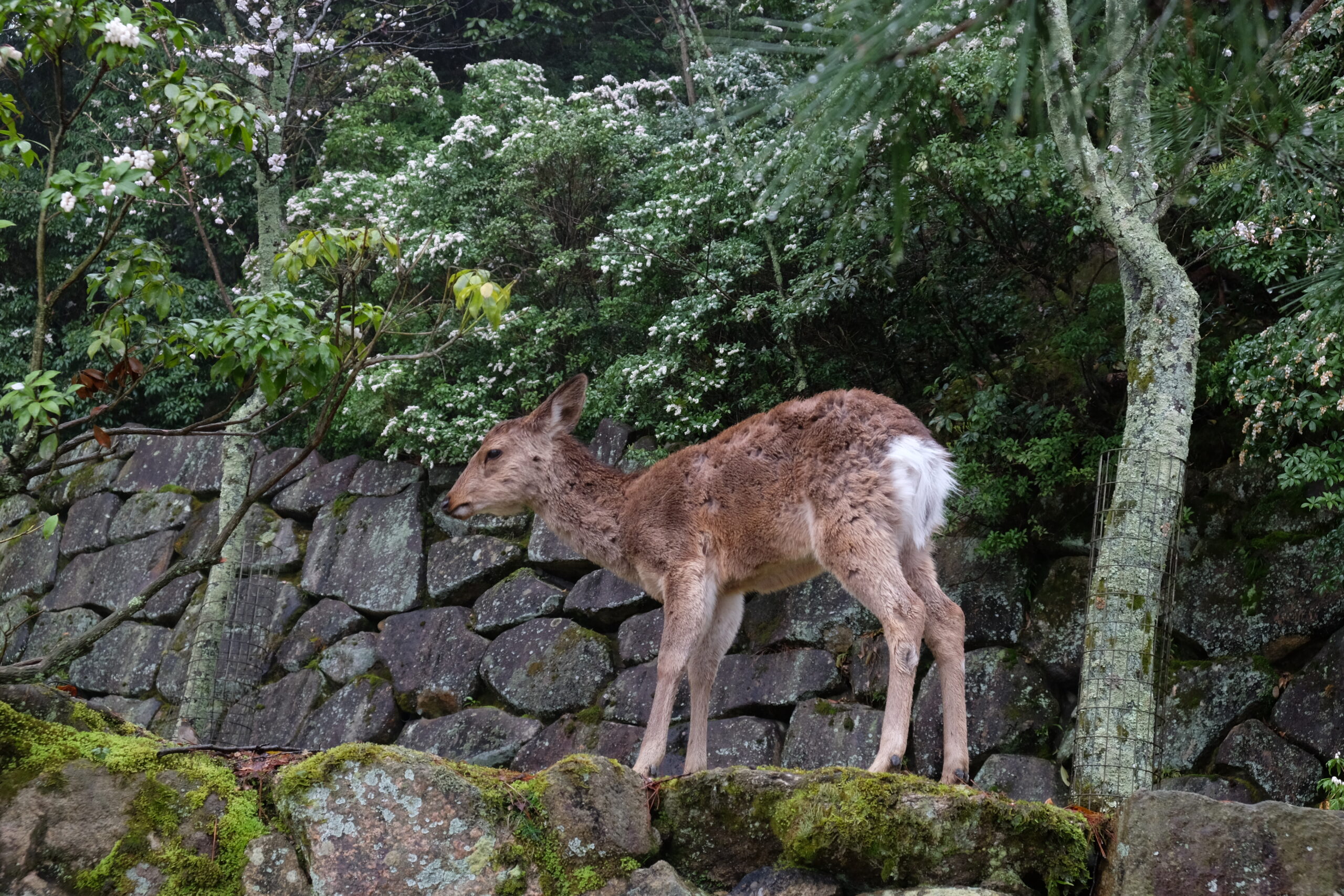
The journey to Miyajima Island takes just under an hour from Hiroshima, and you can either take the train and a boat or take a direct boat straight to the Island.
To get to the ferry port by train and boat, take the train to the ferry port; it’s about 25 mins and costs about £2.00 (450 yen) for a one-way journey. Once at the port, there are two ferries, both of which take about 10 minutes to cross and cost roughly £1.00 (200 yen) one way.
Alternatively, you can take a direct boat from Peace Park, the trip takes about 45 minutes and will set you back about £11.00 (2,200 yen)
Day 6-8: Kyoto
Taking the bullet train out of Hiroshima, head to one of my favourite places in Japan. Kyoto! Roughly £50.00 (11,300 yen) and about 2 hours, taking you back through Osaka before heading onto Kyoto.
A place where Japanese history stands still, preserved in a way that simply has to be seen and felt to fully understand. Like most of Japan, it’s a tale of two halves. With the historic district and the modern downtown urban sprawl.
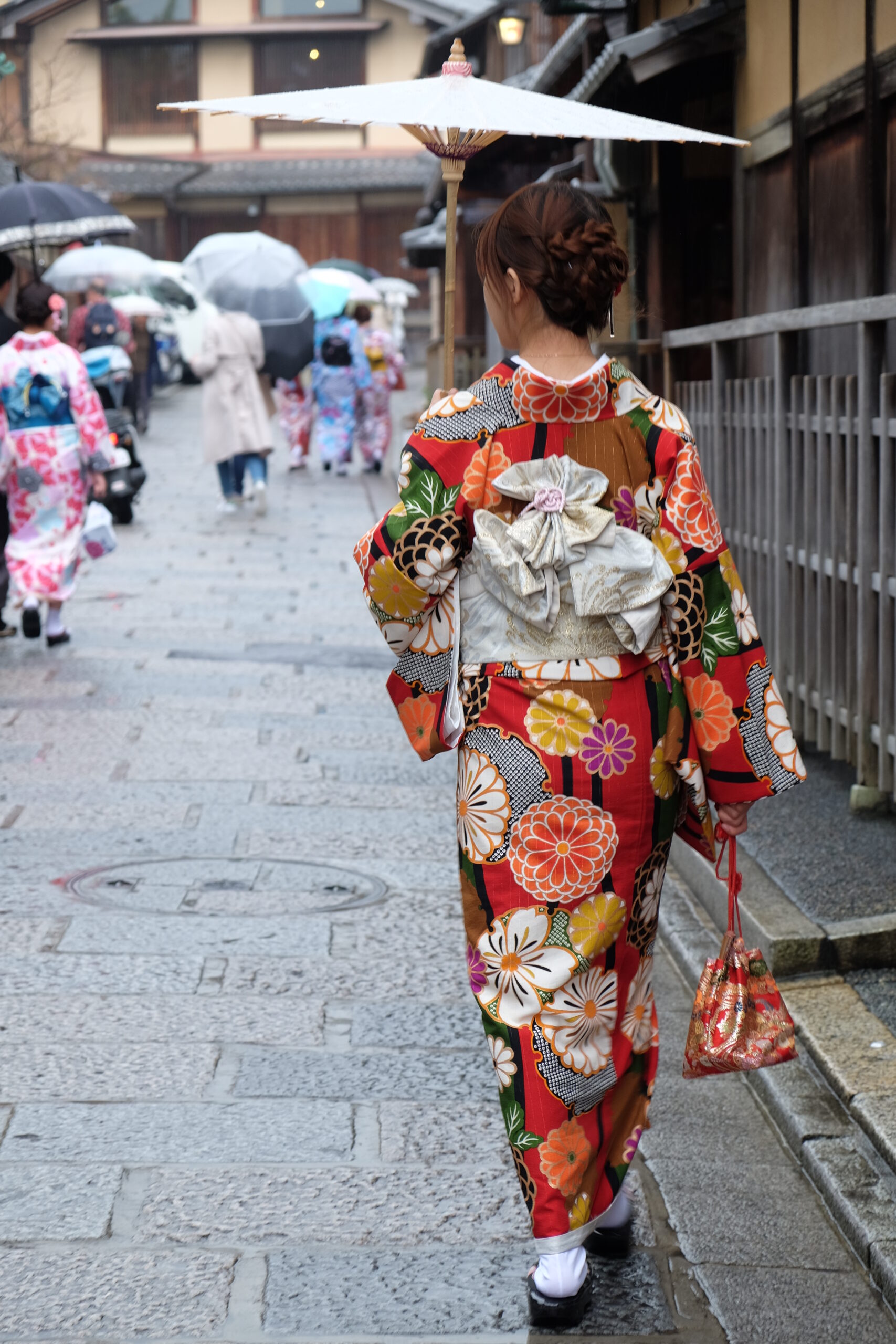
Retail Therapy and Royalty
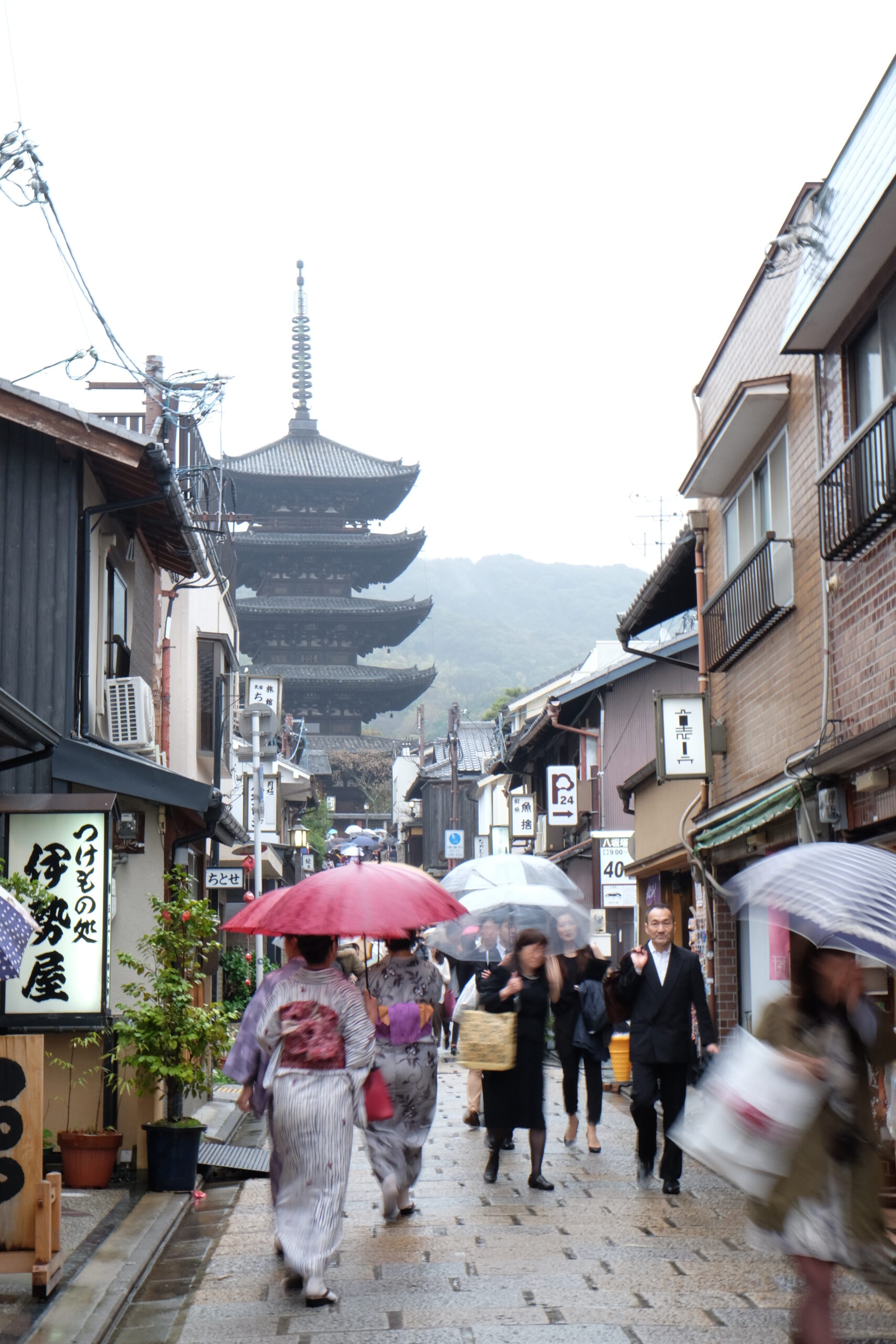
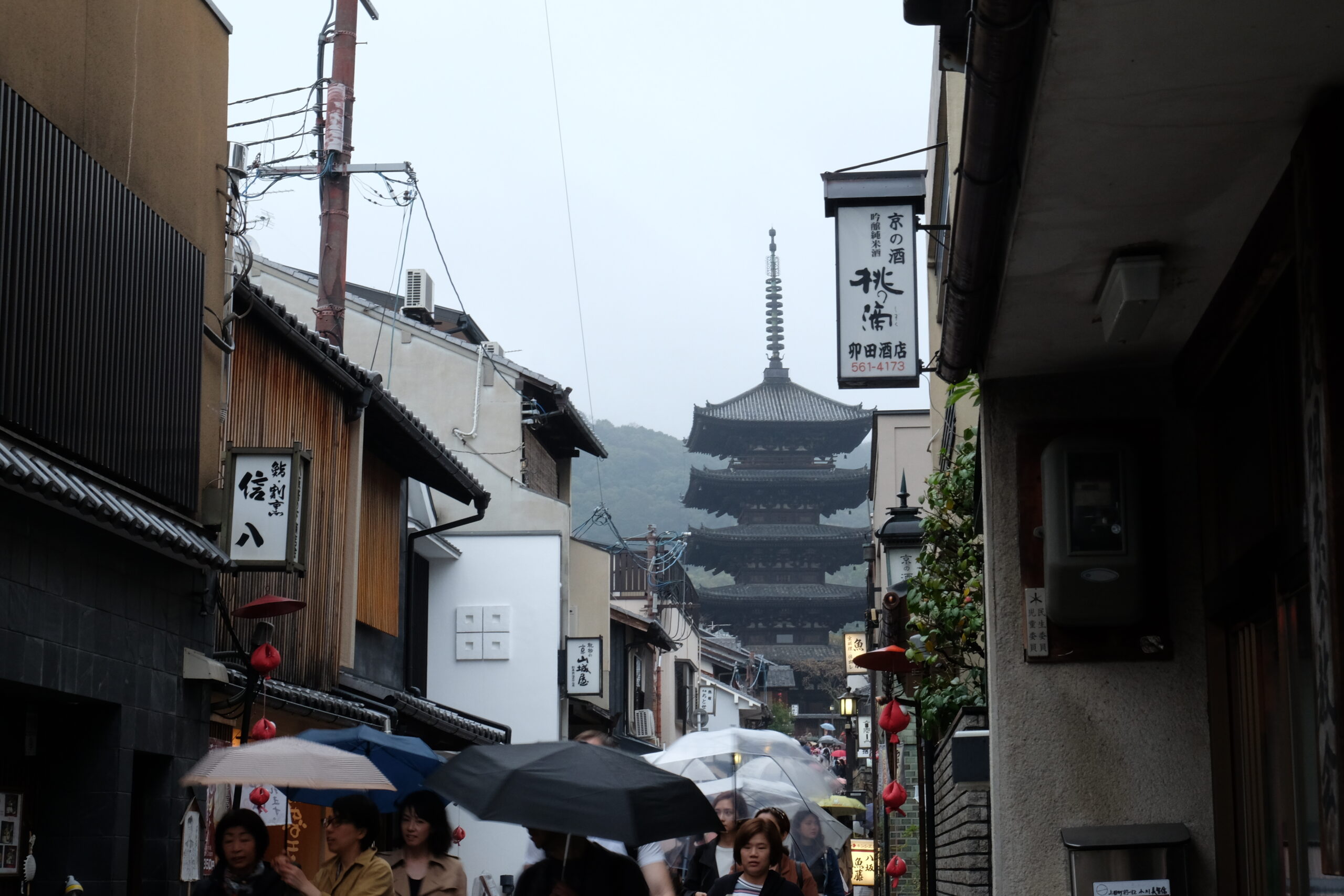
First things first, I’d recommend taking a walk through the Historic Entertainment District of Gion. It’s a place where Japanese culture really shines through. Think people in traditional dress, geisha, traditional riverside dining, busking and an atmosphere that is hard to describe without being there. The streets are a woven maze of red lanterns, temples, sirens and waterways with mountain backdrops. If there’s any place that will make you feel like you stepped out into an Anime movie, then Kyoto might just be it. The wooden facades, seeped with sap, gave the streets a cedar fragrance.
Everything here is made to feel and look authentic, even the Starbucks blends in seamlessly, complete with Tatami Mat dining. Kyoto is a place that needs to be felt to be fully experienced, and walking its streets, even in the rain, is an adventure in itself.
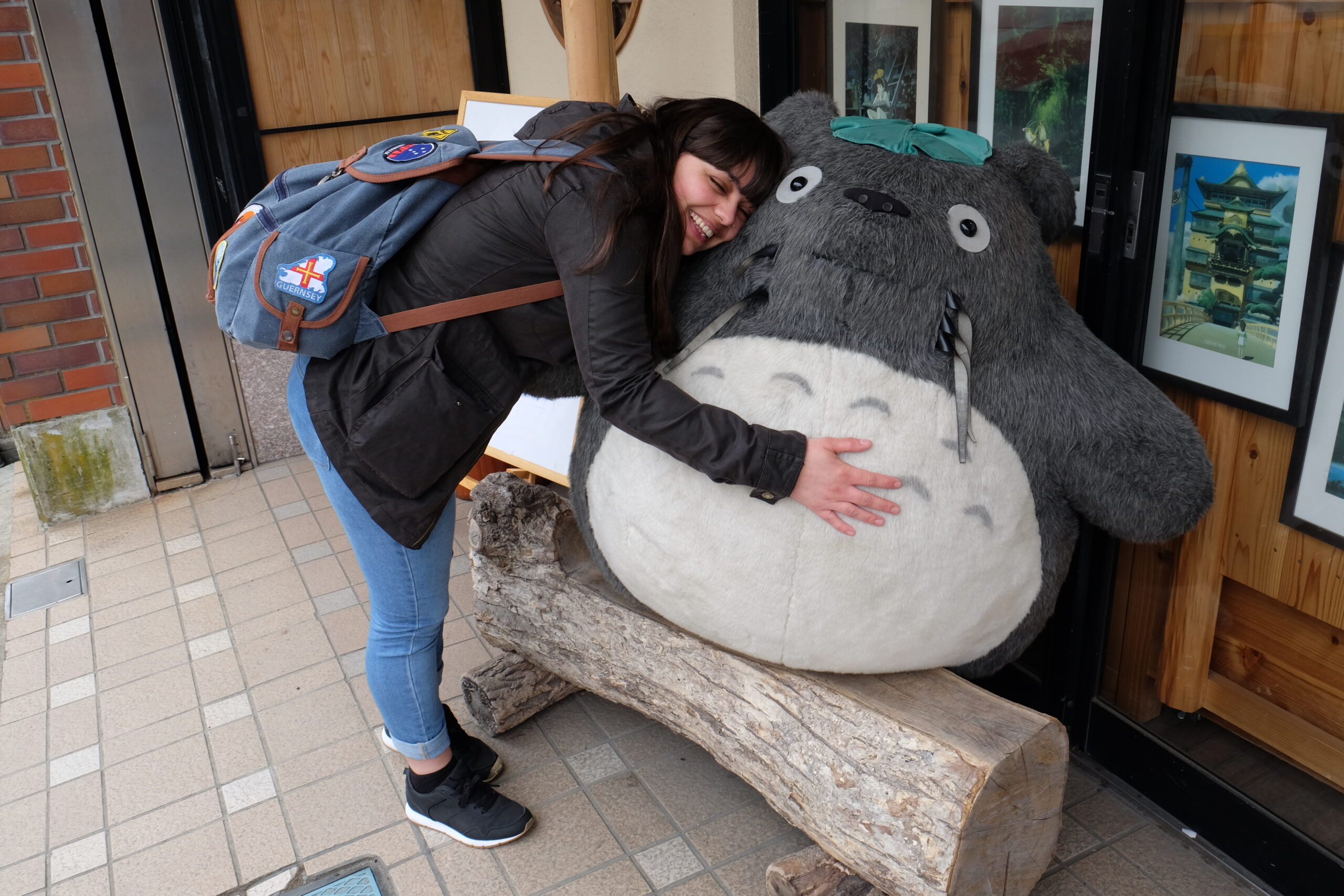
If anime is your thing, I highly recommend a visit to the Official Studio Ghibli Store. Like everything in Japan, it’s an immersive experience, complete with in-store forests making you feel as though you could be in another world. Of course, if you’re a fan, it will be hard to resist the little pushies.
There’s plenty of other shops to get stuck into if you’re not looking to take home a Totoro. With a wide variety of unique bespoke dining, souvenir stores and home wear. If you are looking to grab some souvenirs or just have a look at all the beautiful things on offer in Kyoto, then head to Downtown Kyoto to The Shinkyogoku Shopping Street, with multiple vendors and food stalls to keep you entertained.
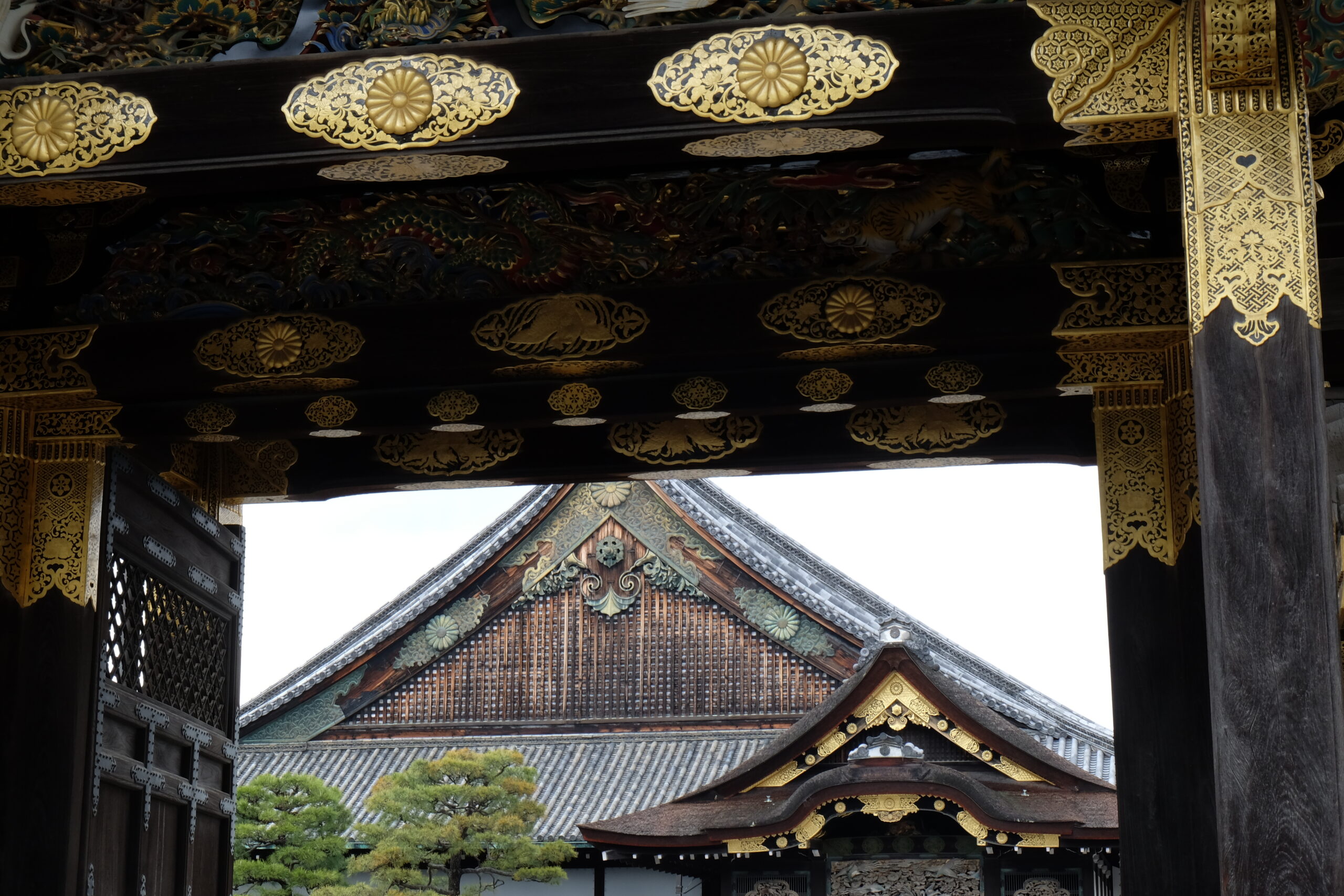
Nijō Castle
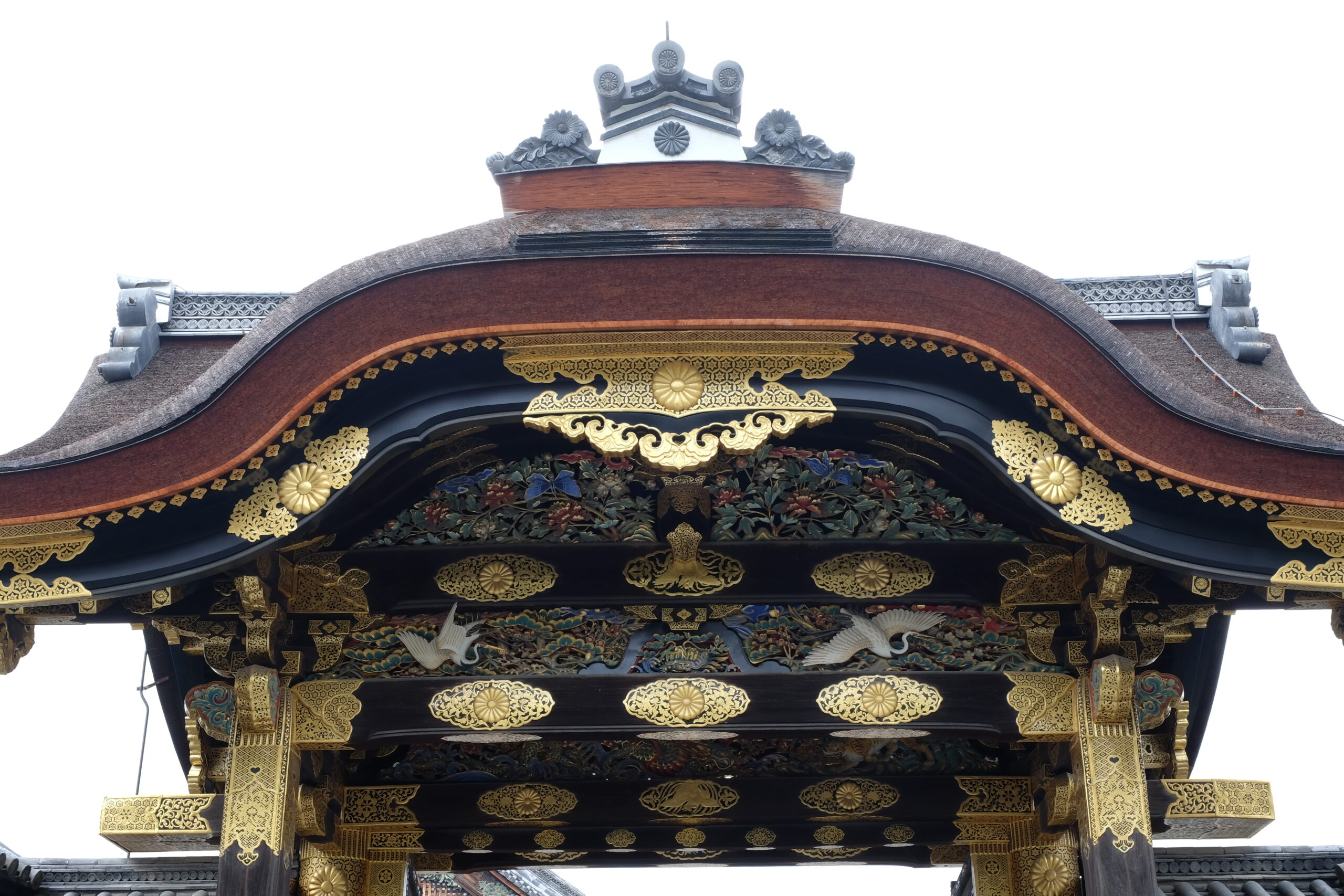
After shopping till you drop, it’s time to spend a day exploring the historic Nijo Castle, with its ornate gold leaf-carved entrance. The Nijo Castle was the home of the first shogun and was built in 1603. It was eventually donated to the city after the late 1800’s, and is now another fantastic UNESCO World Heritage Site. Much like Osaka Castle, the Nijo Castle has lines of defence and a moat that surrounds it. The main gate is an elaborate mix of carving and gold leaf and is considered one of the best-kept surviving castles in Japan, complete with painted clearings. Walking through the different defence sectors, you get a real sense of what life behind the walls would have been like and the power the shoguns had.
Surrounded by gardens, green spaces, and seasonal cherry trees, it’s a beautiful place to take in the area’s rich cultural history. Entrance fees are about £3.50 (750 yen).
Day Trip to Arashiyama
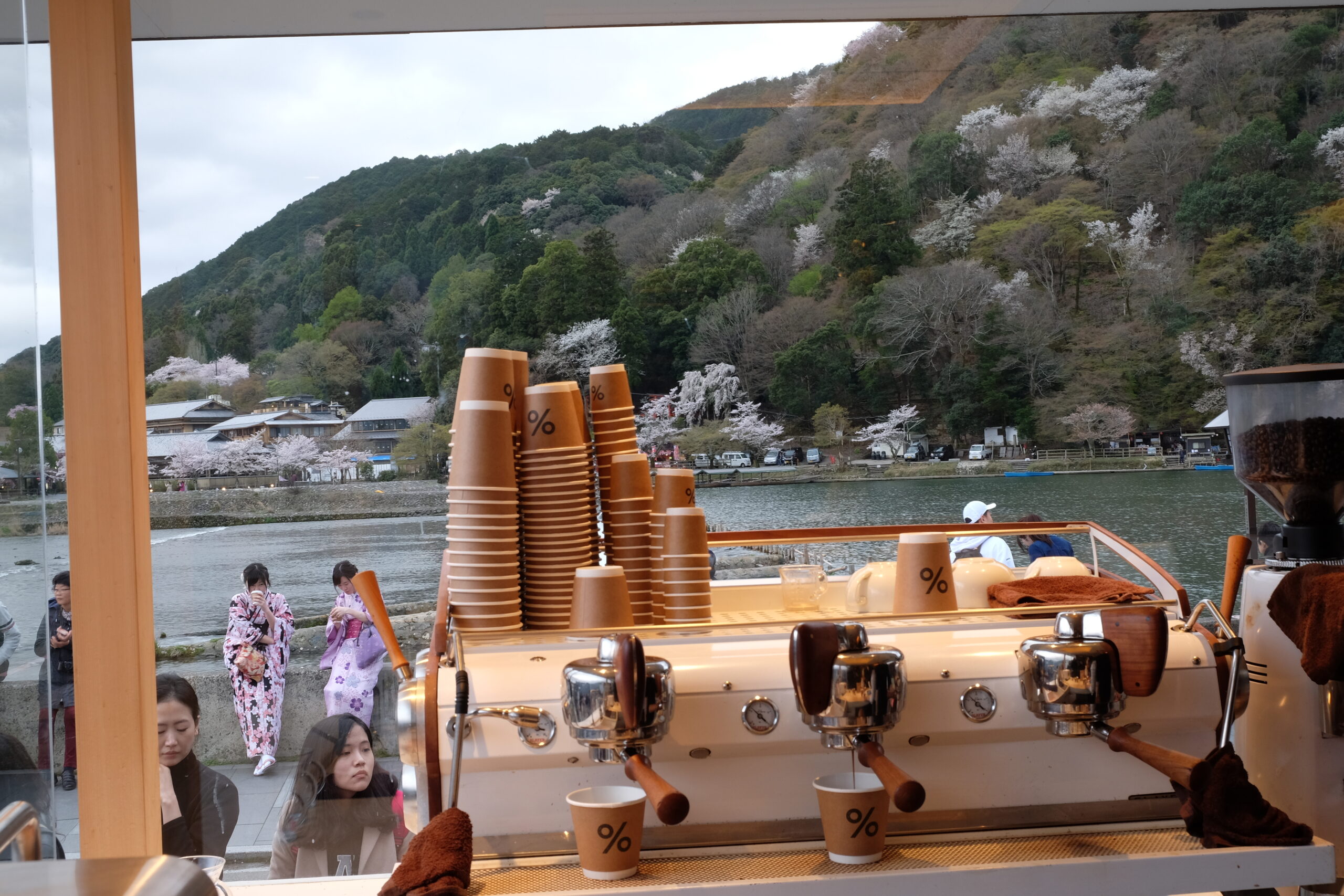
If you’re looking to explore a little further afield from the inner sector of Kyoto and one of the most aesthetic coffee locations hidden in a little lesser-known area of Kyoto, then I highly recommend heading out to Arashiyama. A 30-minute train journey from Kyoto to the Katsura River District. The stunning, misty, mountainous region comes alive during cherry blossom season with the trees painting the hillside in little pops of pink and green.
My favourite spot for coffee of the entire trip has to be % ARABICA in Arashiyama, the tiny little store overlooking the river, with such a clean aesthetic. This place gets super busy, so I recommend getting here as early as you can to avoid the crowds.
Naturally, the area has a whole host of incredible things to see and do, from temples and gardens to galleries and museums. However, if you are looking to experience a little more of the unique natural landscapes that Kyoto hides, then look no further than a walk through the Arashiyama Bamboo Forests. The towering green shoots seem to create a tunnelled maze through the gardens. The perfect place to take in the serenity and stillness of the area after the busy streets of Kyoto.
Entrance to the park is Free and is filled with little gems and alternative tracks. The main trail is only about 10 minutes, but you can extend your time here by exploring further, should you wish. If you’re looking to experience the waterways by boat, you can jump on board one of the blue self-rowing boats. There are two little docks on each side of the river way if you’re looking for a cute way to experience the magic of the part of the area, roughly about £9.00 (1800 yen).
Torii Gates
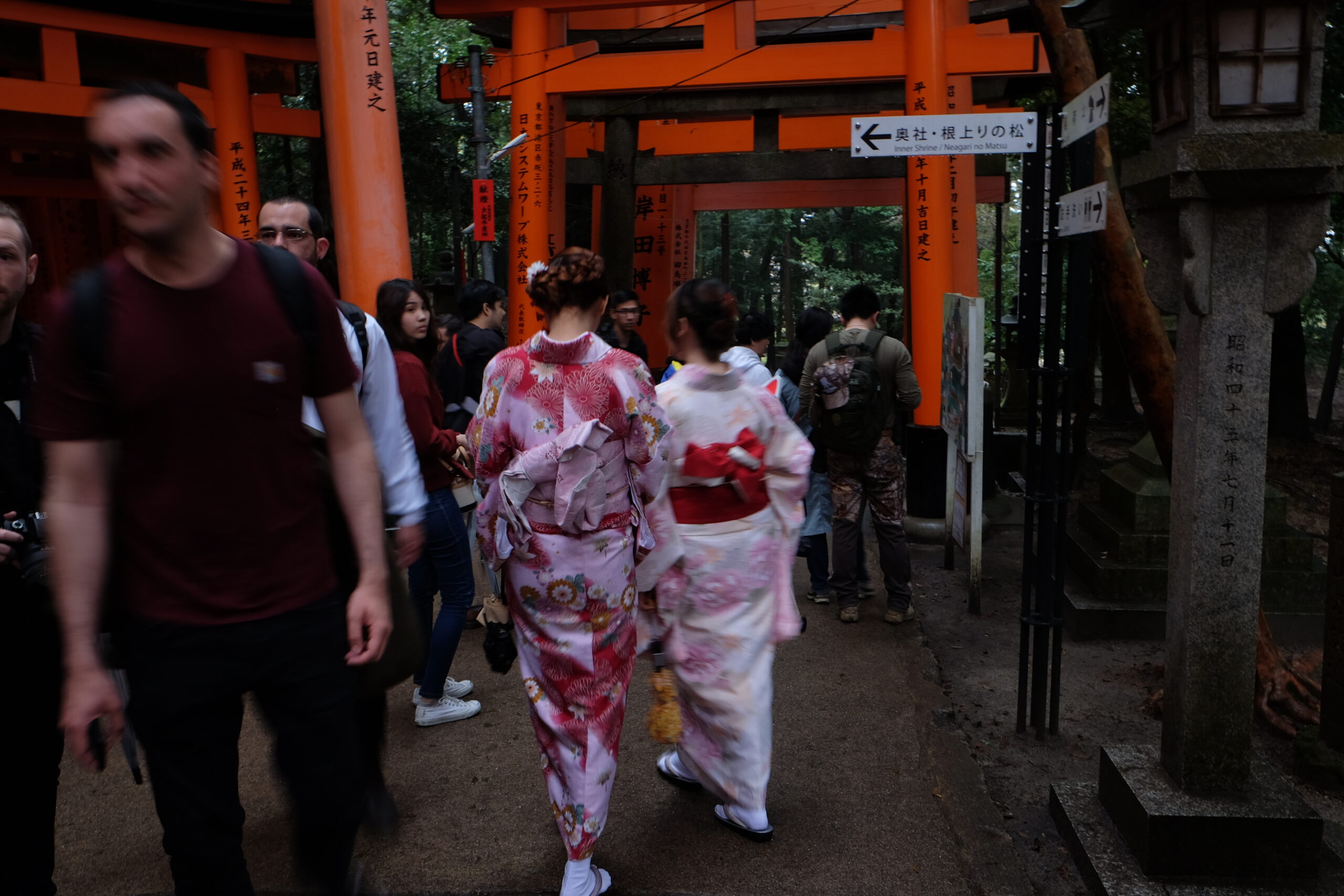
Possibly one of the most photographed sites in Japan, or at least the most recognisable, is the Thousand Torii gates of the Fushimi Inari Shrine. Located a short 8-minute train journey from Kyoto Station. Arriving, you are met with a giant Red Torii Gate that leads up to the red shrine that sits proudly.
The grounds of the shrine alone are beautiful to explore before you head on up towards the walk through the maze of gates. The gates are packed together so tightly that you feel as though you are inside one big tunnel, where even daylight softens. The gates eventually lead to the top of the mountain with views across Kyoto on a clear day. The entire hike takes around 3 hours, but it’s optional for those who want to.
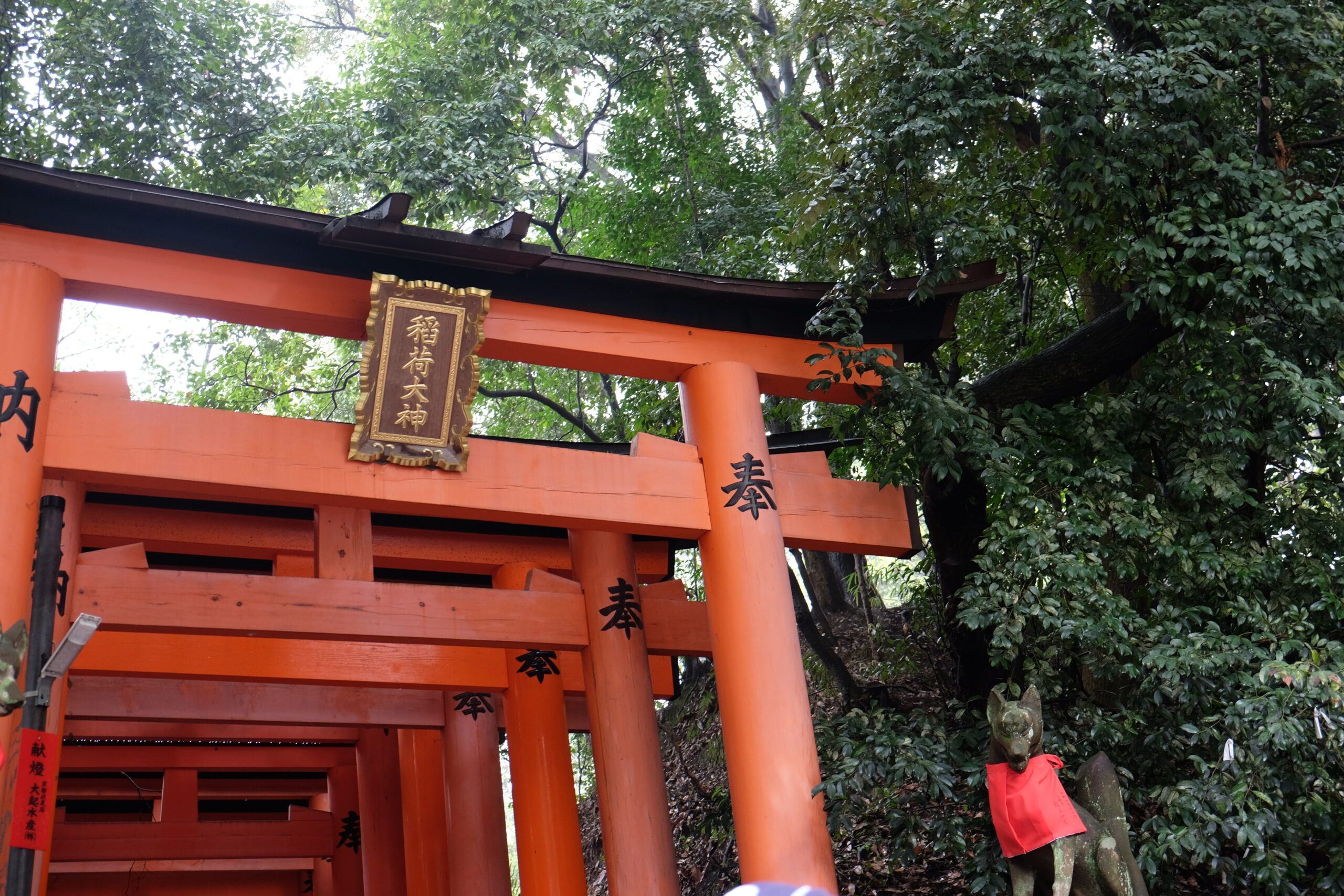
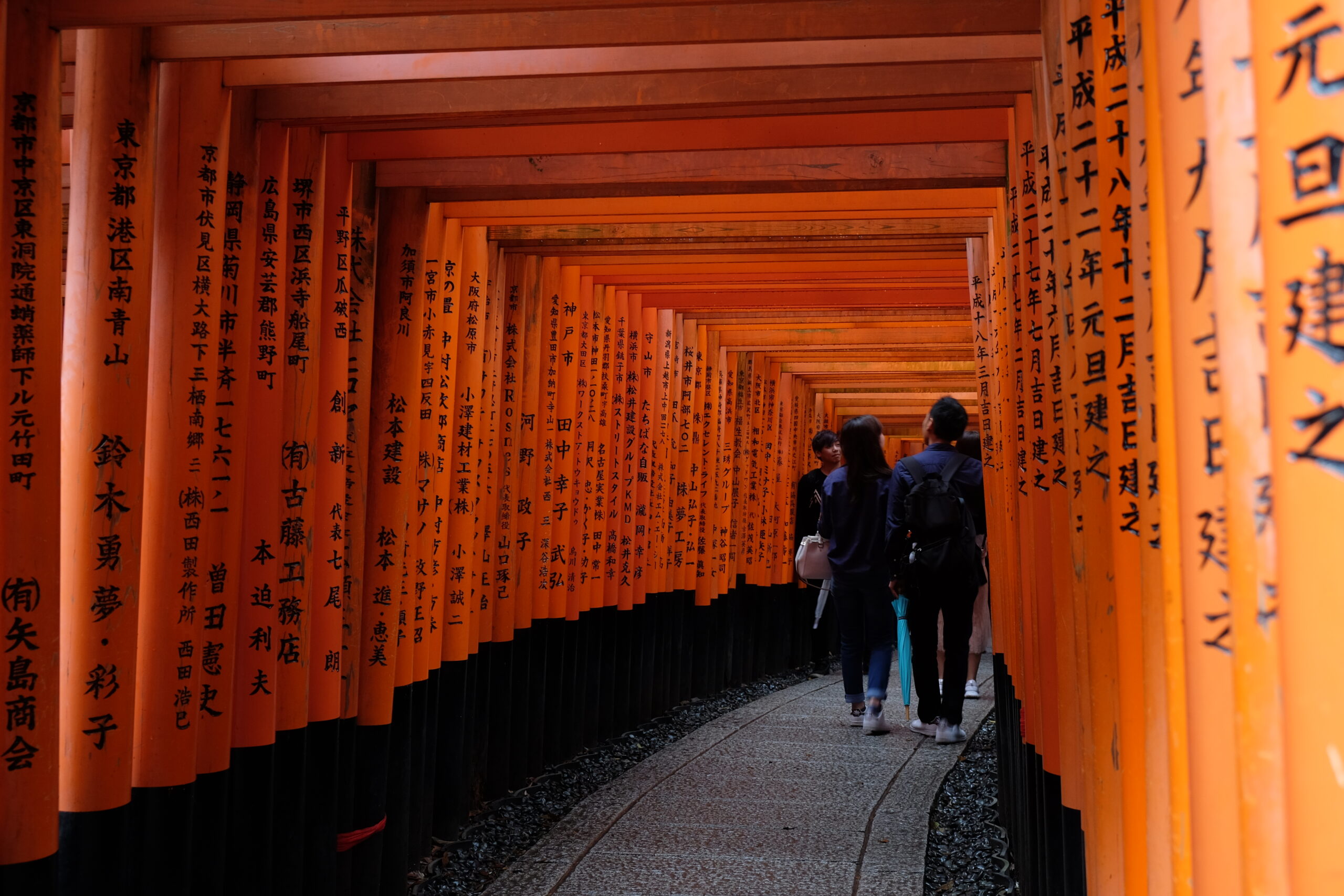
The gates are symbolic of honouring the God of Rice – Shinto, and their main purpose has been for worship and the many fox statues that line and guard the gates are seen as messengers to the deity Inari, the same name given to the mountain that the gates ascend.
I highly recommend getting here as early as you can, as it will get crowded and getting those pictures without the crowds will be tricky.
Temple Time
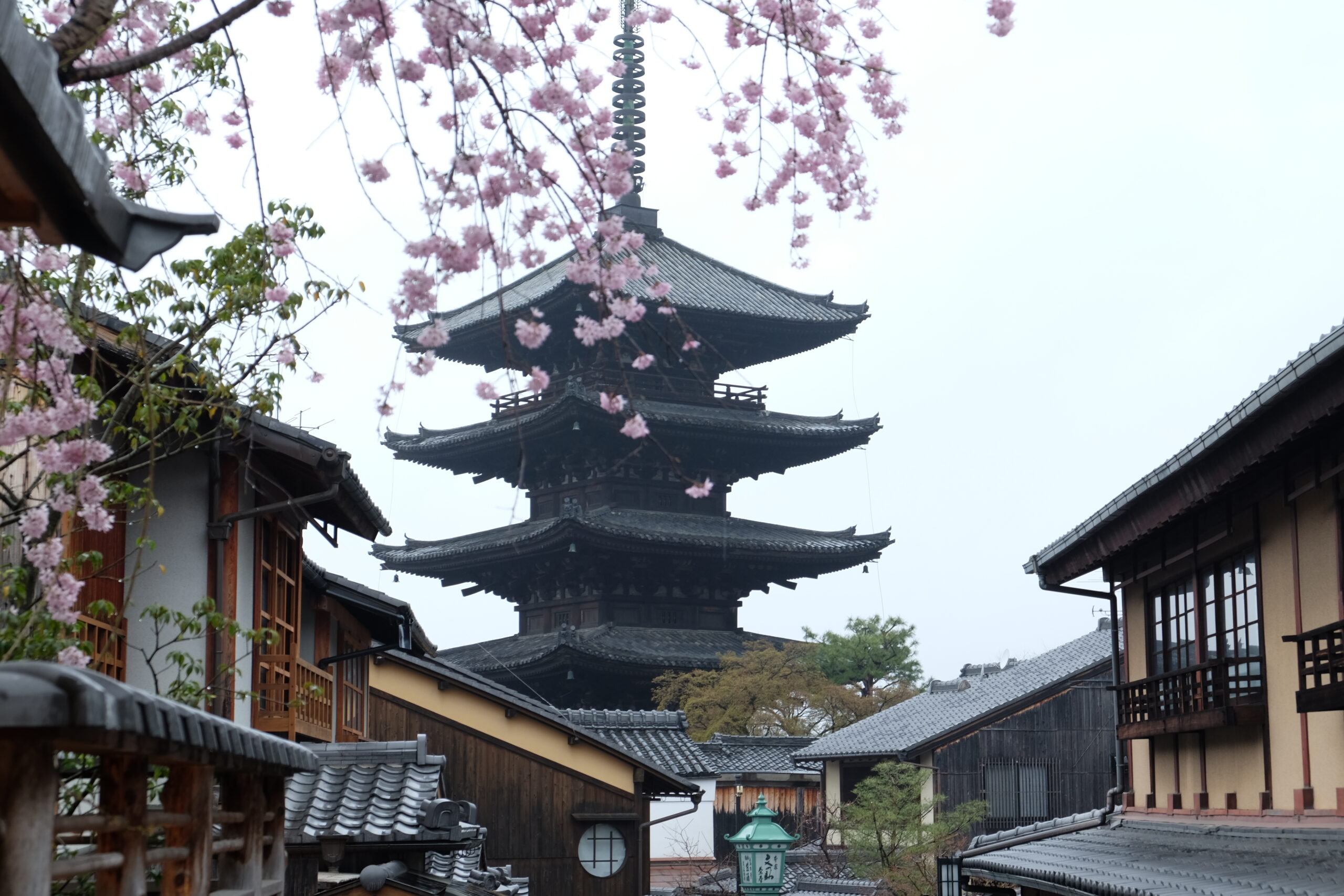
If you’re not templed out yet, then there are some beautiful shrines and temples to visit and collect those Siduals. The most notable and obvious of all is Yasaka Pagoda, which is part of Hōkan-ji Temple. Framed by the Streets of Gion. The tower seems to be a constant feature of the skyline in Gion, and you won’t be able to miss it. If you’ve seen any images of Kyoto, you’ve likely seen the five-tiered pagoda, standing 46 meters tall. Admission into the temple is about £2.00 (400 yen). It has a beautiful garden and views from inside, across Kyoto.
Japan Google Map
Get lifetime access to my endless hours of research and time spent on the ground finding the best places to eat, drink, relax and explore in Japan. Simply open the Google Map on your device and all my recommendations are at the touch of your fingertips.
Midas Touch
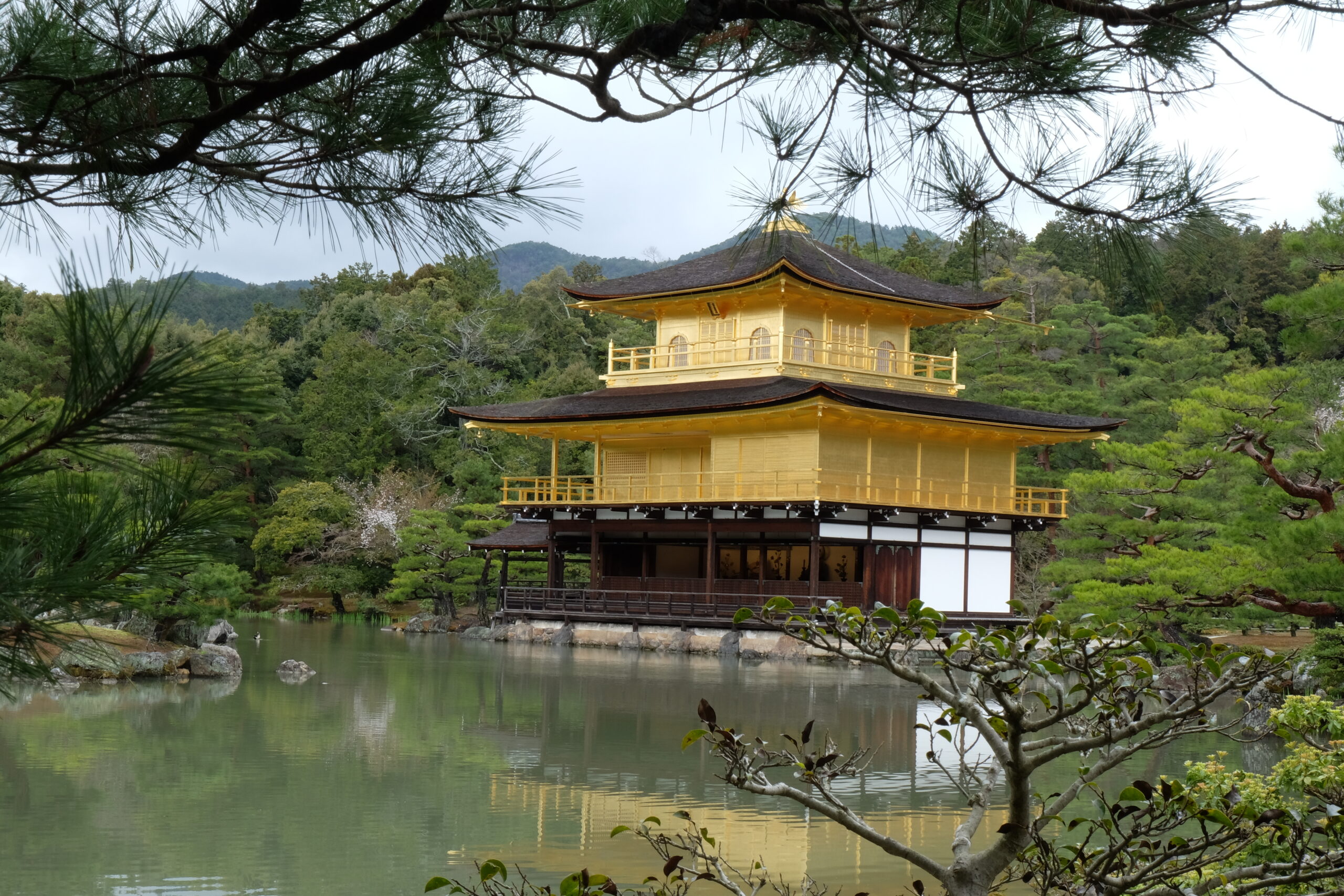
After spending some time on the riverside, you can extend the day and head over to the famous Kinkaku-ji – Golden Temple. You can take two buses, which will take you about 45 mins, a fairly straightforward trip. Once there, admission to the Castle is around £2.50 (500 yen).
The Temple is an impressive sight, sitting in a beautifully maintained garden; it’s hard to miss the reflective golden walls set against the green. The temple has a complex history and has survived multiple fires in its lifetime. Covered with gold leaf from the second story to the top, this place looks as if it were touched by Midas himself, creating a stunning reflection on the pond it sits atop.
Naturally, the Golden Temple sits within a stunning garden and is well worth exploring, including the tea house outside the gardens. While you cannot go inside the Golden Temple, you can explore some of the zen gardens, part of what would have been the living quarters of the former head priest.
Day 9-10: Hakone
Leaving Kyoto might feel impossible, with endless exploration to be had here, but the shy mountain calls. The bullet train from Kyoto to Hakone takes about 1 hour and 40 mins, taking you deep into the green spaces Japan has to offer. Hakone and the Gora Valley have to be among the most zen places I have visited in Japan, surrounded by nature, running streams, and the foothills of Mount Fuji. Sandwiched between the coast and the mountains, Hakone makes for the perfect stop before you take on the final stop. Tokyo.
Choosing to stay in Gora, located 20 minutes away from Hakone Station and 45 minutes from Lake Ashi, for its proximity to nature and the adventure of finding the shy mountain. Accommodation in the region is mostly multi-complex hotels, with a mix of Western and traditional Japanese-style places. I stayed at Hotel Pax Yoshino, a beautiful modern riverside complex. Hotel Pax Yoshino offers western, Japanese, and deluxe rooms, some with private onsen baths, in clean-cut, sleek spaces with a modern take on ryokan-style aesthetics. With a sleek modern shared Onsen for those in standard rooms.
One of the highlights that Hotel Pax offers is a traditional ten-course menu consisting of Hors D’oeuvres, Soup, Sliced Raw Fish, Simmered Cabbage and Meatballs, Grilled Fish, Meat, Boiled Rice, Miso Soup, Pickles, and a Milk Pudding Dessert. The experience is held in the dining hall, and all guests must wear traditional dress provided by the hotel. The Yukata and slippers are in the room’s wardrobes and must be worn to attend the dinner.
A generous buffet breakfast is also provided for guests and is served in the buffet hall. Yukata isn’t mandatory here, but if you wish to wear traditional dress to breakfast, you are welcome to.
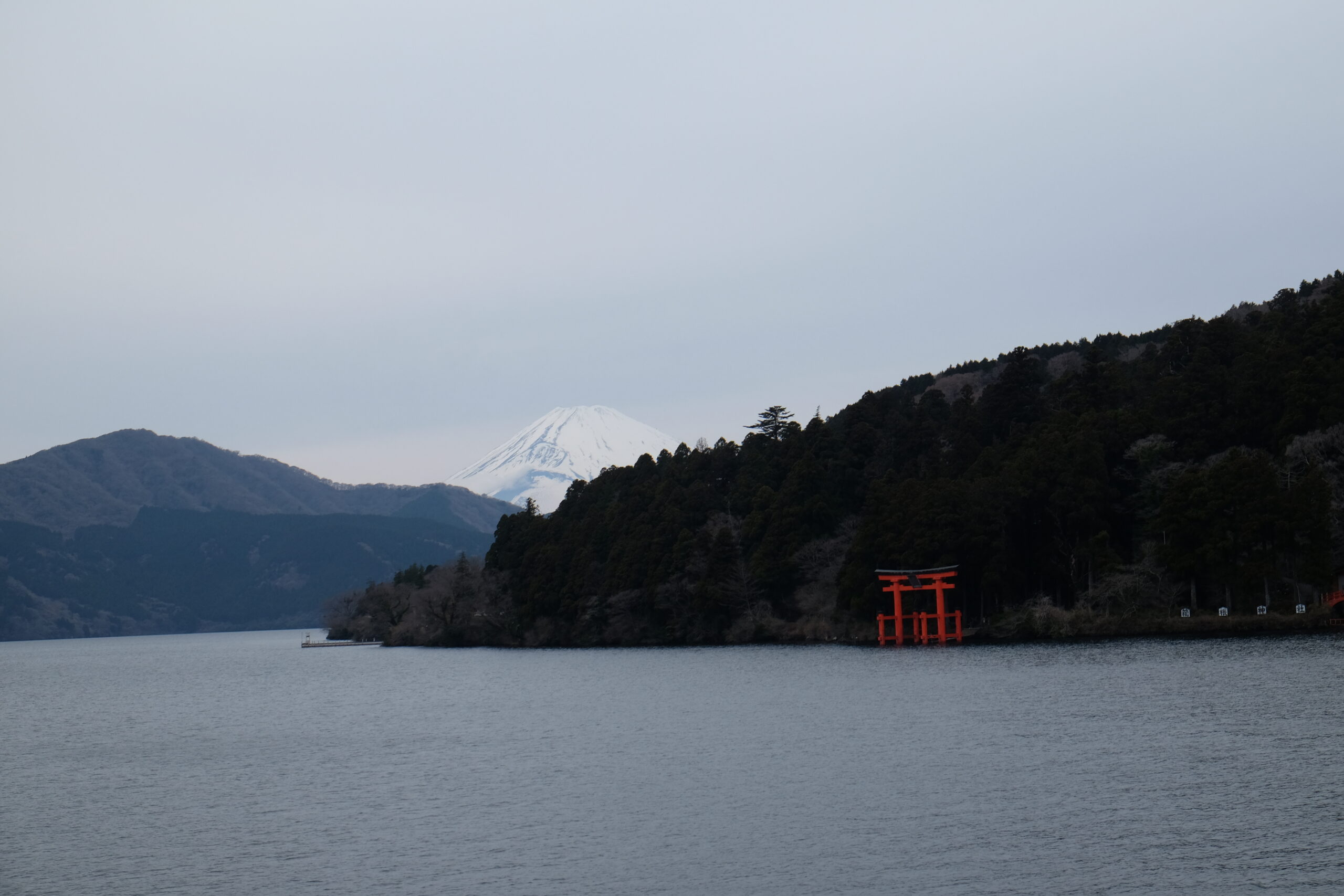
The adventure begins to seek out Mount Fuji, notorious for being hard to catch a glimpse of and is more often than not shrouded by clouds. If you do get the chance to see the mountain, it is quite the sight. Set against the lake and dwarfing the Red Torii Gate that sits on the edge of Lake Ashi.
The Hakone Ropeway
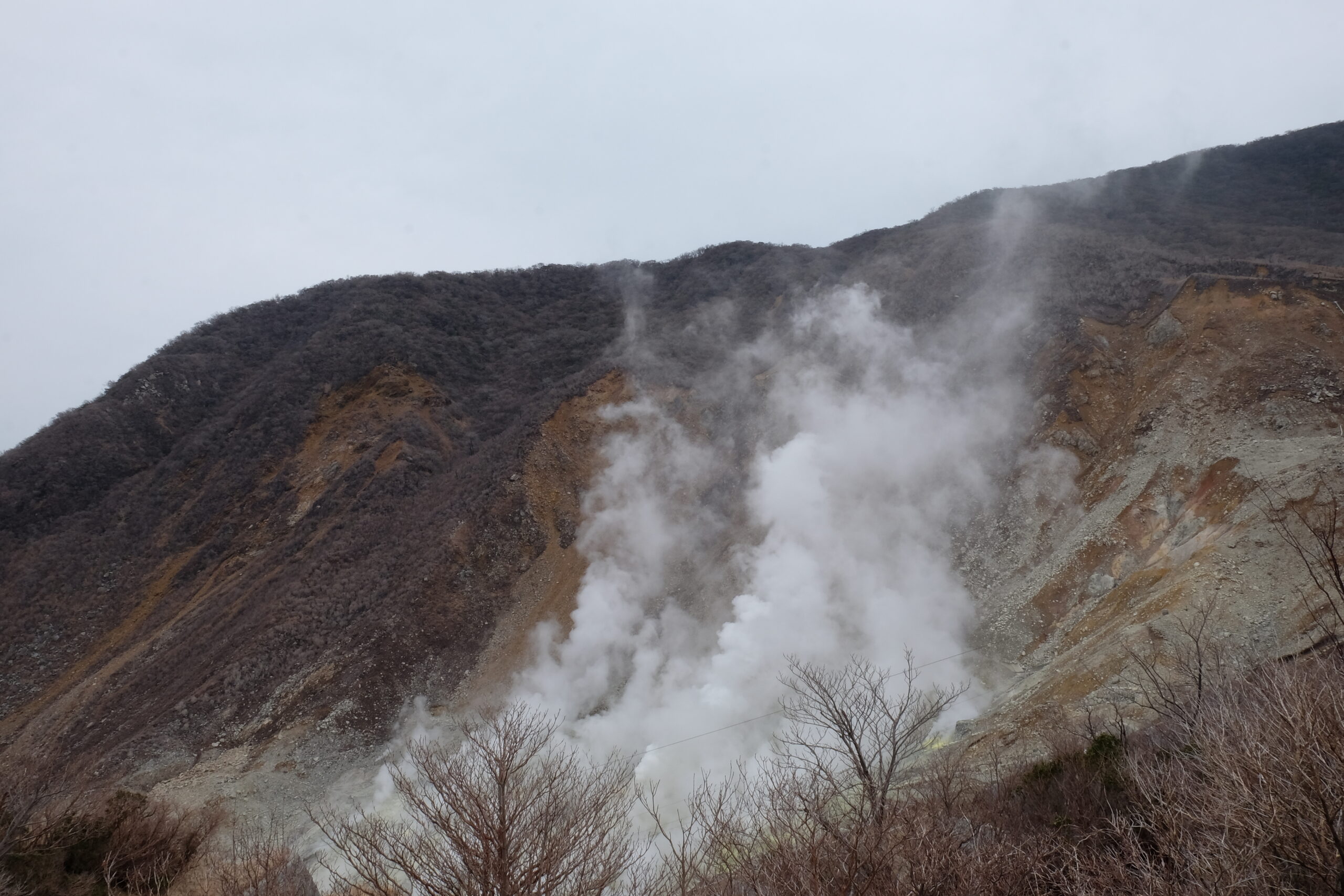
Starting the adventure in Gora and heading to the train station, where you will also find the Hakone Ropeway, the cable car traverses the town before rising high above the hills and the ancient volcanic vent area. I highly recommend getting off at the gondola stop here and having a look at the volcanic vents.
The Owakudandi Station is home to an observation platform, a souvenir store with a cafe where you can buy Kuro-tamago or Black Eggs. The eggs are a unique local delicacy and get their black colour after being boiled in the natural sulfur pools. The shells turn a jet black colour after reacting with the various minerals found in the pools. I was expecting them to have a very strong sulfur taste, but they were just like a normal boiled egg; eating one is said to extend your life.
The car park at the top provided us with some of the best views of Mount Fuji, getting super lucky with the weather. It’s not uncommon for it to be hidden by thick clouds, and it’s only really visible for 80 days out of 365. So go without expectations.
The gondola takes you all the way to Lake Ashi for the next part of the adventure to Fuji starts. Upon arrival at the Lake, you might be graced with your first views of Mount Fuji and the Hakone Shrine illuminating the shoreline in its red glory. Here you can explore all around the lake, with multiple shrines, Hakone-en Aquarium and multiple golf courses if you’re looking for a scenic green.
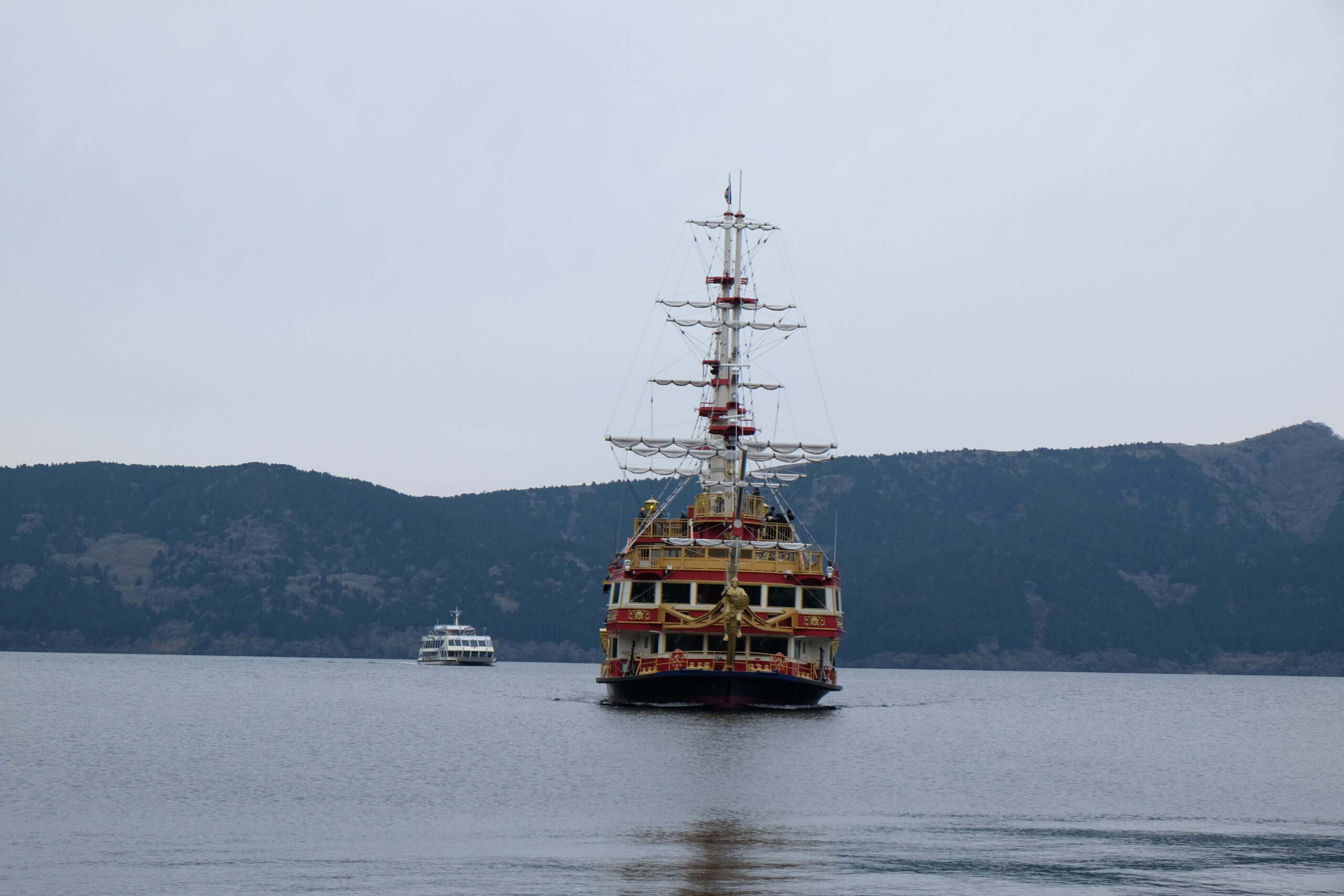
From here, the next part of the adventure means it’s time to board the Hakone Pirate Ship and set sail across Lake Ashi. There are three stops across the lake: Hakone Town Port, Motohakone Port and Togendia Port.
Prices will vary depending on the journey you choose and whether it is one-way or a return to the starting point. There are three ships, but all are equally elaborate and beautifully decorated inside and out. The cruise lasts about 25 minutes and gives you views of the lake and, of course, the stunning Mount Fuji when visibility is good.
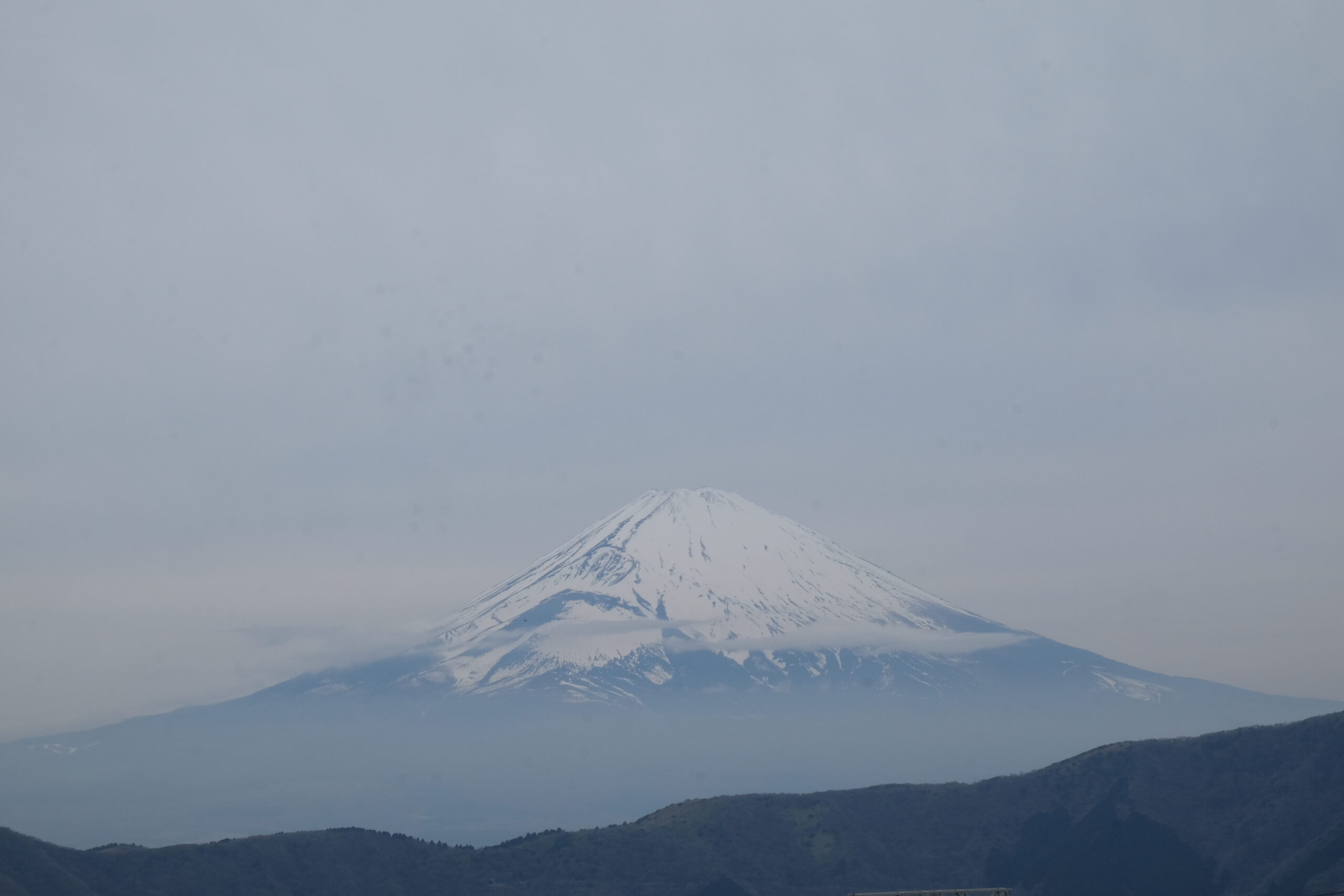
I highly recommend taking some time out in Hakone before heading to Tokyo, with the proximity to Mount Fuji, there are plenty of Onsen Hot springs to explore and plenty of sightseeing and activities to unwind from the pace of traveling.
Day 11-14: Tokyo
The final stop on this Japanese adventure is Tokyo, saving one of Japan’s most iconic cities for the farewell. Taking the bullet train from Hakone to Tokyo is about 2 hours, leaving behind the county hills for the industrial web that is Tokyo.
Tokyo is a vast, fast, and densely packed city that will leave you feeling like you only scratched the surface of all it has to offer. You could easily spend 2 full weeks in Tokyo alone.
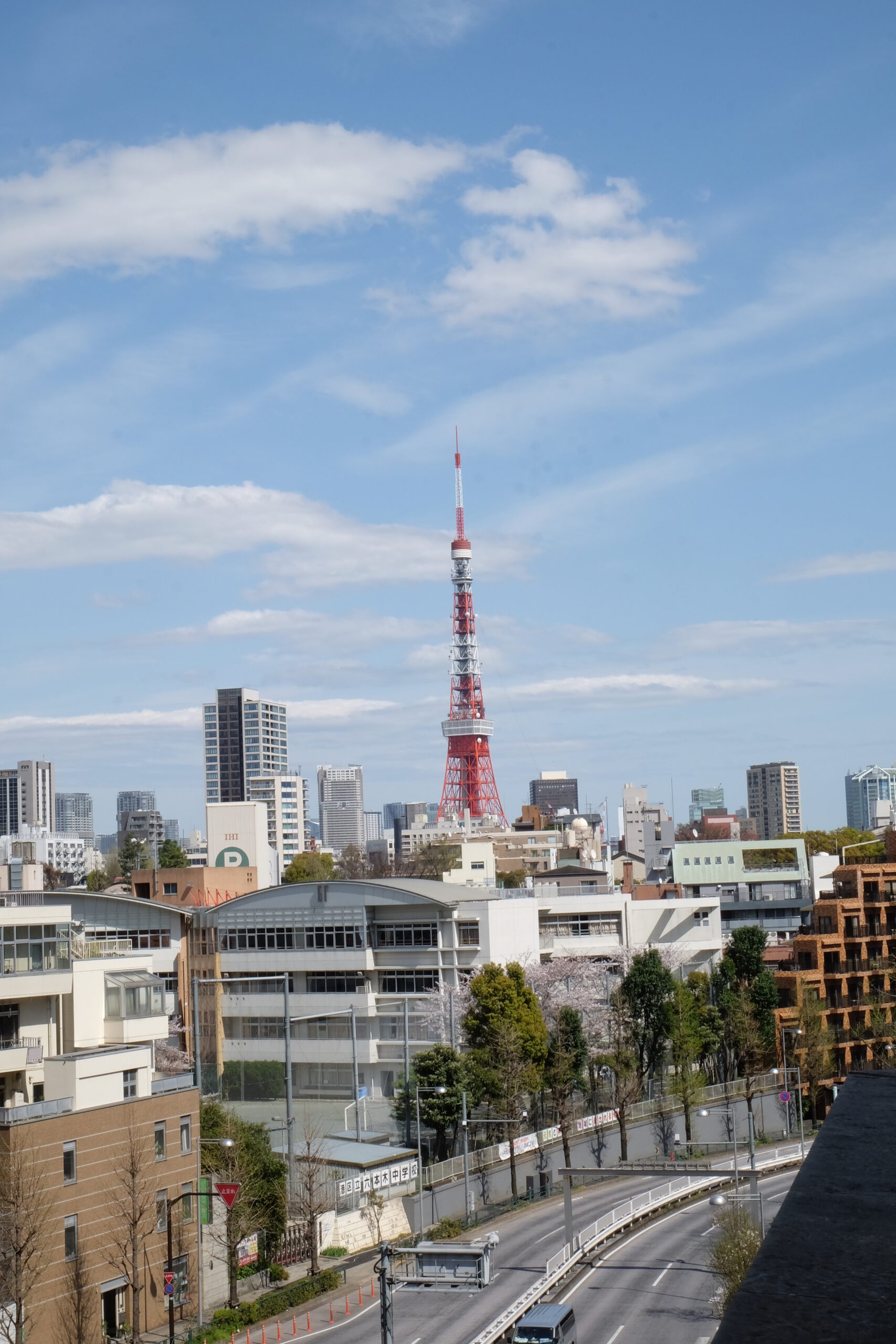
Much like Osaka, there are different districts. Staying in the Minato District, next door to Ginza and super close to the famous Shibuya. It’s a good central location with access to many of the best things to see, do, and eat in Tokyo.
I chose another Capsule Style Hotel, and I opted for a ladies-only hostel. Centurion Cabin and Spa was a great place to base myself, with cosy pod bunks. With a sauna space, an onsen and a small kitchenette, but for the most part, there is so much on offer in Tokyo that you might find you hardly use the space.
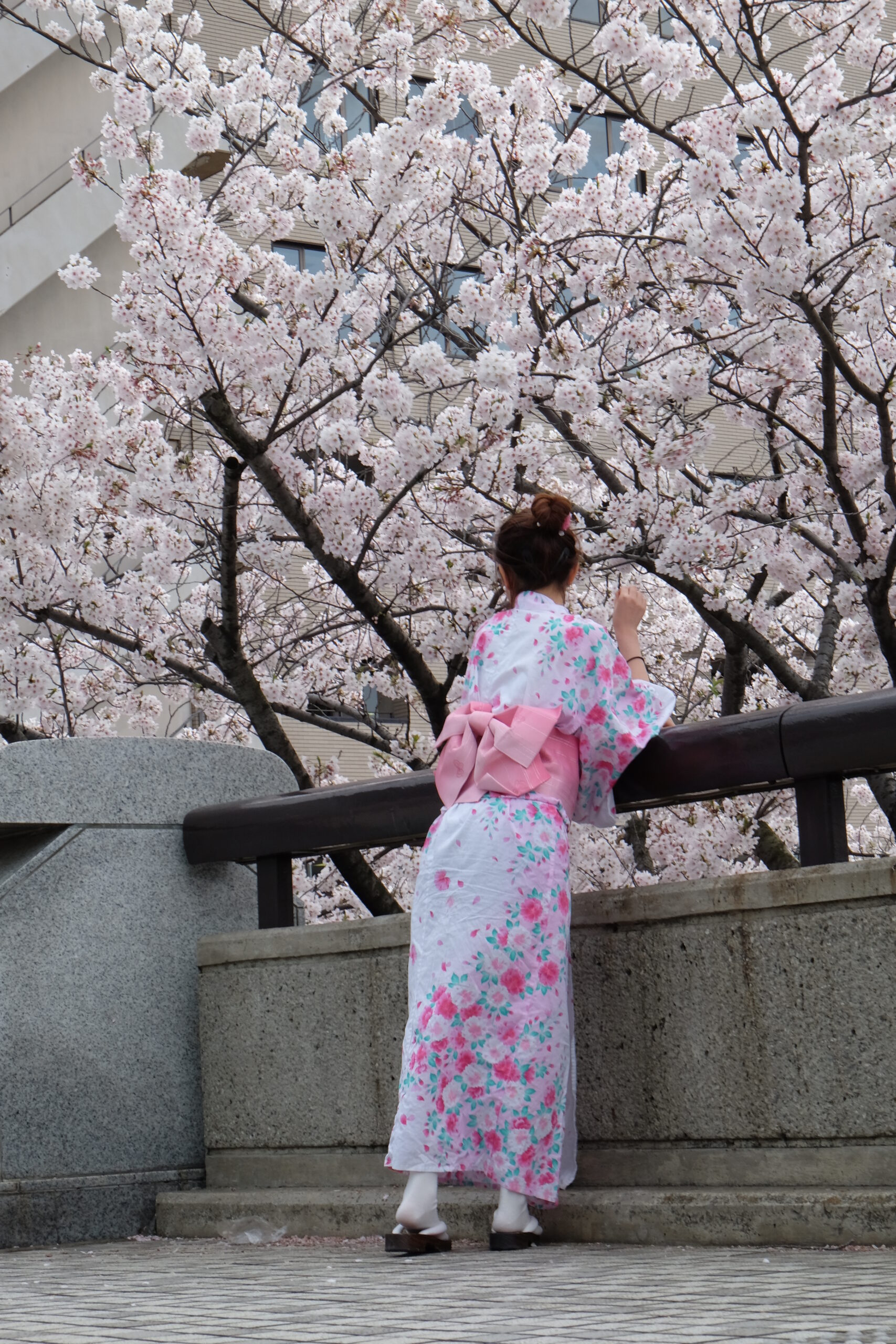
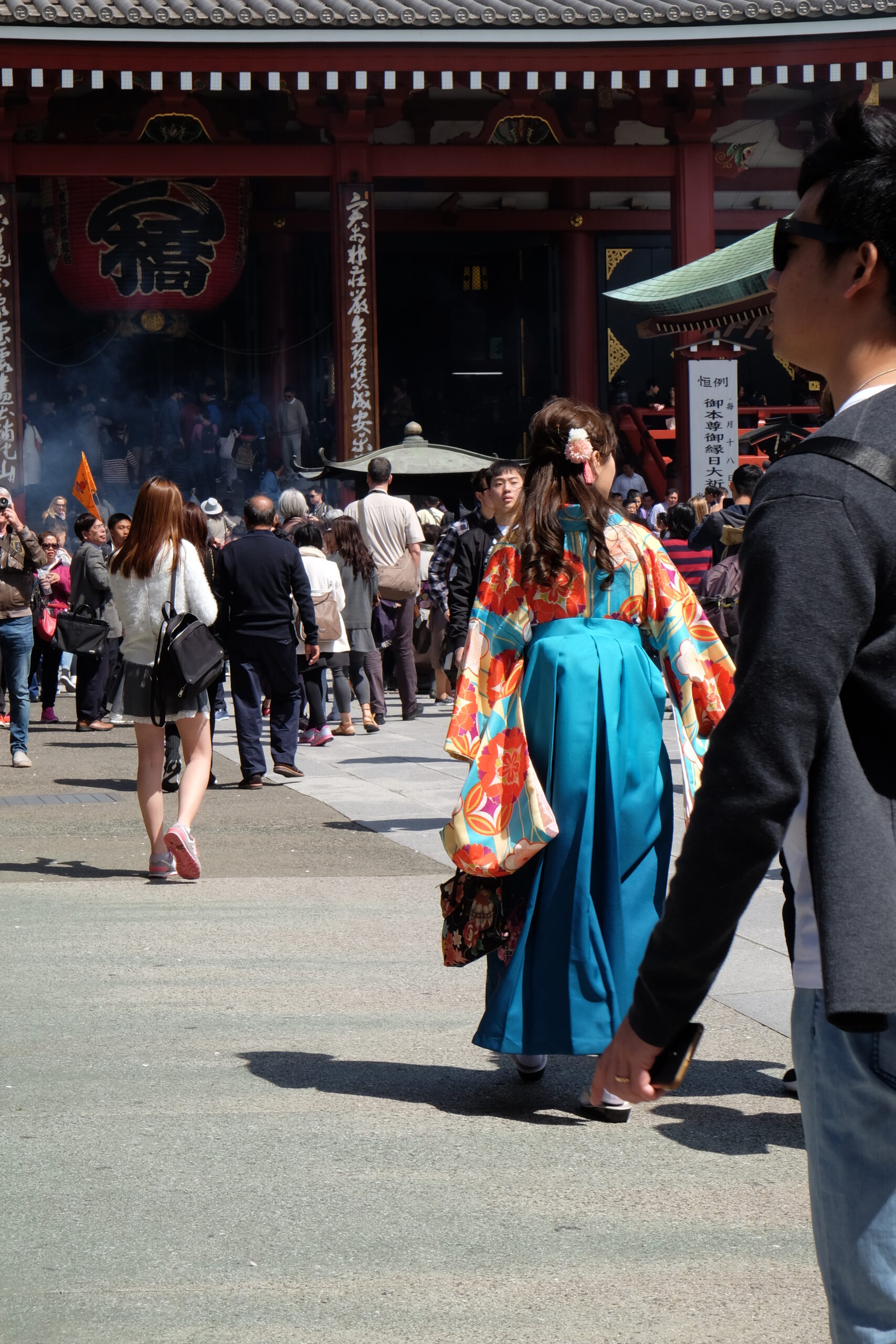
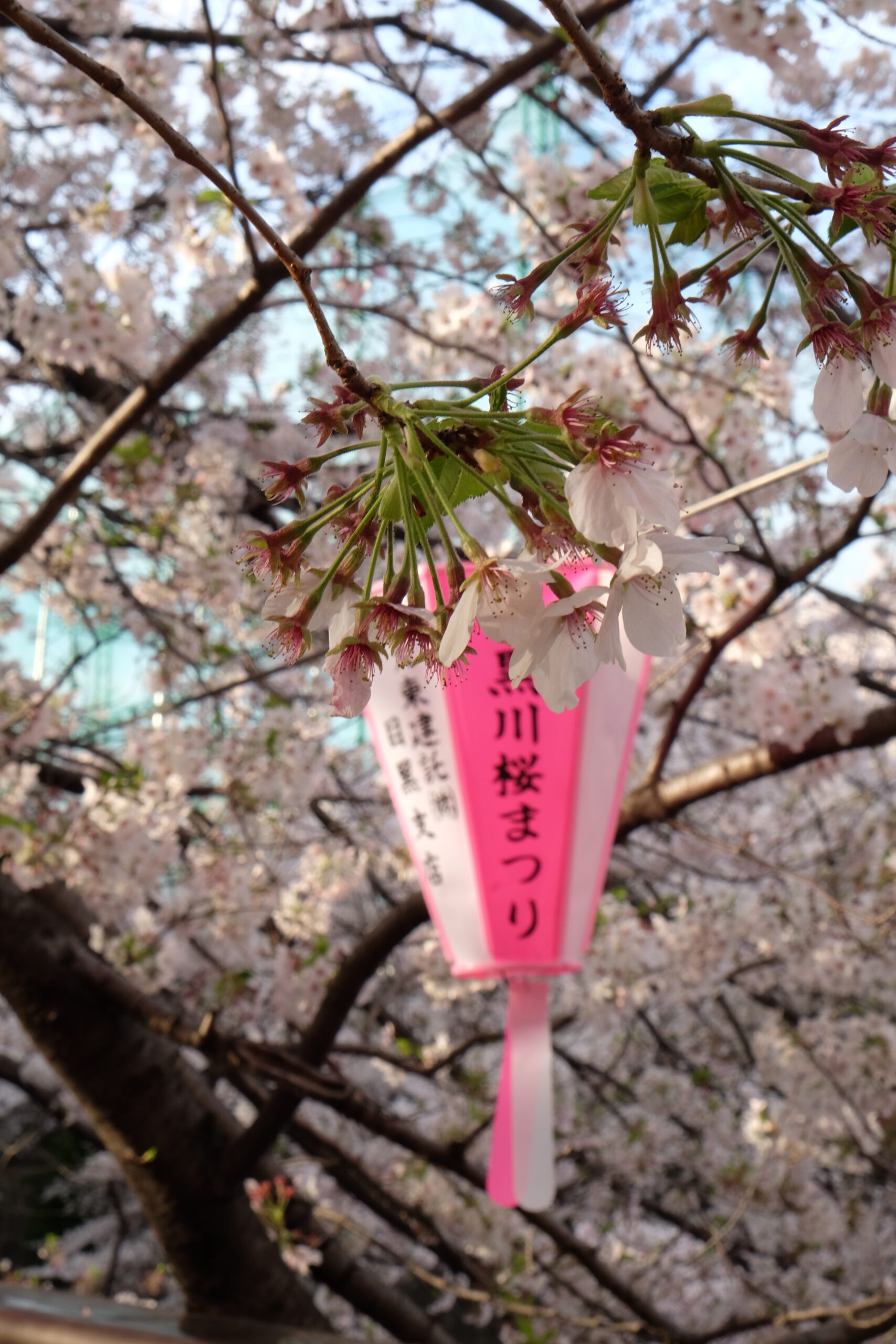
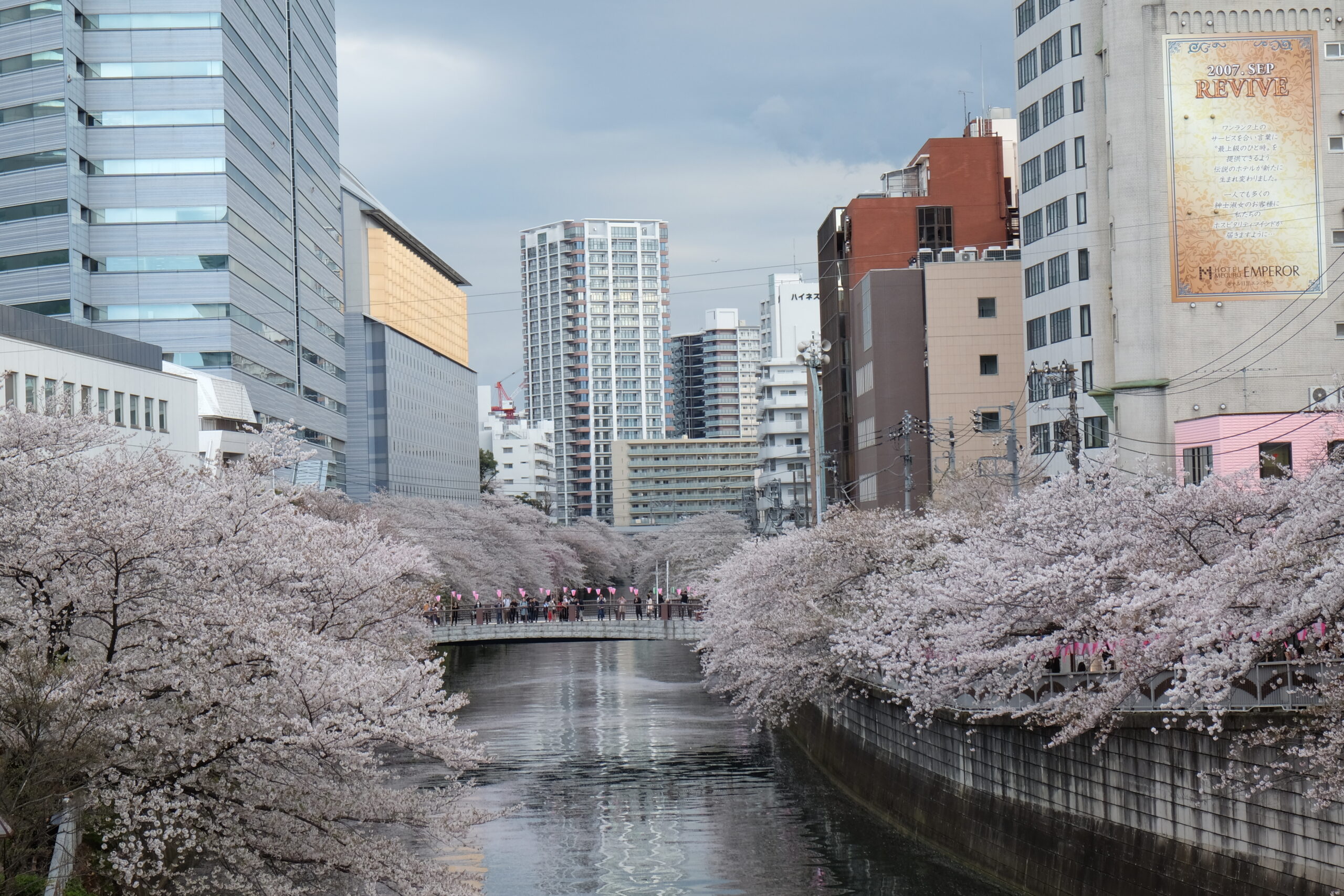
Heading out on foot is by far one of the best ways to explore Tokyo, with so many side streets and back alleys, main shopping strips and food spots within walking distance. However, if you’re looking to get those last-minute cherry blossom photos, I highly recommend taking the train to Nagatachō Station and walking along the Meguro River. The area is decorated during cherry blossom season with pink lanterns and arched cherry trees that create literal tunnels of blossom. While it might seem like just another urban waterway, it was home to some of the most impressive cherry blossoms I saw in Japan and was aptly named the Cherry Blossom Pomade.
I spent a good few hours walking along the many bridges here and stumbled upon Switch Coffee, a cute little cafe location. For those who are super into their pour-overs, this place is worth the spot for speciality coffee.
Last-minute gifts
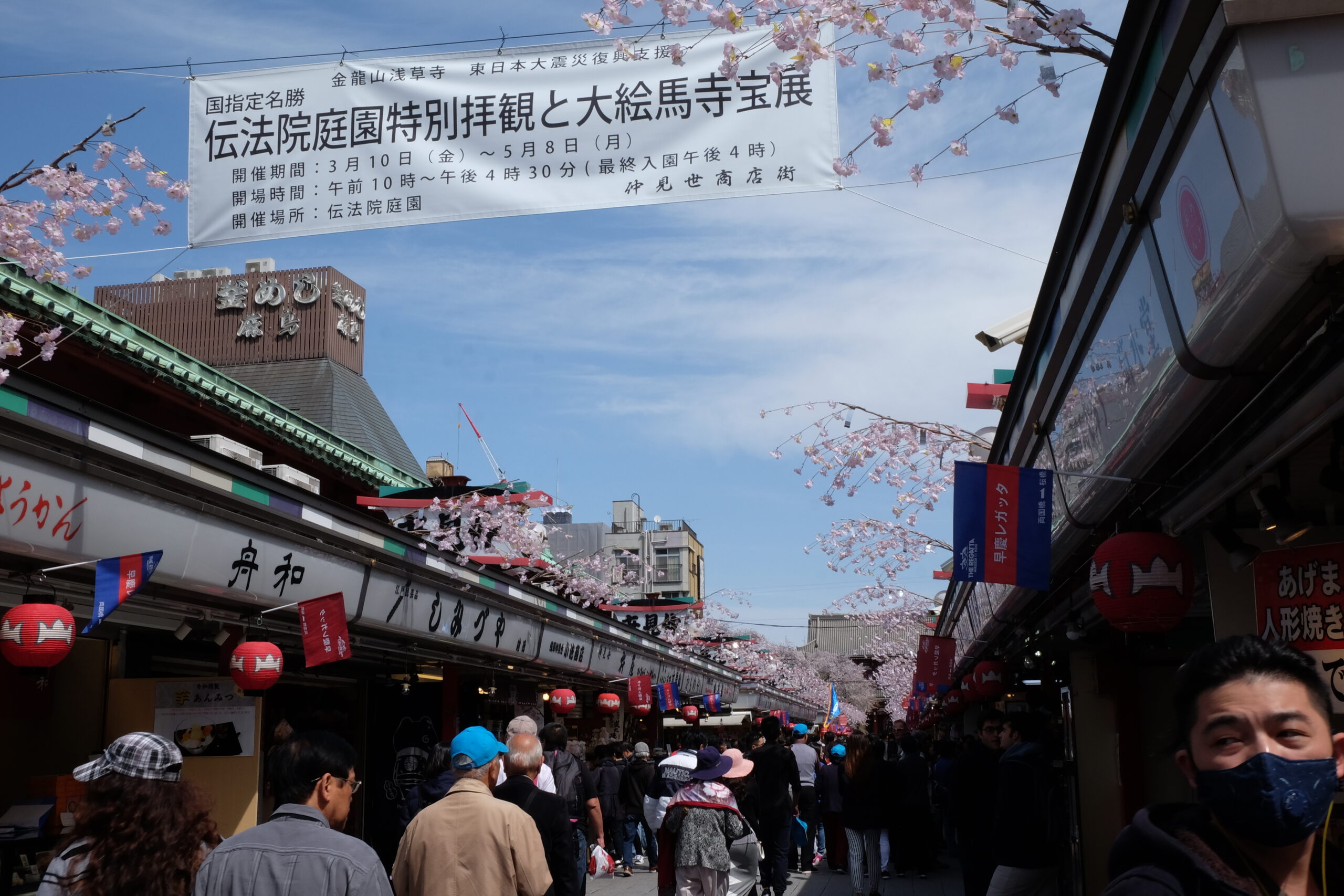
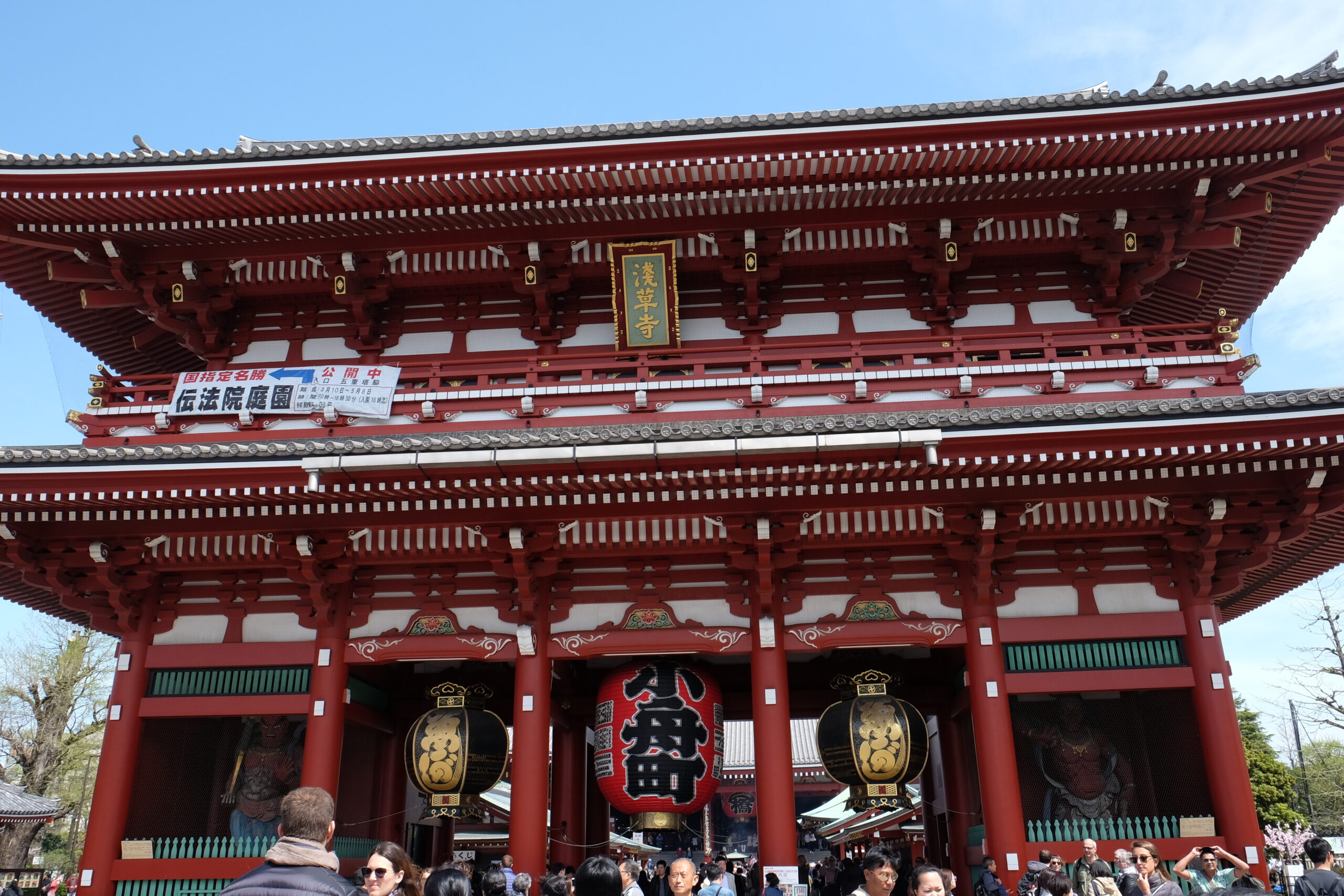
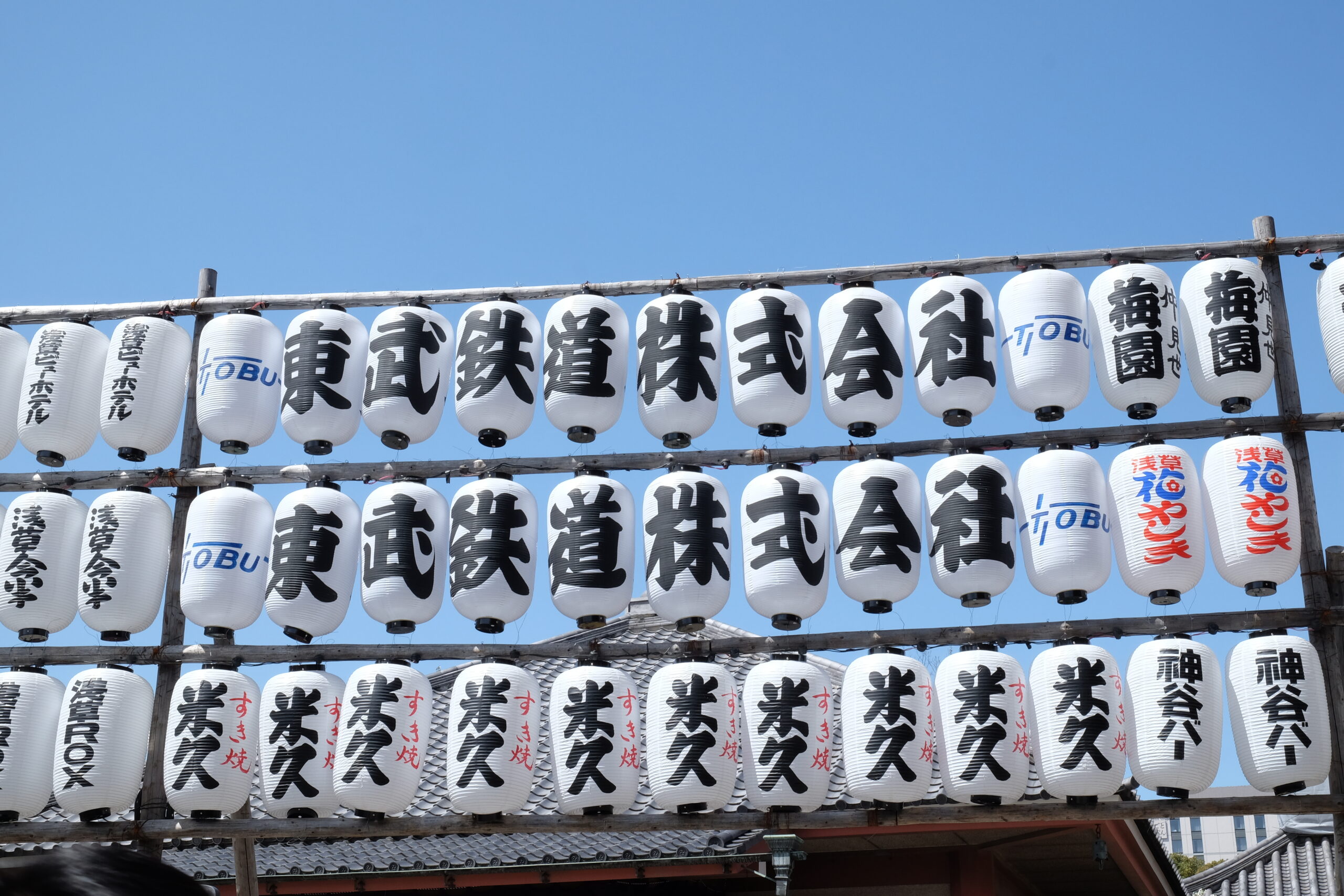
If you’re looking for some last-minute souvenirs or just a little look around one of the shopping streets, then head to Nakamise Shopping Street for all kinds of gifts, pottery, snacks and homeware goods. Stretching 200 meters, it is one of the longest-standing shopping strips. I recommend going early, as it gets pretty busy during peak times, especially in peak season. The strip is easily identified by the large red gate and giant lantern of the Kaminarimon Gate, which sits in the middle of the entrance.
There is so much here to look at that I recommend you carve out a good chunk of time. The entire area is a stunning walk around with bike paths and nice little locations for photos. The very end of the shopping street is home to one of Tokyo’s oldest temples.
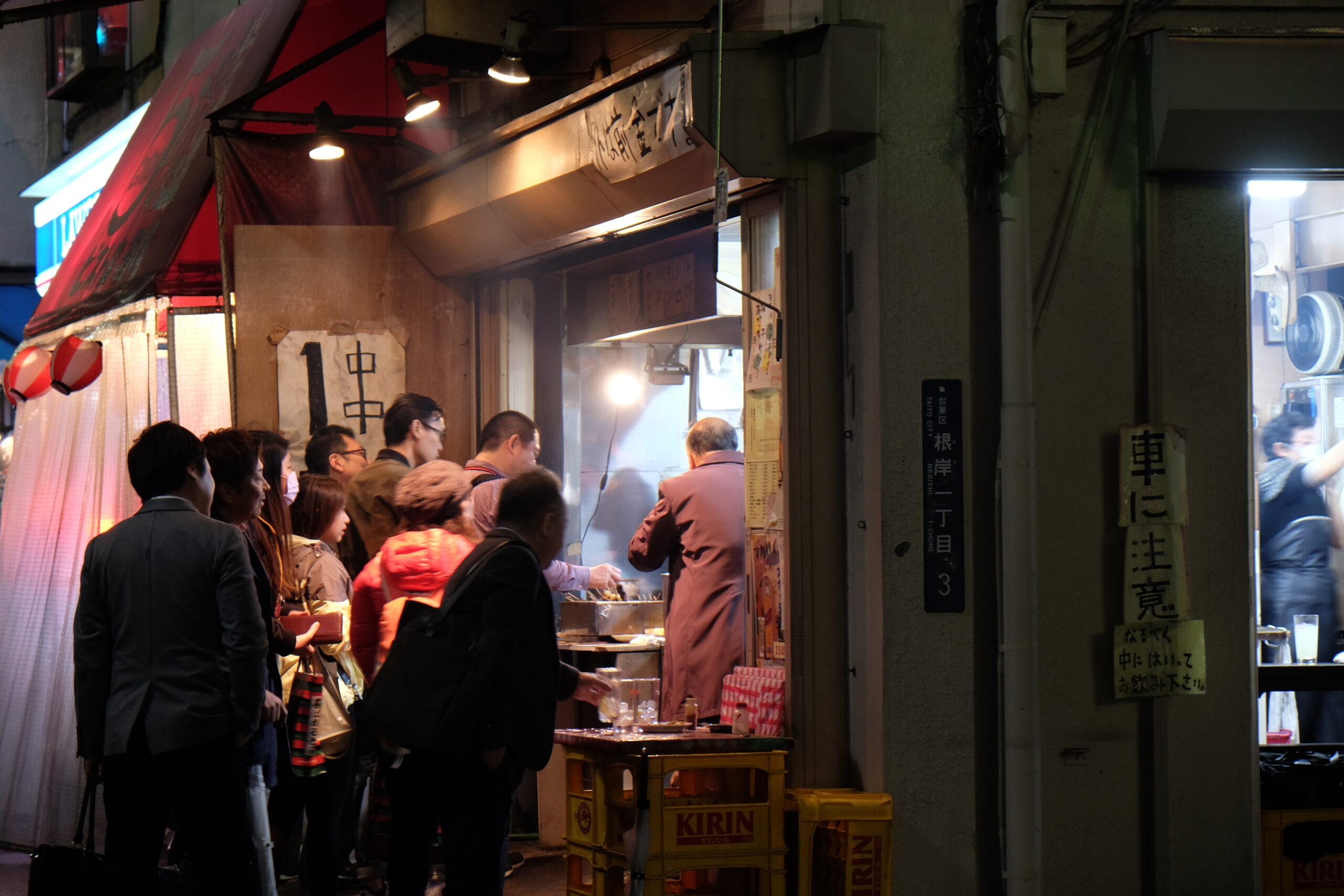
Sensō-ji Buddhist Temple
The iconic red pagoda and hall stand proud at the end of the Nalamsie Shopping Street. The temple is known for its relief of suffering and answering prayers. The Senso-ji Temple and surrounding grounds are vast, with A Main Hall, a second hall named Yogodo Hall, (where you can collect stamps), Awashimado Hall, Five Story Pagoda, Gardens, 3 different gates: Niten-mon Gate, Hozo-mon Gate, Kaminari-mon Gate, The Shopping Street and Bentendo Hall.
The temple also hosts events throughout the year, and it’s worth checking the schedule to see what is happening so you can better plan your visit or even attend some of the festivals.
Getting there from the Hostel is simple: a short 15-minute train journey via the Ginza Line from the accommodation, with Asakusa Station a 400m walk away from the temple.
The Shibuya Scramble
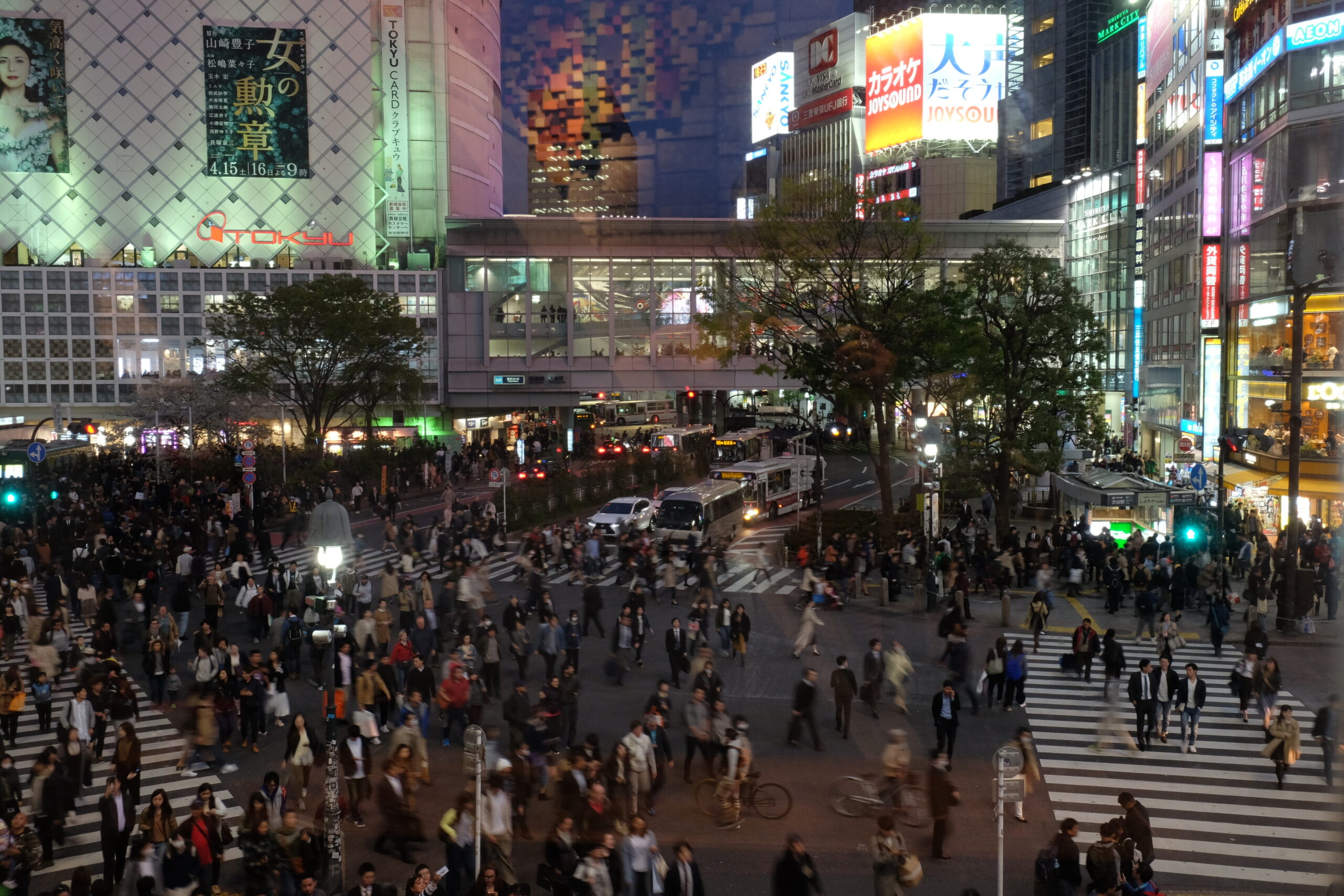
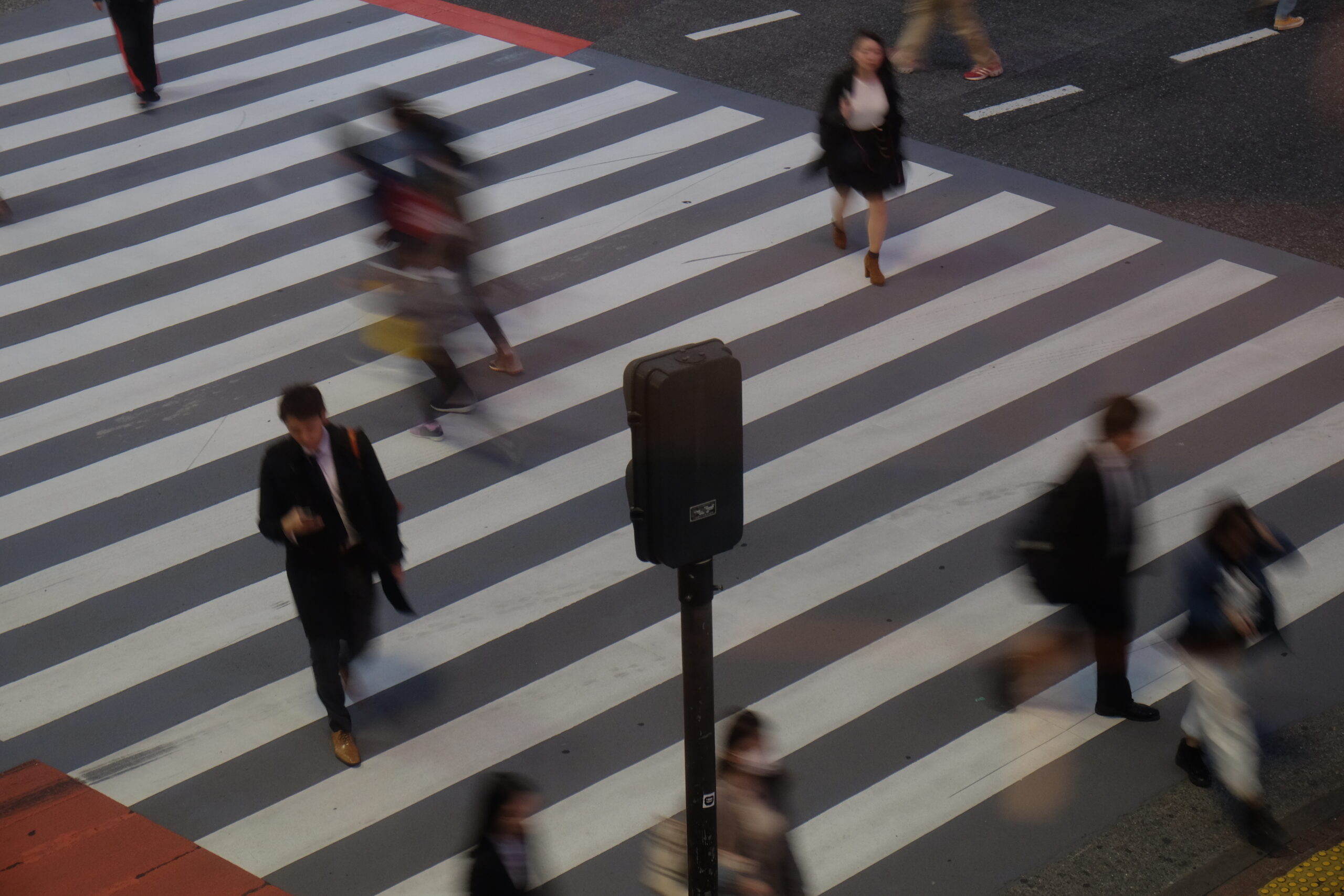
The famous Shibuya Crossing is by far one of the most chaotically organised places you will likely visit in Tokyo or maybe all of Japan. The shopping area is a hub of activity in Tokyo, where you can find the most quirky and interesting things to do.
A section of road divided by 5 crosswalks that simultaneously turn green, creating a sea of people, yet somehow no one ever walks into one another. It’s wildly overwhelming to be a part of once you see how many people are waiting on the opposite side, but like all organised chaos, it happens with little drama. With up to 2,000 people waiting to cross every few minutes, it feels like going into battle.
The cyberpunk city comes alive at all hours of the day, and I highly recommend getting there in the late afternoon during the work rush hour to see the crossing in full swing. I also grabbed a seat after dark to watch the crossing at night with a coffee from the Starbucks across the street.
Tokyo Metropolitan Government Building
The last free activity, which is well worth doing, is to get a sense of the scale of Tokyo. Head to the Metropolitan Government Building, open from 9:30 am to 9:30 pm. The 45th floor is home to the observation deck, where you will get panoramic views of Tokyo. I couldn’t believe the density of Tokyo till I got up there and how tightly packed it was, and how far it spread out. With views of both Tokyo Tower and Tokyo Skytree. If you get lucky, you might even get the opportunity for a second sighting of Mount Fuji.
This was one of my favourite free activities, and I sat and took in the views for a while. It’s hard to comprehend how vast Tokyo is from the ground, but once you’re up there, you can really see how big it is as a city.
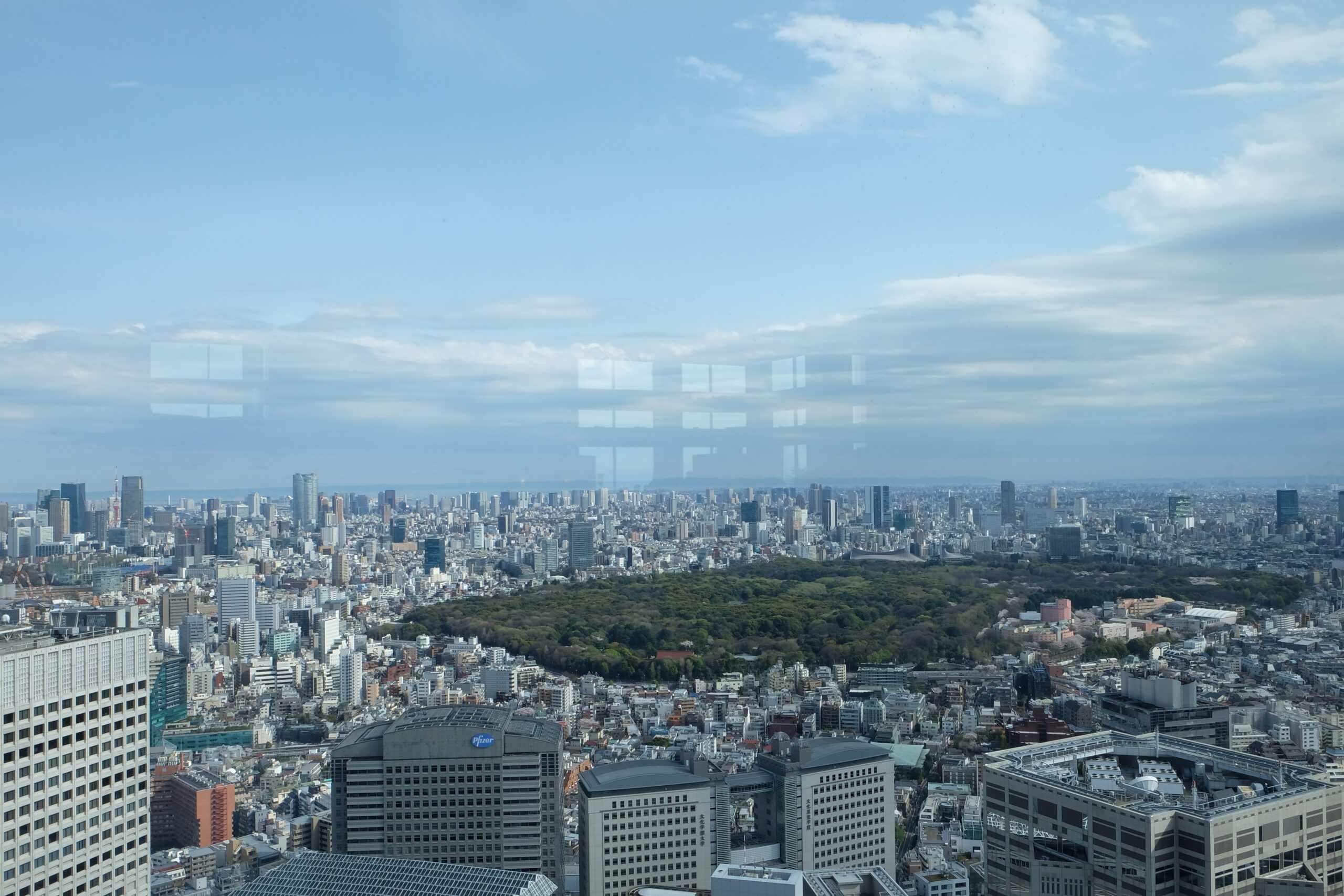
If you’re looking for more interesting views, you can also go up at night. I didn’t have the time, but I can only imagine what it might have looked like to go up there and see the city illuminated as far as the eye could see.
Woah! That’s 2 weeks in Japan complete!
Japan is so vast, but as you can see from this 2-week Japan itinerary, you can pack so much in and see multiple world heritage sites and get a sense of what Japan is all about, which will no doubt leave you wanting more.
Have you been to Japan?
What are the best things to do in Japan? Anything you’d add to this Japan bucket list?
Francesca Solloway
See more of Francesca’s travel guides here.
Japan Google Map
Get lifetime access to my endless hours of research and time spent on the ground finding the best places to eat, drink, relax and explore in Japan. Simply open the Google Map on your device and all my recommendations are at the touch of your fingertips.